

Best Mattress for Side Sleepers: A Ruidoso Guide

You roll onto your side because that’s the only position that feels natural. Then morning comes, and your shoulder feels pinched, your hip feels tender, or your lower back reminds you that sleep wasn’t as restorative as it should’ve been. A lot of folks in Ruidoso, Alto, and across Lincoln County assume that’s just part of getting older or part of living an active life in the mountains.
Usually, it’s a mattress mismatch.
After decades of helping neighbors find better sleep, one pattern shows up again and again. Side sleepers need a different kind of support than back or stomach sleepers. If your mattress pushes too hard on the shoulder and hip, or lets your midsection sag, you’ll feel it by breakfast. The good news is that the right mattress can change that.
Table of Contents
- Why Side Sleepers Wake Up with Aches and Pains
- The Science of Support for Side Sleepers
- Choosing Your Technology Memory Foam vs Hybrid vs Latex
- How to Find Your Perfect Firmness Level
- Special Advice for the Ruidoso Mountain Lifestyle
- The Miller Waldrop Promise Your Path to Pain-Free Mornings
Why Side Sleepers Wake Up with Aches and Pains
If you wake up with a numb arm, a sore shoulder, or an aching hip, your body is telling you something useful. The surface under you isn’t matching the way you sleep.
Side sleeping creates concentrated pressure in two spots first. Your shoulder presses down into the mattress, and your hip does the same. If the bed is too firm, those areas get jammed upward. If it’s too soft, your torso drops too far and twists your spine out of line.
That’s why some people sleep a full night and still wake up feeling worn out. They weren’t tossing and turning because they’re restless. They were moving because their body kept trying to escape pressure.
Small warning signs most people ignore
A mattress problem doesn’t always start as major pain. It often shows up as:
- An arm that falls asleep when you stay on one side too long
- Shoulder stiffness that eases after you get moving
- Hip tenderness that’s worst first thing in the morning
- Low back tightness even though you don’t sleep on your back
- Frequent position changes because one side never feels settled
You shouldn’t have to “fight” your mattress to find a comfortable side sleeping position.
I’ve seen many shoppers come in thinking they need a firmer bed because pain means “more support.” In practice, that often makes a side sleeper feel worse. Support matters, but pressure relief matters just as much.
If you’ve been trying to fix the problem with pillows alone, that can help, but only up to a point. Good posture during sleep starts with the mattress itself, and then your pillow setup fine-tunes it. If you want to better understand how your sleep posture affects discomfort, this guide on how to align your spine while sleeping is a helpful next step.
The Science of Support for Side Sleepers
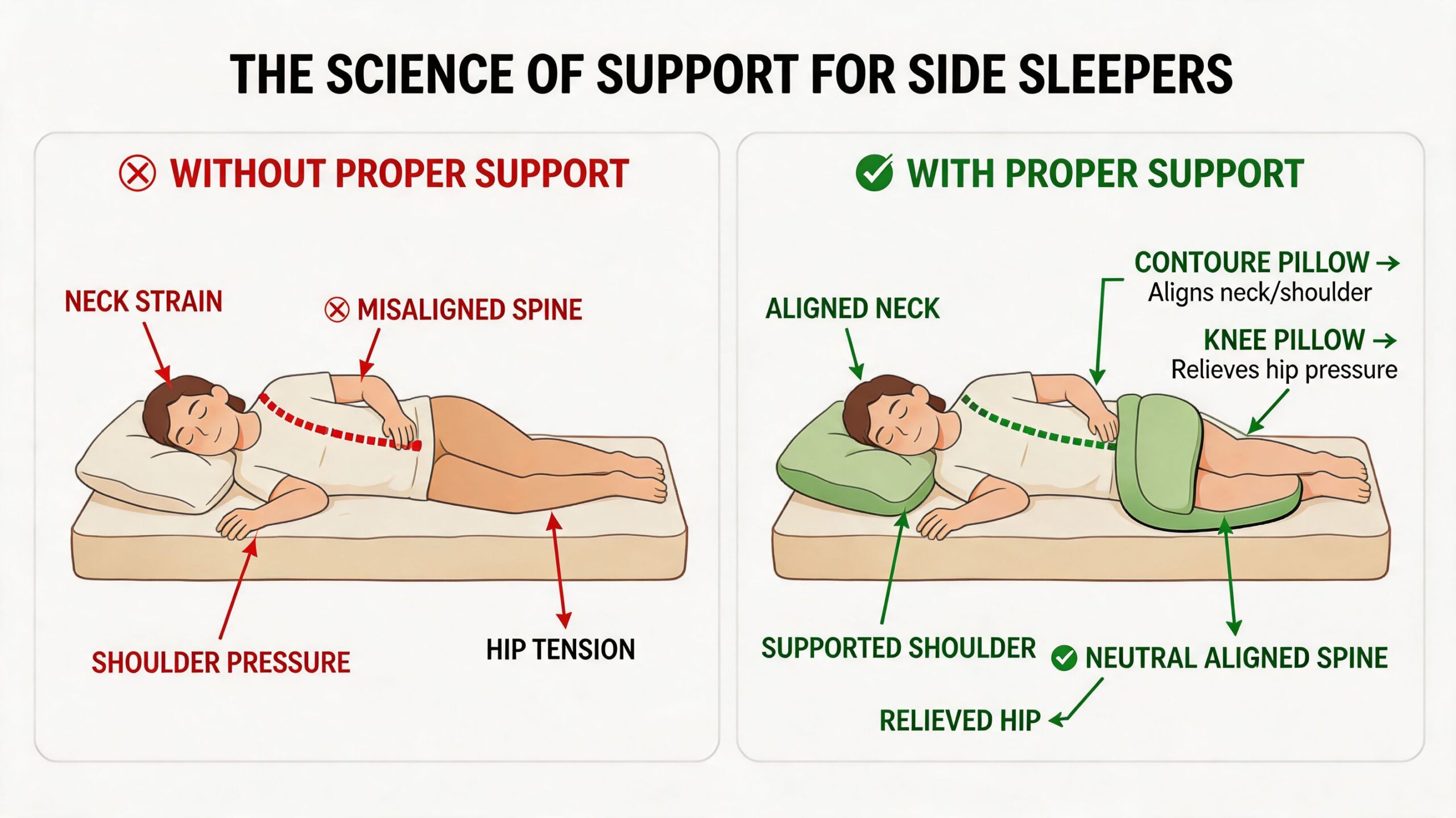
Side sleeping puts very different demands on a mattress than back or stomach sleeping. Your body has sharper pressure points at the shoulder and hip, with a narrower waist between them. A mattress has to do two jobs at once. It needs enough give for those wider areas to settle in, and enough underlying support to keep your midsection from dipping too far.
Why side sleeping needs a different setup
Your spine needs even support from your neck through your lower back. When you lie on your side, your body is not level across the surface. The shoulders and hips carry more weight into the mattress, while the waist often needs the mattress to rise up and meet it.
That is why side-sleeper support is a balancing act, not a firmness contest.
If a mattress is too firm, the shoulder and hip stay perched too high and take the hit. If it is too soft, the torso sinks past the comfort layer and the lower back starts compensating. I see this often with people who moved to Ruidoso from lower elevations and started blaming hiking, skiing, or splitting firewood for morning soreness. Sometimes activity is part of it. Sometimes the mattress is adding strain every night and never letting those joints recover.
Our mountain climate matters too. Dry air can change how some foams feel over time, especially in homes where indoor humidity stays low for months. A mattress that felt nicely cushioned at first can begin to feel less forgiving on top if the materials dry out or firm up with age. That does not happen with every bed, but side sleepers tend to notice it sooner because the shoulder and hip are the first places to complain.
What proper alignment feels like
Good side-sleeper support usually feels clear in a few specific places:
- Your shoulder settles in without numbness or pinching
- Your hip has cushioning instead of sharp pressure
- Your waist is supported instead of floating above the mattress
- Your lower back stays relaxed when you get up
The surface should feel comfortable, but the support underneath matters just as much. That is one reason many side sleepers do well on hybrids that pair pressure-relieving comfort layers with a steadier support core. If you want a plain-English breakdown of how that construction works, this guide explains what a hybrid mattress is.
Here is the practical test I use in the showroom. Lie on your side long enough for your shoulder to settle and your breathing to slow down. The first minute tells you whether the bed feels pleasant. The next several minutes tell you whether it is holding you in a healthy position.
A mattress can feel plush when you first lie down and still let your midsection drift out of line after ten or fifteen minutes. Side sleepers need to judge both pressure relief and level support. If one is missing, comfort rarely lasts through the night.
Choosing Your Technology Memory Foam vs Hybrid vs Latex
The wrong material can fool a side sleeper for five minutes and punish them by morning. In Ruidoso, that decision gets even trickier because dry mountain air and big temperature swings can change how foams and fibers feel over time.

Two beds can carry the same firmness label and still sleep very differently. What matters is how the comfort layers handle pressure at the shoulder and hip, how quickly the surface recovers when you move, and whether the support core keeps your body level through the night.
For side sleepers, mattresses with adaptive foam layers and zoned support can do a better job of cushioning the hips and shoulders while keeping the midsection steadier, which can help reduce lower back strain, as explained in the Sleep Foundation’s side sleeper mattress guide.
Memory foam for close contouring
Memory foam is the first place to look if pressure relief is the main goal. It contours closely, spreads out weight well, and can take the edge off a sore shoulder or a tender hip better than many spring-heavy designs.
This is the feel many side sleepers like in Tempur-Pedic models. It creates a quieter, more absorbed sensation, with less surface bounce and less pushback against the body.
Memory foam tends to fit sleepers who say:
- “My shoulder falls asleep on firmer beds.”
- “I want more contour around my hip.”
- “I don’t want to feel every movement on the mattress.”
There is a trade-off. Some people enjoy that hugged, settled-in feel. Others find it slower to move on, especially after a long day hiking, skiing, or working outdoors when the body already feels stiff. In our mountain climate, some foams can also feel firmer on a cold night and a bit less forgiving until they warm under your body.
Hybrid for balance and airflow
Hybrids appeal to a wide range of side sleepers because they combine pressure relief on top with stronger support underneath. That mix often works well for people who want cushioning but still want the bed to feel easy to move on.
Sealy and Stearns & Foster both make hybrids that suit this middle-ground feel. The comfort layers soften initial pressure points, while the coil unit adds lift and more consistent support through the torso.
| Mattress type | Feel profile | Strongest fit for |
|---|---|---|
| Memory foam | Deep contour, close hug | Pressure-sensitive shoulders and hips |
| Hybrid | Cushioning with added lift | Side sleepers who want comfort, airflow, and easier movement |
| Latex | Buoyant, springy surface | Sleepers who dislike a sinking sensation |
For Ruidoso homes, hybrids also earn attention for airflow. Coil systems allow more heat to escape than solid foam cores, which can help if you sleep warm under heavy bedding in winter. If you want a plain-English explanation of how that construction works, this guide on what a hybrid mattress is explains why so many side sleepers end up in this category.
A well-built hybrid should do two jobs at once. It should cushion the sharp pressure points and keep your frame from dipping out of line after the top layers compress.
Latex for a buoyant feel
Latex has a different personality. It responds faster than memory foam, feels more buoyant, and keeps you more on the mattress than in it.
That can be a strong fit for side sleepers who change positions often or dislike the slow-moving feel of foam. It can also appeal to active people who want cushioning without that heavy, swallowed sensation after a full day.
The trade-off is pressure relief style. Latex relieves pressure, but it does so with springier support rather than a deep cradle. Some side sleepers with very sharp shoulder sensitivity still prefer memory foam or a softer hybrid because those materials contour more closely.
For many shoppers, the decision comes down to how they want the bed to respond at 2 a.m., not how it sounds in a product description:
- Choose memory foam if your top concern is pressure relief and a close, cradled feel.
- Choose hybrid if you want the broadest mix of contouring, support, airflow, and easier movement.
- Choose latex if you want faster response, a buoyant surface, and less of that sinking sensation.
Mattress Pro by Miller Waldrop is one local place where shoppers compare Tempur-Pedic, Sealy, Stearns & Foster, and Sherwood side by side in person, which is often more useful than trying to judge these materials from an online firmness chart alone.
How to Find Your Perfect Firmness Level
A side sleeper can lie on two mattresses with the same showroom label and have two completely different nights. Body weight, shoulder width, hip shape, and pressure sensitivity all change how a bed feels once you settle in on your side.
In Ruidoso, the environment adds another layer. Dry mountain air can leave joints and muscles feeling tighter by morning, especially after a day of hiking, skiing, riding, or working outdoors. In that setting, firmness mistakes show up fast. A bed that is too firm can feel harsher on the shoulder and hip. A bed that is too soft can let the midsection bow out of line.

Why firmness feels different from person to person
Firmness is not a fixed experience.
A lighter sleeper may stay closer to the surface and never engage enough cushioning on a firmer mattress. A heavier sleeper presses deeper into the comfort layers and needs more support underneath to keep the spine from dipping. That is why side sleepers with lower body weight often prefer a softer feel, while people carrying more weight tend to need a firmer, more supportive build for proper alignment, according to guidance summarized by the National Council on Aging.
A practical firmness starting point
Use these ranges as a starting point, not a rule:
- Lighter side sleepers often do better with a softer surface that lets the shoulder and hip sink enough to reduce pressure.
- Average-weight side sleepers tend to feel best in the medium to medium-firm range because it balances contouring with support.
- Heavier side sleepers often need a firmer mattress, especially a hybrid or another design with a stronger support core, so the torso stays level.
The goal is not to pick the firmest bed you can tolerate. The goal is to keep your spine straighter while still giving your pressure points enough room to settle.
I tell shoppers to ignore the hand test. It says almost nothing about side-sleeping comfort. Lie on your side for several minutes in your normal position and check two areas first. Does your shoulder relax, or does it feel driven back up toward your neck? Does your waist feel supported, or does your middle sag?
Move softer if you notice:
- Shoulder pressure that builds within a few minutes
- A sharp or pinching feeling at the hip
- A flat, hard surface feel with very little contour
Move firmer if you notice:
- Your midsection dropping lower than your ribs and legs
- A strained feeling through the lower back after resting a while
- Too much sink, especially if changing positions takes effort
For Ruidoso homes, there is one more practical trade-off. At altitude, a mattress can feel a little different across seasons because cooler nights, dry indoor heat, and day-to-day activity levels all affect how your body reads pressure and support. That is one reason firmness charts from national bed-in-a-box brands miss the mark so often. The label matters less than how the mattress holds your shoulder, hip, and waist in your actual sleep position.
If you want a clearer way to translate showroom labels into real comfort, this guide on how to choose a mattress firmness breaks the process down in practical terms.
Special Advice for the Ruidoso Mountain Lifestyle
Ruidoso isn’t a generic market, and side sleepers here don’t live in generic conditions. Mountain air, cooler nights, dry indoor environments, and active days all change what “comfortable” feels like by bedtime.
That matters more than national mattress lists usually admit.

Why local climate changes the mattress conversation
For Ruidoso’s 6,900+ foot altitude, heat dissipation is key. Hybrid mattresses with innerspring coils provide superior airflow compared to all-foam beds, which can trap heat. That makes them a strong match for our variable mountain climate and for active residents who may have higher core temperatures, according to Mattress Clarity’s side sleeper review roundup.
A lot of people assume cool nights mean cooling features don’t matter. In real bedrooms, they still do. Side sleepers create concentrated contact at the shoulder and hip, and dense foam can hold warmth around those pressure points even when the room itself feels chilly.
That’s one reason hybrids do so well in mountain homes and cabins. The coil system helps move air through the bed, while the comfort layer still cushions the body. For many sleepers in Ruidoso and Alto, that balance feels better through changing seasons than an all-foam build.
What active sleepers and rental owners should look for
If you hike, golf, ski, ride, or spend long days on your feet, side sleeping can be hard on already tired joints. In that case, recovery matters as much as comfort. You want a mattress that reduces pressure without making movement a chore when you roll over at night.
Here’s what usually works best in our area:
- Responsive pressure relief from hybrids or adaptive foams that cushion sore shoulders and hips
- Airflow-minded construction for sleepers who warm up after active days
- Stable edge support if you sit on the side of the bed to get dressed or ease into standing
- Consistent support that still feels level after repeated use
There’s another local angle national sites almost never address. Vacation rentals.
Cabin and rental owners in Lincoln County aren’t just buying for one body and one preference. They’re buying for repeated guest use, mixed sleep styles, and a room that needs to feel inviting to a wide range of people. For that setting, durability and broad comfort matter more than chasing the trendiest boxed mattress online.
If you’re comparing how long different builds tend to hold up under real use, this article on how long should a mattress last is worth reading before you buy.
The Miller Waldrop Promise Your Path to Pain-Free Mornings
The best mattress for side sleepers usually comes down to three things. You need enough cushioning for the shoulder and hip, enough support to keep your spine from sagging, and a firmness level that matches your body instead of someone else’s online review.
That’s where local guidance makes the process easier.
A better way to shop than guessing online
Buying a mattress in a box can feel simple right up until it doesn’t. The description says “medium-firm.” The reviews sound promising. Then the bed shows up, and you’re still waking up sore because the feel, support, or temperature control wasn’t right for your body or your home.
A better process is to lie down, get coached, compare technologies side by side, and remove some of the risk from the decision. That’s exactly why the Comfort Promise matters. It gives side sleepers room to choose thoughtfully instead of anxiously.
For Ruidoso’s significant vacation rental market, mattress durability is key. We help owners select models from brands like Stearns & Foster and Sherwood that are suited to high-turnover use, which offers a better long-term return than consumer-grade online mattresses, as reflected in the gap identified by AARP’s mattress guidance for side sleepers.
The same practical approach applies whether you’re furnishing your own home off Sudderth Drive, updating a cabin in Alto, or replacing guest beds anywhere in Lincoln County. Good sleep isn’t luck. It’s fit.
Ready to transform your sleep? Visit our Sleep Pros at Mattress Pro by Miller Waldrop showroom located at 2801 Sudderth Drive, Suite F, in Ruidoso. From luxury brands to budget-friendly solutions, we’re here to help you wake up loving your mornings. Browse our collection online or stop by Monday through Saturday.