


How to Rotate Mattress for Better Sleep and Longer Life

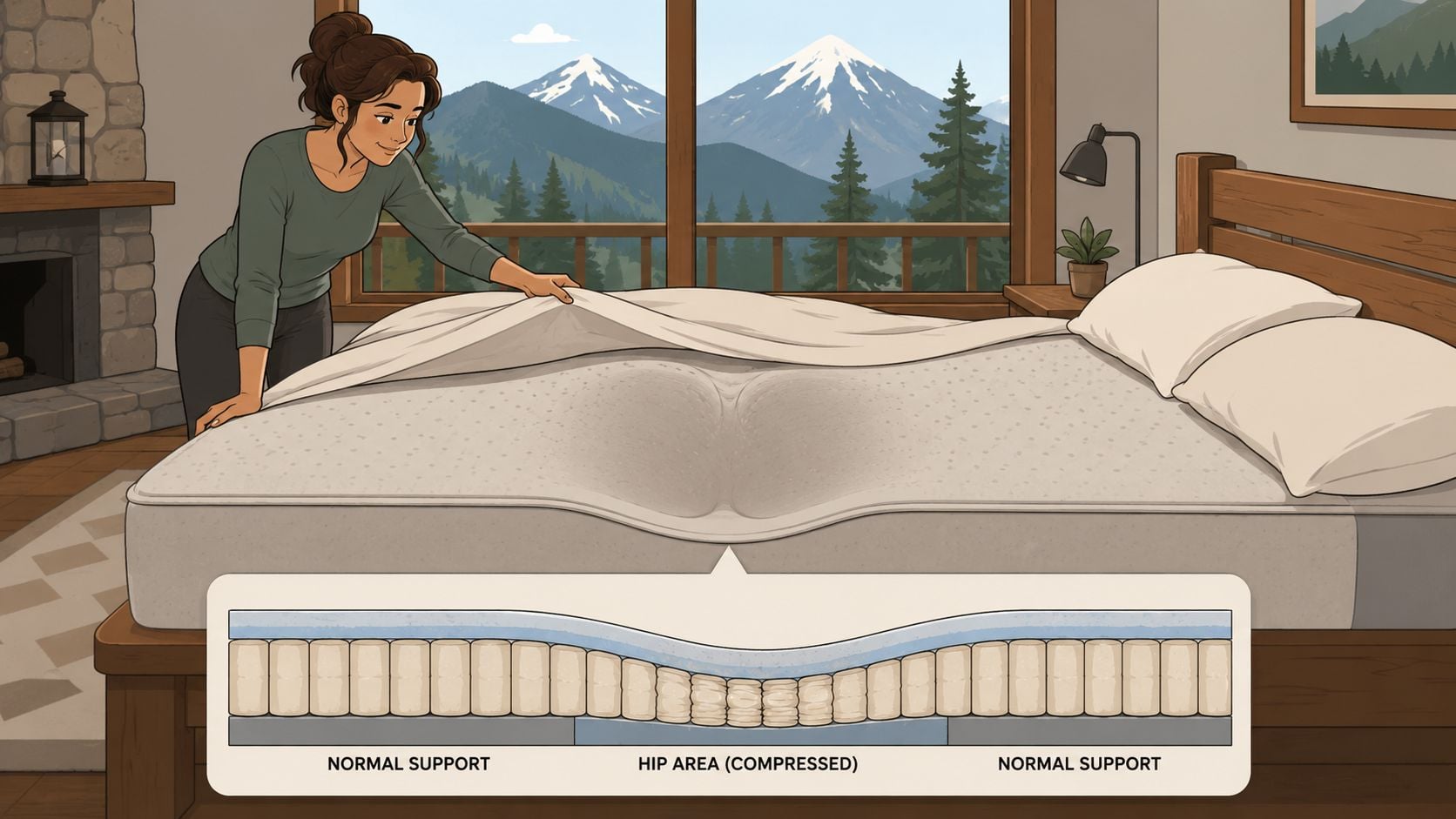
You can strip the sheets and spot it right away, a familiar dip where the hips land, a little extra softness in the middle, maybe a frame that feels more lopsided than it used to. In a Ruidoso bedroom, that moment usually leads to the same question, is the mattress worn out, or does it just need a simple reset?
For a lot of beds, the answer is rotation, not replacement. How to rotate mattress care is one of the easiest habits to overlook, yet it often does the most to spread out compression, especially in homes where the same side of the bed gets used every night.
Why Rotating Your Mattress Matters More Than You Think
A homeowner in Ruidoso notices the same thing after ski season or cabin cleanup, the mattress still looks fine at the edges, but one spot near the hip feels lower. That low spot usually does not appear overnight. It builds because the same body weight keeps compressing the same comfort layers in the same place, and dry mountain air does not stop that from happening.
Rotation helps move that pressure around. Most modern mattresses are meant to be rotated 180 degrees, with the head becoming the foot, so the same section is not always carrying the heaviest load. On one-sided beds, that habit helps spread out wear across foam, hybrid, and latex builds, which is why the details in a detailed mattress rotation guide usually start with the mattress type, not a fixed calendar rule.
The first thing a Sleep Pro checks
When someone walks in complaining about a dip, the first question is often whether the mattress has been rotated on schedule. That is because a visible impression can come from ordinary use before it turns into a replacement problem. A mattress can look tidy on top and still be carrying most of the load in one center lane, the same way a cabin doorway shows more wear where everyone steps through.
Practical rule: If the bed is still structurally sound, rotation is usually the cheapest way to buy back more even support.
That matters in a mountain town like Ruidoso, where cabins, second homes, and guest rooms often sit unused for stretches and then get heavy use all at once. A mattress that does not get regular attention can break in unevenly faster than people expect, especially heavy hybrid beds that stay under the same pressure points night after night. Rotation will not fix a failed bed, but it often helps keep a good one comfortable longer.
Rotate or Flip: What Your Mattress Wants
Most confusion starts with those two words. Rotation means turning the mattress 180 degrees so the head becomes the foot. Flipping means turning it upside down so the top surface becomes the bottom surface, and that only works on mattresses built to be used on both sides. What memory foam is built to do
Modern one-sided mattresses usually have a comfort system on top and a support core underneath. The top layer is built for pressure relief and spinal alignment, while the lower section provides structure. If a one-sided pillow-top gets flipped, the design gets reversed, and the sleeper ends up on the wrong side of the build.
Quick cues that usually tell the story
A mattress is probably designed to be rotated, not flipped, if it has:
- A pillow-top or clearly padded top, which usually marks one sleeping surface.
- A finished bottom panel, often with labels or a non-sleep surface.
- No matching comfort layer on both sides, which is common in modern foam and hybrid construction.
A true two-sided mattress is less common, but it does exist. It is usually built to feel usable on both surfaces, sometimes with handles and a more symmetrical profile.
Most modern beds reward rotation, not flipping, because the comfort layers are layered for one direction of use.
That is why mattress type matters before anyone tries to lift a corner. A quick look at the seams, tags, and top padding often tells you more than guesswork ever will. In Ruidoso, that matters even more because dry mountain air can make fabrics feel crisp and cabin beds often sit unused before they get heavy use again. A mattress that looks simple from the outside may still have a very specific build underneath, so checking the construction first saves work and prevents avoidable damage.
A Calm Room-by-Room Rotation Workflow
The smoothest rotation starts before the mattress moves at all. Strip the bed completely, take off the protector, and clear a little breathing room around the frame so nothing catches on a corner or rail. Vacuuming the exposed surface and seams while the bed is open is smart too, especially in Ruidoso's dry mountain air, where cover fabrics and dust settle can show up faster than people expect.
Make the pivot, not the struggle
After the room is clear, slide or lift just enough to create a pivot point. The goal isn't a dead-lift, it's a controlled turn, especially on queen, king, or heavier hybrid beds.
A calm rotation usually looks like this:
- Remove bedding and accessories, so nothing pulls or tears during the move.
- Clear nearby furniture and breakables, giving the mattress room to swing.
- Shift the mattress slightly off center, which creates space for the turn.
- Turn it 180 degrees, so the head end becomes the foot end.
- Re-center it on the foundation, so the load sits evenly again.
If the mattress lands crooked, it can wear unevenly on the base. A bed that sits off-center may also feel less stable the next time somebody lies down.
Two people make the process safer, especially on larger sizes. That's less about strength and more about control, because one person can guide while the other keeps the mattress from snagging on the frame.
How Often to Rotate Based on Sleeper Profile
The right schedule depends on who sleeps there and how long the mattress has been in service. A new mattress usually benefits from more frequent attention during the first year, then the pace can ease off once the materials have settled. Single sleepers often create one main wear zone, while couples often create more than one.
Recommended Rotation Frequency by Sleeper Profile
| Sleeper Profile | Mattress Age | Recommended Rotation |
|---|---|---|
| New mattress | First year | Every 3 months |
| Single sleeper | After break-in | Every 6 months |
| Couples | After break-in | Every 3 to 6 months |
| Older innerspring | Ongoing use | 1 to 2 times per year |
That schedule lines up with common modern care guidance, which places many beds in the 3 to 6 month range, with some experts suggesting quarterly rotation in the first few years and twice yearly later on. For single-sided mattresses, the basic rule stays the same, rotate them on a steady cadence and keep an eye out for visible impressions. Rotation schedule basics
The sleeper profile matters because the wear pattern matters. A guest room in Alto with light use won't behave like a master bedroom in Lincoln County where two people sleep on the same mattress every night. Sleep style and mattress choice
Safe Handling for Heavy Hybrid and Premium Beds
A queen hybrid in a small cabin bedroom can turn into a awkward job fast. The mattress feels too heavy to lift cleanly, the headboard leaves barely any clearance, and the frame lip wants to catch the corner right when the turn starts. In that situation, the safest move is a partial-lift pivot, not a full overhead lift.
What the safe move looks like
The mattress gets nudged, tilted just enough to free one edge, then turned while it stays under control. That matters on premium beds, because modern mattresses are often thicker and heavier than older models, and dragging them can stress both the cover and the frame.
A few guardrails help:
- Protect the corners, since those are the first points to snag.
- Watch the foundation lip, especially on tighter frames.
- Use two people for queen and king sizes, because one person can't easily control a heavy turn.
- Stop if the base is fixed or awkward, such as on an adjustable frame that won't move.
If the setup is tight, a neighbor, friend, or professional delivery team may be the better choice. That's especially true when the mattress has no handles or the room layout makes the turn feel forced. White-glove delivery explained
A good rotation leaves no strain marks on the mattress, the frame, or the person doing the work.
Local help matters in Ruidoso, where a heavy bed in a cabin loft or a narrow primary bedroom can be more complicated than the average internet guide suggests.
Common Mistakes That Ruin a Good Mattress
Some of the biggest problems come from trying to be too quick. Dragging the mattress across a wood floor can stress the cover and corners, and letting a king-size bed flop down after a solo lift can bend the frame or scrape the base.
Skipping the foundation check is another easy mistake. If the mattress rotates correctly but the frame is uneven, the wear problem just keeps going. Ignoring visible body impressions is just as risky, because a schedule is only useful if the mattress is still holding its shape.
A mattress protector helps too, because spills, moisture, and grime can shorten the life of the cover and outer materials. Why a mattress protector matters
When Rotation Stops Helping and Replacement Begins
Rotation can help with surface wear, but it can't rebuild a mattress that has lost its structure. If the sag stays in the same place after rotation, if the support feels broken down, or if sleep gets consistently worse, the bed may be at the end of its useful life. Signs it may be time to replace
That's where the Comfort Promise matters, because the fear of choosing wrong is usually what keeps people sleeping on a bad bed too long. A clear replacement decision is better than trying to rescue a mattress that's already failed.
If the mattress still has life, a careful rotation can help it behave more evenly. If it doesn't, replacement becomes the safer, more comfortable move.
Ready to transform your sleep? Visit our Sleep Pros at the Mattress Pro showroom located at 2801 Sudderth Drive, Suite F, in Ruidoso. From luxury brands to budget-friendly solutions, we're here to help you wake up loving your mornings. Browse our collection online or stop by Monday through Saturday. You can also visit Mattress Pro by Miller Waldrop for local guidance, the Low Price Promise, and full-service setup that makes mattress care feel easy from the start.