

Pocketed Coil Mattress vs Innerspring: A Ruidoso Guide

A lot of Ruidoso shoppers arrive at the same moment. A couple gets back from a long day outdoors, shoulders tight, lower back talking, one sleeper kicks off the quilt because the room feels warm, and the other wishes the bed felt steadier. Then the old mattress squeaks, ripples, or sags in the middle, and the question shows up.
The question usually isn't just “Do you want springs?” It's Pocketed coil mattress vs innerspring, and the answer depends on how that spring system is built, how it feels under a real body, and how it handles mountain-life sleep in Lincoln County.
For a family business with a 70-year Miller Waldrop legacy, sleep comes first. That's why local shoppers on Sudderth Drive, in Alto, and across Ruidoso often do better with a side-by-side test than a label on a website. Brands like Tempur-Pedic, Sealy, Stearns & Foster, and Sherwood all approach support differently, and the right fit comes from matching construction to the sleeper, not from chasing a buzzword.
What Ruidoso Sleepers Are Really Choosing Between
A traditional innerspring and a pocketed coil mattress both use steel coils for support, but they don't behave the same way.
A traditional innerspring usually uses connected coils. Those coils may be Bonnell style or part of a continuous-wire unit, but the big idea is simple. When one part moves, the system tends to react together.
A pocketed coil mattress uses individually wrapped springs. Each coil sits in its own fabric sleeve, so it can compress more independently than a connected coil unit. That difference is the heart of the decision for many couples, side sleepers, and people who wake when a partner turns over.
Why this matters in Ruidoso
Mountain living changes what shoppers care about. Dry air can make some sleepers more aware of heat retention in thick comfort layers. Active days can leave hips, shoulders, and lower backs asking for better pressure relief. Cabin-style bedrooms and guest rooms often need a mattress that works for more than one type of sleeper.
Common showroom questions usually sound like this:
- “Will I feel my partner move?” That matters in shared bedrooms where one person gets up early.
- “Will it stay cool enough?” In Ruidoso, airflow matters, but so do the foams and fabrics above the coils.
- “Will it support my back?” Hikers, skiers, and anyone spending long days on their feet often focus on lumbar support first.
- “Is this for the primary bedroom or a guest room?” A vacation cabin may need broad comfort and easier value math.
Simple rule: The coil label tells only part of the story. Motion transfer, edge support, surface feel, and comfort layers usually matter more in daily sleep.
Shoppers who want a broader framework for narrowing choices can start with this guide on how to choose a mattress.
How Each Mattress Is Built
Inside, these two mattress types solve support in different ways. For a Ruidoso sleeper, that matters because a bed has to do more than look good on the sales floor. It has to cushion tired shoulders after a hike, stay comfortable through cool nights and dry air, and work for two people sharing a cabin bedroom without every shift turning into a wake-up call.
Traditional innerspring construction
A traditional innerspring uses coils that are linked together into one working unit. Depending on the design, those coils may be connected by wires or arranged so they respond more as a team than as separate parts. The oldest spring mattress patents date back to the 1800s, and the connected-coil approach became common because it was practical to build and gave sleepers that familiar springy, lifted feel.
The simplest way to picture it is a row of sleds tied together. Push down in one spot, and the pull can travel outward. That linked action is why traditional innersprings often feel more uniform across the surface.
Above the coil unit, the top of the mattress is usually more straightforward than many newer builds:
- Quilted padding for a flatter, more classic surface
- Pillow-top or euro-top layers for extra softness at the top
- Less close body contouring than many pocketed-coil hybrids
That construction can make sense for guest rooms, kids' rooms, or sleepers who like a buoyant feel and do not want a mattress that hugs too closely.
Pocketed coil construction
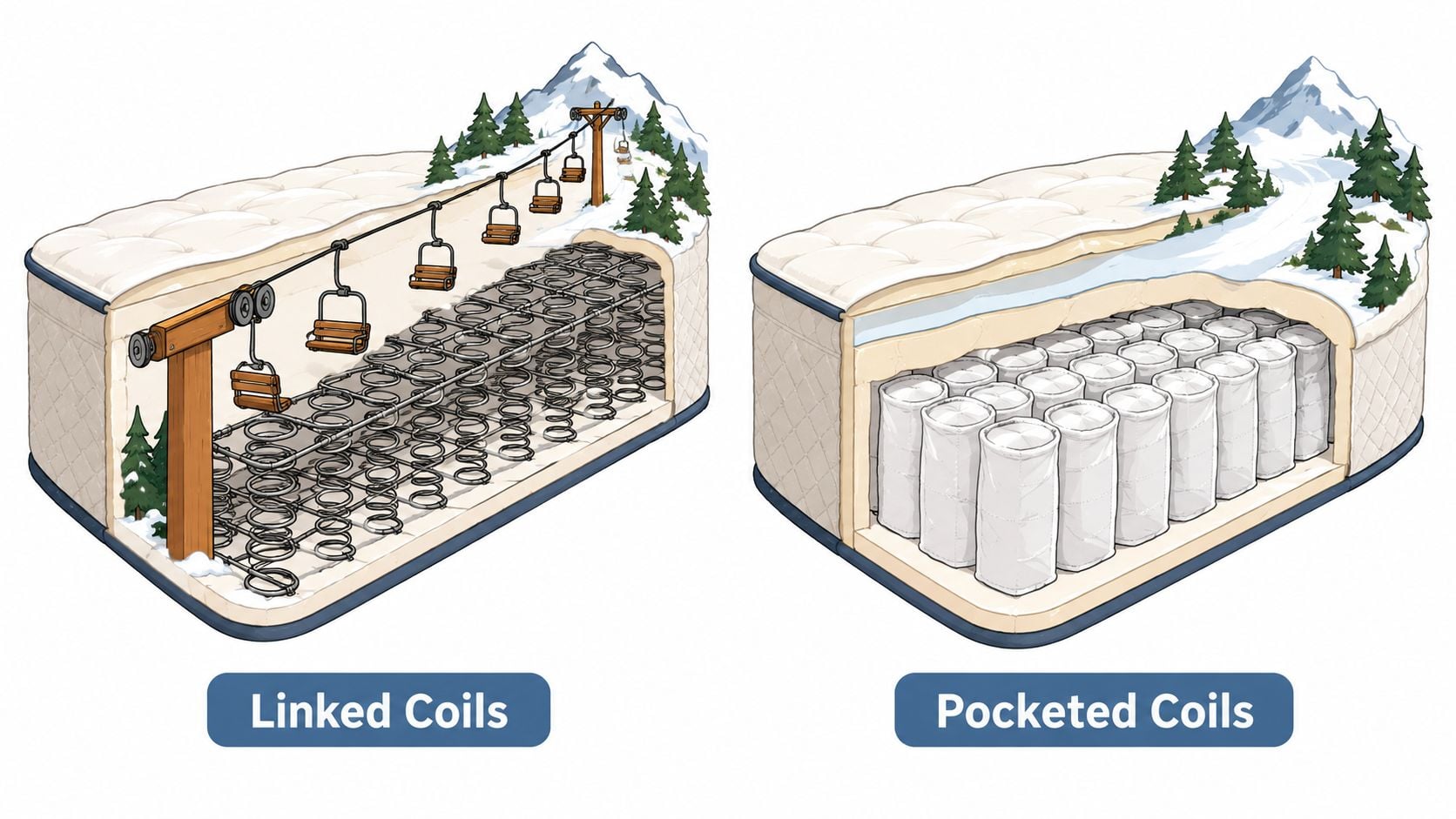
Pocketed coils are built differently. Each spring sits inside its own fabric sleeve, so it can compress with less pull on the coils around it. The wrapped-coil idea dates to the early 1900s and became popular because it gave manufacturers a way to reduce motion spread and shape support more precisely across the bed.
A pocketed coil unit works more like a line of hikers on separate switchbacks than one group tied to the same rope. One person steps down, but the whole line does not jolt. For couples in Ruidoso, especially in smaller cabin-style bedrooms where one partner may get up early for work or a ski day, that independent response is often the first build difference they notice in the showroom.
Pocketed coils also give manufacturers more flexibility. They can use different coil gauges, zoning, and comfort layers above the springs to change how the mattress feels under the shoulders, lumbar area, and hips. That is one reason this coil style shows up so often in modern hybrids. If you are sorting out that category too, this guide on what a hybrid mattress is and how it combines coils with comfort layers helps connect the pieces.
Why the build matters in real bedrooms
Coils create airflow in both mattress types, but the support system still changes how the bed behaves night after night. A connected-coil innerspring usually feels more shared and more consistent from side to side. A pocketed-coil bed usually feels more localized and more adaptive.
That difference matters in mountain homes. A couple in a queen bed may care about reduced pull across the surface. A solo sleeper with sore hips may care more about how much one area can compress without flattening the rest of the mattress. In our Sudderth Drive showroom, that is why we encourage shoppers to lie still, roll once or twice, and notice what happens under the parts of the body that carry the most strain. The label says coil. The build tells the story.
Feel, Motion Isolation, and Cooling Compared
The easiest way to compare these beds is by what sleepers notice first at night and at 2 a.m. The chart below gives the quick version.
Pocketed Coil vs Traditional Innerspring Performance
| Criterion | Pocketed Coil | Traditional Innerspring |
|---|---|---|
| Feel | More contouring, with responsive push-back | More uniform, bouncier, classic spring feel |
| Motion isolation | Stronger motion control for couples | More movement can travel across the bed |
| Edge support | Varies by perimeter design and full build | Often feels sturdier at the edge |
| Cooling | Good airflow through coil core, depends on top layers | Good airflow, often a simpler top build |
Feel under different sleep positions
Side sleepers usually notice the difference first. Pocketed coils tend to compress more locally, so shoulders and hips can settle in without the whole bed reacting the same way. That can help with pressure point relief and spinal alignment when the comfort layers above the coils are matched well.
Traditional innersprings usually feel flatter and more buoyant. Some back and stomach sleepers like that “on top of the bed” sensation because it feels straightforward and supportive.
A side sleeper with sore shoulders often notices contouring first. A back sleeper often notices surface push-back first.
Motion and edge performance
For couples, motion transfer is often the deciding factor. One independent comparison reported pocketed coils transferring about 50 to 70% less motion than Bonnell-style systems, according to this pocketed coil comparison. That lines up with the basic mechanics. Connected coils tend to spread movement. Wrapped coils contain more of it.
A practical example helps. If one partner gets up before sunrise for a run around Grindstone Lake, a connected innerspring is more likely to let that movement travel across the bed. A pocketed coil build is more likely to keep that motion local.
Edge support is more nuanced. Connected innersprings often feel more rigid from edge to edge, which can help in tighter cabin bedrooms where people sit on the side of the bed to lace boots or get dressed. But some pocketed-coil models use strong perimeter reinforcement and perform very well too.
Shoppers comparing partner disturbance can dig deeper with this guide to the best mattress for motion isolation.
Cooling in dry mountain air
Both coil styles can sleep cooler than dense all-foam builds because air moves through the spring unit.
Pocketed coils are widely used in hybrids because they preserve that coil airflow while improving contouring and reducing noise and motion transfer, as described in this motion isolation methodology overview. Still, the final temperature depends heavily on the comfort system above the coils.
A thick, heat-holding top can sleep warmer than a lighter, more breathable one, even if both use the same coil type.
Durability, Price, and Long-Term Value
The better value isn't always the lower ticket. It's the mattress that still supports the sleeper well after regular use in a primary bedroom, guest room, or cabin rental.
Durability and Value Comparison
| Feature | Pocketed Coil | Traditional Innerspring |
|---|---|---|
| Wear pattern | Localized response can reduce chain-reaction movement across the unit | Connected design can show wear that affects a wider area |
| Comfort range | Often broader because of zoning and thicker comfort layers | Often simpler and more straightforward |
| Upfront cost | Usually higher when paired with richer comfort materials | Often easier on the budget at entry level |
| Best value case | Couples, side sleepers, shoppers wanting more refinement | Guest rooms, firmer-feel shoppers, simpler budget buys |
What tends to hold up better
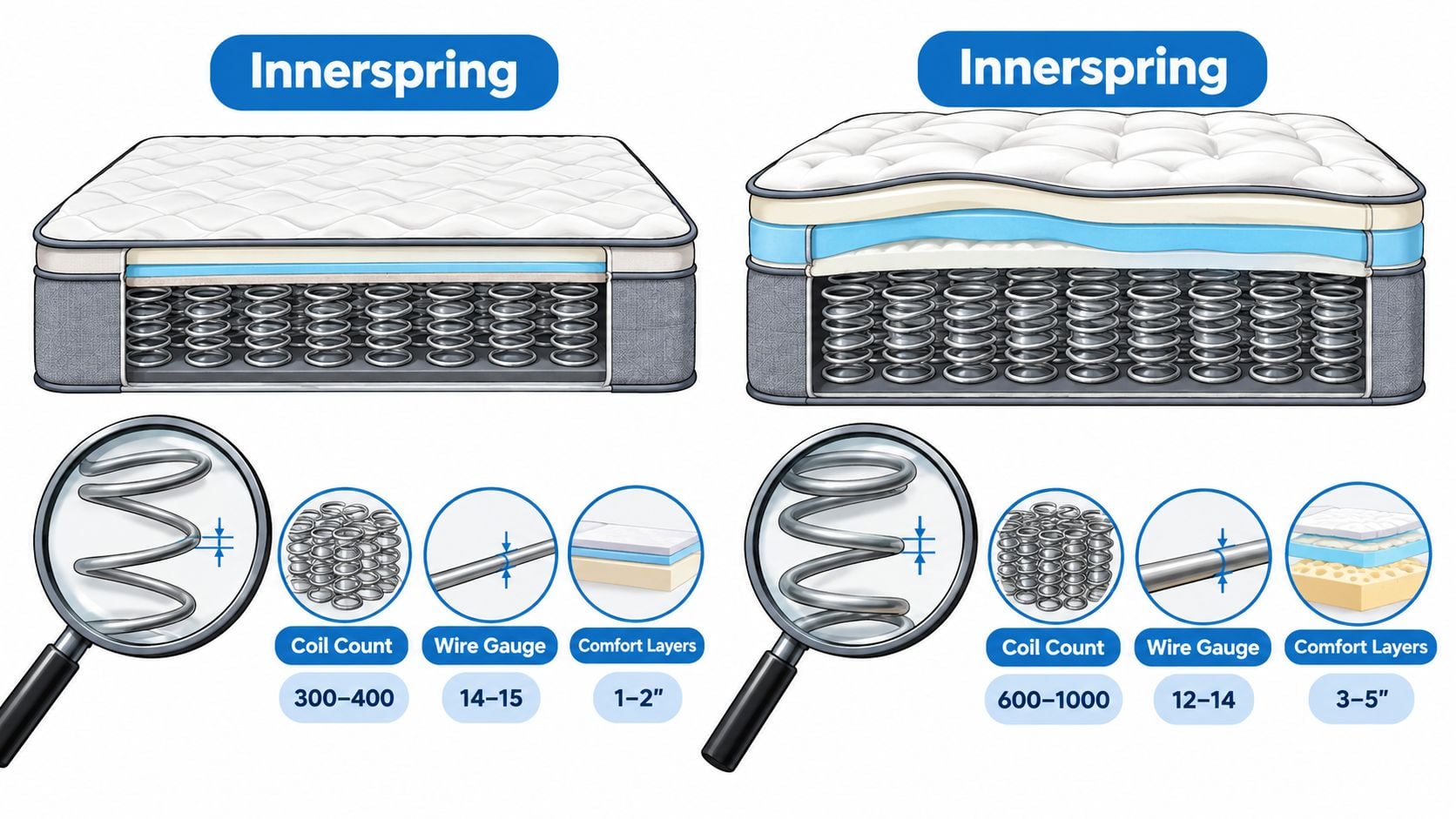
Durability depends on more than the label. Steel quality, coil count, perimeter construction, and the quality of foams above the springs all matter.
Current coverage also points out an important shift. Many recent “innerspring” recommendations are pocketed-coil hybrids, and reviewers describe pocketed coils as the standard in many modern innerspring mattresses, as discussed in this category overview. That's why a shopper can't assume “innerspring” means one simple build anymore.
In practical terms:
- Primary bedroom use often justifies paying more for better motion control, support tuning, and stronger materials.
- Guest room use may favor a simpler build if the bed won't be used nightly.
- Cabin rental use usually calls for broad comfort and edge stability more than highly specialized contouring.
What not to overpay for
A long feature list doesn't always equal better sleep. If the support core is solid and the comfort layers suit the sleeper, that usually matters more than extra branding language or inflated spec talk.
For replacement timing and wear signs, this guide on how long a mattress should last gives a useful baseline.
The smartest upgrade is the one that solves an actual sleep problem. If motion wakes a couple up, pocketed coils can earn the higher cost. If the goal is a straightforward guest bed, a simpler spring build may be enough.
Which Sleeper Each Mattress Suits Best
Different sleepers need different things from coils. A mattress that feels stable and refreshing for one person can feel flat or disruptive to another.
Couples and light sleepers
Shared beds often benefit from pocketed coils because each spring reacts more independently. That helps when one partner rolls over, gets up early, or comes to bed later.
A cabin-style bedroom in Ruidoso often makes this more obvious because sound and movement feel amplified in smaller, quieter spaces.
Side sleepers and pressure relief
Side sleepers usually need better give at the shoulders and hips, plus support under the waist so the spine doesn't bow. Pocketed coils often fit this profile better, especially when paired with a thoughtful comfort layer.
This is one reason many shoppers with shoulder tenderness or hip pressure move away from old connected innersprings.
Those sleepers can compare fit factors in this guide on how to choose a mattress for side sleepers.
Back sleepers, hot sleepers, and heavier builds
Back sleepers often do well on either style if the mattress keeps the midsection from sinking too far. A firmer traditional innerspring can work well here, but so can a zoned pocketed-coil model that gives extra support through the lumbar area.
For hot sleepers in Ruidoso's dry mountain climate, the label matters less than the whole build. Coils promote airflow, but the top materials still decide whether the surface feels breathable or stuffy.
Heavier sleepers should pay close attention to sturdier support components and the full mattress design. Recent review coverage also notes that the more useful question isn't whether pocketed coils are better in general, but which system fits a sleeper's body type, sleep position, and motion sensitivity in a specific build, as discussed in this mattress buying perspective.
Vacation rental owners and broad-appeal comfort
Vacation rental owners in Lincoln County usually need something durable, easy to like, and supportive for a rotating mix of guests.
That often leads to one of two directions:
- A simpler innerspring when budget and basic support come first
- A balanced pocketed-coil hybrid when guest comfort and reduced motion matter more
For shoppers comparing stocked options in person, Mattress Pro by Miller Waldrop offers coil-based models across major comfort styles from Tempur-Pedic, Sealy, Stearns & Foster, and Sherwood, along with the Comfort Promise, Low Price Promise, and Full-Service Delivery with Professional Setup.
Testing Both Options at the Ruidoso Showroom
Specs help, but bodies decide. A short in-person test usually tells more than a long product page.
The three tests that matter most
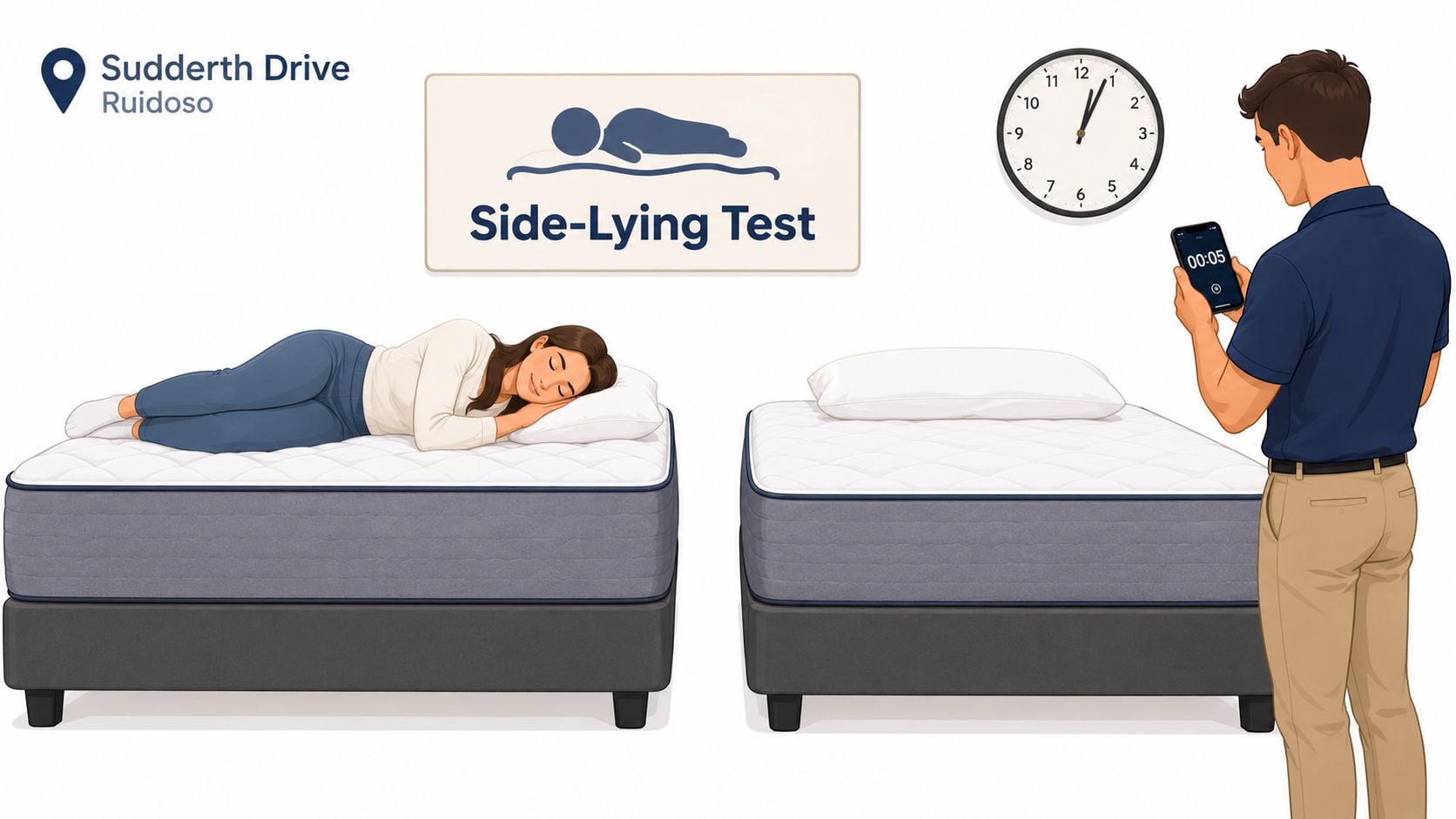
Start with a side-lying test. Stay on the mattress for about five minutes in the actual position used most at home. If the shoulder jams upward or the waist hangs without support, the bed is probably wrong.
Then do a partner-motion test. Have one person roll, sit up, and get out of bed while the other stays still. Pocketed coils often show their advantage here because the movement doesn't spread as easily across the surface.
Finish with a seated edge test. Sit where shoes would usually go on. If the edge collapses too much, the bed may feel less usable in a smaller bedroom.
What to tell the Sleep Pro
A better fitting starts with better details. Helpful information includes:
- Primary sleep position and any secondary position
- Pressure spots, especially shoulders, hips, or lower back
- Partner movement sensitivity
- Body shape and support concerns
- Whether the bed is for nightly use or a guest room
Comfortable clothing helps. A familiar pillow can help too, because neck angle changes the whole test.
Showroom advice: Don't rush a mattress test just because the first minute feels fine. Pressure issues and alignment issues often show up after a few more minutes.
The biggest emotional hurdle for many shoppers is the fear of choosing wrong. That's where the Comfort Promise matters. It gives people a clear path forward if the first pick doesn't feel right after sleeping on it at home.
Local shoppers in Ruidoso, Alto, and nearby mountain communities also benefit from Full-Service Delivery with Professional Setup, which removes the hassle of handling a heavy mattress alone.
Beyond the Coil Label
A Ruidoso shopper can lie on two beds with coils inside and walk away with two completely different impressions. One may feel steady after a long day hiking or working on your feet. The other may look similar on the tag but feel shaky when a partner turns over in a cabin bedroom.
What matters more than the label
The coil category gives you a starting point. The smarter question is how the whole mattress works once real people sleep on it in real local conditions.
In Ruidoso, that often means three practical concerns. Does the bed stay comfortable through cool nights and dry air? Can two people share it without every movement carrying across the surface? Does the edge feel dependable in a tighter room where people sit to put on socks, lace boots, or fold back blankets in the morning?
Those answers come from details you can feel in person:
- Comfort layers that either let shoulders and hips settle or keep the surface feeling flat and stiff
- Zoning that can give the midsection firmer support while allowing lighter areas to sink a bit more naturally
- Perimeter support that affects how usable the full sleep surface feels, especially near the sides
- Overall balance between spring response, pressure relief, and temperature comfort
A better showroom check
At the Sudderth Drive showroom, a quick label read will not tell you enough. A simple body check usually tells you more.
Lie in your normal sleep position long enough for your body to settle. If you are a side sleeper who wakes up with sore shoulders after ski days, notice whether the top layers soften pressure without letting your middle sag. If you sleep warm in the dry mountain climate, pay attention to whether the surface feels airy and easy to settle into rather than close and stuffy.
Then change positions the way you do at home. Roll from your side to your back. Sit on the edge the way you would in a cabin bedroom while getting dressed. If the mattress feels supportive through those everyday movements, the construction is doing its job.
A good mattress choice usually sounds less like, "This one has the right label," and more like, "My back stayed level, the edge felt usable, and my partner did not shake the whole bed." That is the point where the coil type starts to matter less than the full design and the way it fits your life.
Your Next Step to Better Sleep
The fastest path to clarity is to stop reading labels and start lying down on both styles.
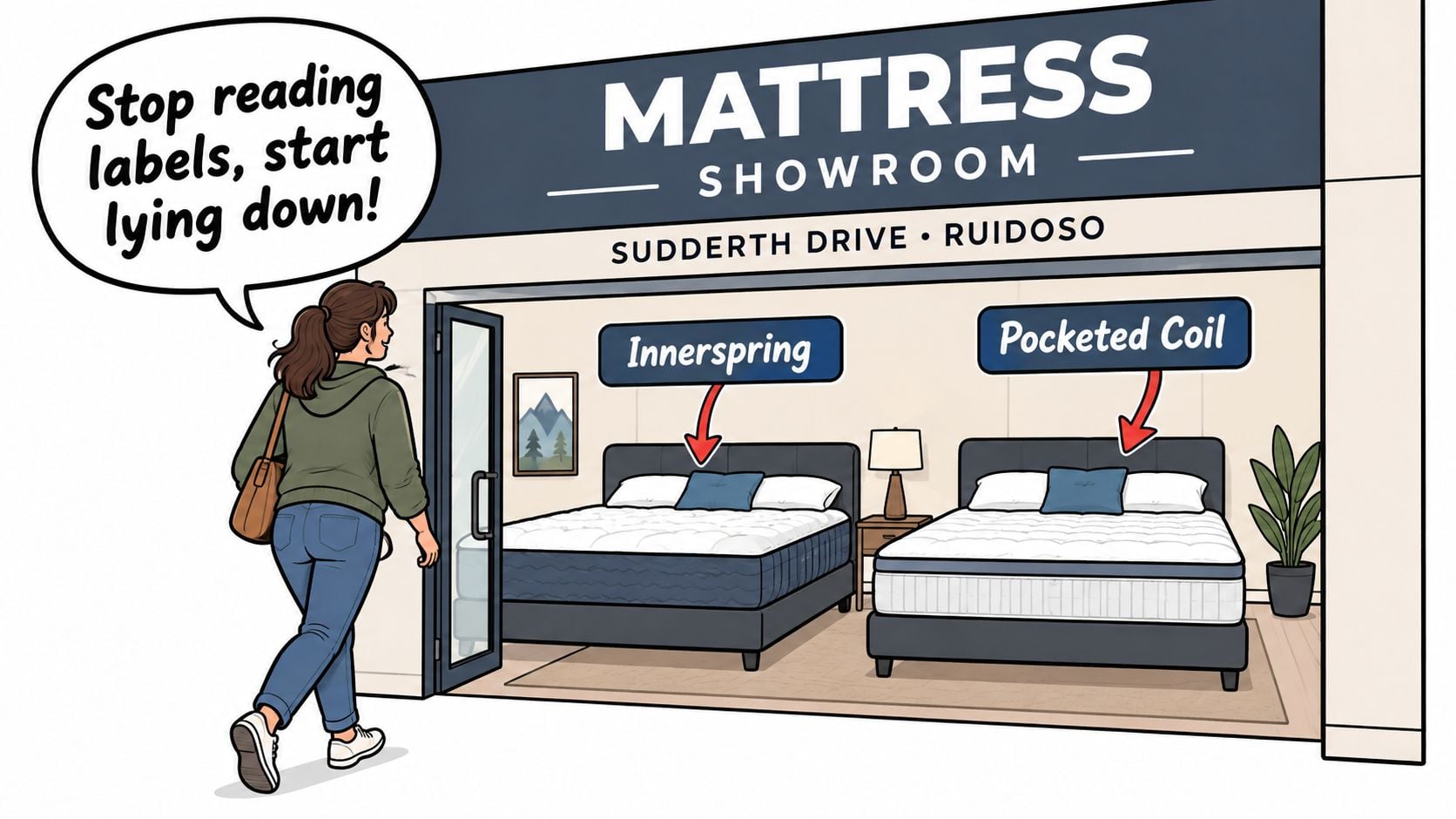
A side-by-side test on Sudderth Drive can quickly sort out what matters most. Some shoppers discover they need stronger motion control for a shared bed. Others learn they prefer a firmer, simpler spring feel for a guest room or back-sleeping setup.
A good buying process in Ruidoso usually looks like this:
- Bring real sleep details. Sleep position, heat concerns, aches, and partner movement all matter.
- Test both coil styles. Spend enough time on each bed for pressure and alignment to show up.
- Compare the full build. Look at comfort layers, edge support, and overall feel, not just the spring category.
- Use the Comfort Promise. The fear of choosing wrong gets smaller when there's a practical next step if the fit isn't right.
- Let local delivery simplify the switch. Professional setup makes the transition easier across Ruidoso, Alto, and the rest of Lincoln County.
For many shoppers, the winning mattress isn't the one with the flashiest label. It's the one that supports the body well, sleeps comfortably in local conditions, and still feels right after the novelty wears off.
Ready to transform sleep? Visit the Sleep Pros at the showroom located at 2801 Sudderth Drive, Suite F, in Ruidoso. From luxury brands to budget-friendly solutions, the goal is simple: help every neighbor wake up loving mornings. Browse the collection online or stop by Monday through Saturday.
For shoppers comparing pocketed coils and traditional innersprings, Mattress Pro by Miller Waldrop offers local guidance, side-by-side testing, and support from Sleep Pros who understand how Ruidoso sleepers live and rest. The showroom carries coil options from Tempur-Pedic, Sealy, Stearns & Foster, and Sherwood, backed by the Comfort Promise, the Low Price Promise, and Full-Service Delivery with Professional Setup so the final choice feels informed, not risky.