

Mattress Comparison Chart: Find Your Perfect Bed in Ruidoso

A lot of Ruidoso shoppers start the same way. They open a few tabs, read a few mattress descriptions, and end up with more confusion than clarity.
One brand calls a bed plush. Another calls a similar feel medium. A third says firm, but once you lie down on it, it doesn't feel firm at all. For couples in Alto, retirees across Lincoln County, and cabin owners replacing a guest bed, that kind of guesswork gets expensive fast.
A good mattress comparison chart cuts through that noise. It gives you one practical way to compare comfort, support, motion control, and value before you commit to a mattress you'll sleep on every night.
Why a Mattress Comparison Chart Changes Everything
The biggest problem in mattress shopping isn't lack of options. It's too many options described in inconsistent ways.
That's why a mattress comparison chart matters. It replaces marketing language with a shared framework. Instead of chasing labels like soft, luxury firm, or ultra-supportive, you can compare beds side by side using the same standards.
The chart turns guessing into decision-making
A useful mattress comparison chart usually starts with a standardized firmness scale. Major review organizations commonly use 1 to 10, where 1 is extremely soft and 10 is extra firm. Very few mattresses sit at either extreme, and most fall between 4 and 7. Sleep Foundation also connects those ranges to sleeper needs. 2 to 3 tends to suit side sleepers under 130 pounds, 5 is a medium balance point, 6 is medium-firm, and 7 to 8 is often preferred by sleepers over 230 pounds according to Sleep Foundation's firmness guide.
That shared scale is what keeps comparisons honest.
A couple can walk into a showroom on Sudderth Drive thinking they need "something supportive," but that phrase alone doesn't tell much. One person may need better pressure relief at the shoulders. The other may need stronger edge support and less motion transfer. The chart separates those needs.
Why this matters in Ruidoso
Ruidoso shoppers often aren't buying for a single simple use case. One household may need a primary bedroom mattress, a guest-room mattress for family visits, and a durable option for a vacation property.
A chart helps organize those decisions by showing where each mattress fits best. It also helps compare broad categories, not just single models.
- Foam choices often appeal to sleepers who want closer contouring.
- Hybrid designs usually draw people who want a mix of cushioning and pushback.
- Traditional innerspring feels still matter for sleepers who prefer easier movement on the bed.
A mattress comparison chart doesn't tell you what to buy. It shows you how to buy without relying on guesswork.
That's the advantage. It gives you a calm, practical way to narrow the field before comfort testing begins.
Understanding the Comparison Criteria That Actually Matter
A mattress comparison chart is only helpful if the columns mean something in real life. The right criteria should connect directly to how you sleep, how you feel in the morning, and how the mattress holds up over time.
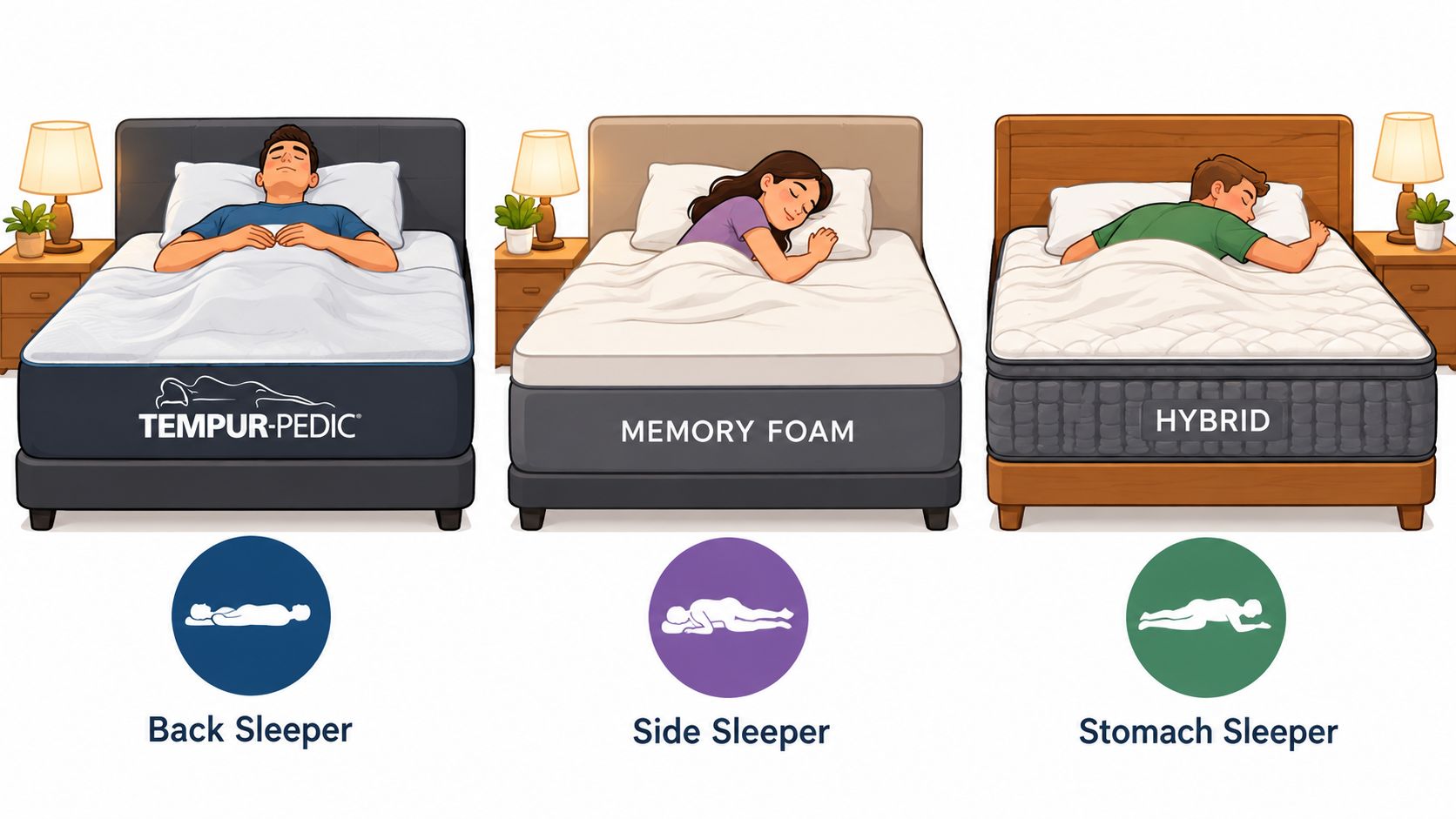
The performance categories worth paying attention to
Independent comparison charts commonly focus on pressure relief, motion isolation, edge support, and temperature control because those measures show how a bed performs for side sleepers, couples, and people who use the full sleep surface. Sleep Foundation defines motion isolation as how well a mattress prevents movement transfer, and edge support as how well the perimeter resists sagging under weight or pressure in its guide to what matters most when comparing mattresses.
Those four are the core of any chart worth reading.
How each column affects real sleep
Firmness
Firmness tells you how hard or soft the surface feels at first contact. It matters, but it's only the starting point.
Two mattresses with the same firmness rating can feel very different because the materials and layer design change how your body settles in.
Support
Support is what keeps the spine from dropping out of alignment overnight. A mattress can feel soft on top and still support well underneath.
This is one reason shoppers benefit from comparing actual comfort categories instead of relying on a simple showroom label. A guide to mattress comfort levels can help translate that language before a store visit.
Pressure relief
Pressure relief matters most at the shoulders, hips, and lower back. Side sleepers usually notice this first, but active sleepers with sore joints notice it too.
Memory foam and foam-forward hybrids often do well here because they spread body weight more evenly across the surface.
Motion isolation
If one partner turns frequently, gets up earlier, or sleeps lightly, motion isolation becomes a major quality-of-life issue. Some beds absorb movement well. Others let every shift travel across the mattress.
Edge support
Edge support matters more than many think. It affects how secure the mattress feels when sitting, how usable the full width feels, and how stable the side of the bed remains over time.
The practical tie-breakers
After comfort and support, these factors often settle the decision:
- Temperature control helps sleepers who run warm, especially in Ruidoso homes where dry mountain air may still call for a cooler sleep surface.
- Durability outlook gives a sense of how the materials are likely to age.
- Warranty and trial terms reduce risk when comfort takes time to confirm.
- Price matters, but only in context of mattress type and expected use.
Practical rule: If a chart only shows firmness and price, it leaves out the features that usually decide whether a mattress works after the first week.
Our Mattress Comparison Chart Side by Side
Most shoppers don't need a giant spreadsheet. They need a short, honest chart they can scan in under a minute.
The chart below compares common mattress directions found in major brands carried locally, including Tempur-Pedic, Sealy, Stearns & Foster, and Sherwood. It's designed to answer the question that comes up most often: which type of bed fits the way this person sleeps?
Mattress Comparison Chart
| Brand & Model | Firmness | Support Type | Best For | Price Range |
|---|---|---|---|---|
| Tempur-Pedic memory foam model | Soft to medium-firm, depending on model | Foam support core with contouring comfort layers | Pressure relief, side sleepers, couples wanting lower motion transfer | Premium |
| Sealy hybrid model | Medium to medium-firm | Coil support with foam comfort layers | Back sleepers, combination sleepers, shoppers wanting balance | Mid to premium |
| Stearns & Foster innerspring or hybrid model | Medium to firm, depending on model | Coil-based support with comfort-focused top layers | Shoppers wanting a luxury feel, stronger edge support, easier movement | Premium |
| Sherwood foam or hybrid model | Medium to firm, depending on model | Foam or coil-and-foam hybrid support | Value-focused households, guest rooms, broad comfort appeal | Budget to mid-range |
How to read the chart without overthinking it
Start with the Best For column, not the brand name. That keeps the process grounded in your body and sleep habits instead of advertising.
Then compare firmness with support type. A medium-firm hybrid and a medium-firm foam mattress may share a label, but they won't feel the same once weight settles into the top layers.
For shoppers deciding between traditional coils and deeper contouring, this overview of innerspring vs memory foam mattresses can make the differences easier to spot before testing beds in person.
What usually works for the widest range of sleepers
Sleep research regularly points toward the middle of the firmness scale. A long-term review found that medium-firm mattresses tend to outperform very soft or very firm surfaces for many sleepers, with better pressure distribution, improved sleep quality, reduced morning stiffness, and lower low-back pain according to this review of mattress firmness and sleep outcomes.
That doesn't mean everyone should buy the same bed. It means the middle ground often gives the best starting point.
No single mattress wins every category. The right choice depends on sleep position, body type, sensitivity to pressure points, and whether one person or two people have to be happy with it.
What works and what usually disappoints
A few patterns show up again and again in real mattress decisions:
- What works for couples often includes good motion control and dependable perimeter support.
- What works for active sleepers is usually a bed that cushions tired joints without letting the hips sink too far.
- What disappoints is choosing only by sale tag, then discovering the feel doesn't match the sleeper's body or habits.
That's why a chart should narrow choices, not make the final choice by itself. The chart gives structure. The final decision still comes from matching the mattress to the person.
How Brand Profiles Fit Different Sleepers
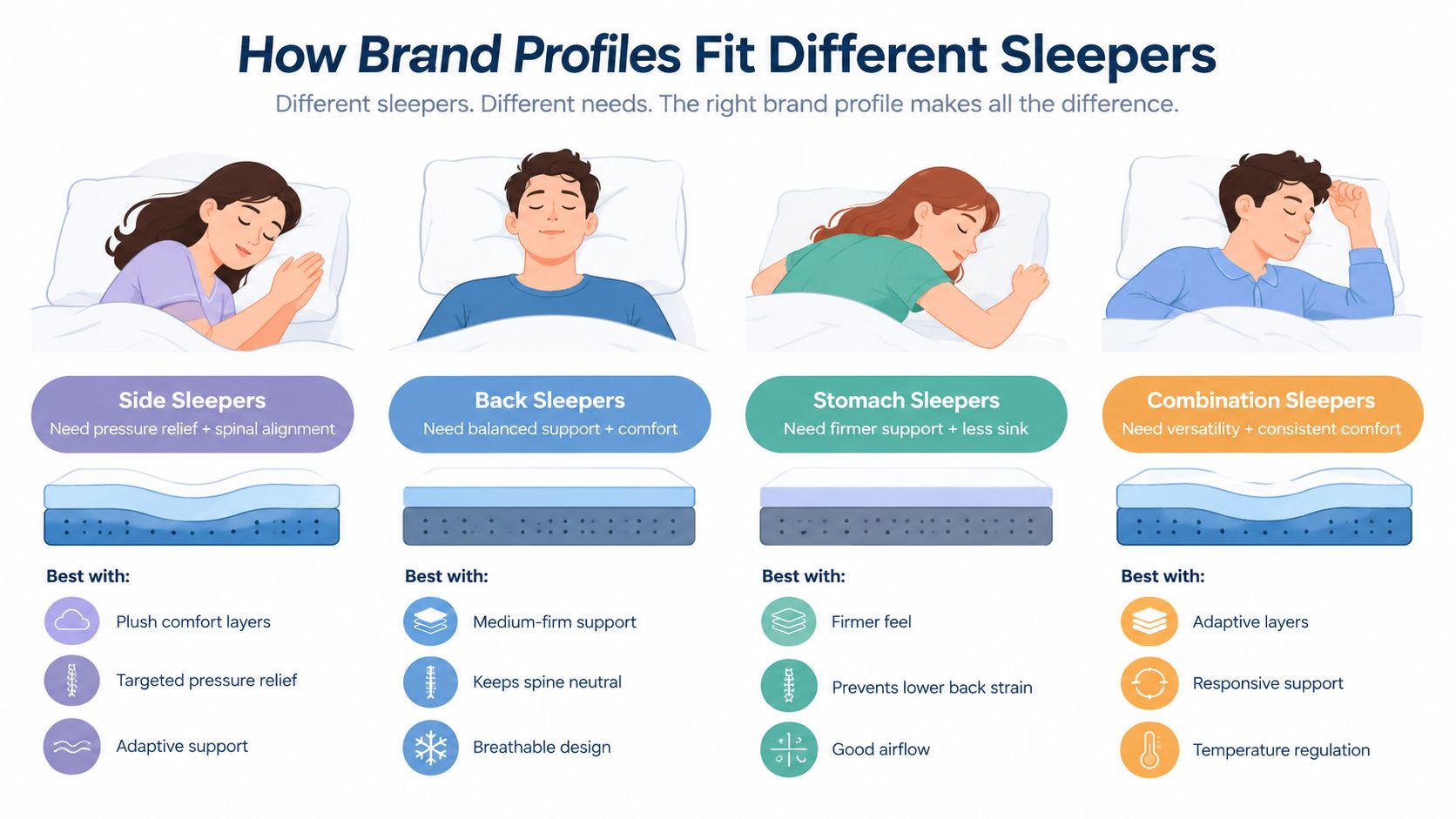
A comparison chart gives the outline. Brand personality fills in the texture.
Tempur-Pedic, Sealy, Stearns & Foster, and Sherwood each serve a different kind of sleeper. None is right for everyone. Each has a lane where it tends to make more sense.
Tempur-Pedic
Tempur-Pedic usually speaks to sleepers who want close contouring and steadier pressure relief. The foam response can cushion shoulders and hips in a way many side sleepers and people with joint discomfort appreciate.
The trade-off is feel. Some sleepers love the deeper cradle. Others prefer a more buoyant surface that's easier to move across. Tempur-Pedic often makes the most sense when pressure relief and motion control matter more than bounce.
Sealy
Sealy tends to fit shoppers who want range. The lineup often gives a choice between traditional support, hybrid balance, and several comfort feels.
That flexibility matters in households where one person wants cushioning and the other wants a sturdier feel. For many back and combination sleepers, Sealy sits in the practical middle. A closer look at hybrid mattress brands helps explain why that coil-and-foam blend appeals to so many shoppers.
Stearns & Foster
Stearns & Foster usually attracts sleepers who want a more refined finish and a more substantial surface feel. These mattresses often appeal to people who like support under the body but still want a refined comfort layer up top.
They can be a strong fit for primary bedrooms where long-term nightly comfort matters more than chasing the lowest price.
Sherwood
Sherwood often fits value-minded shoppers well. It can make sense for guest rooms, younger households, vacation properties, or buyers who want a comfortable mattress without moving into a premium price tier.
A budget-friendly mattress still has to match the sleeper. Lower cost only helps if the comfort and support are right.
A smart shopper doesn't ask which brand is the winner. A smart shopper asks which brand's feel and construction fit the room, the sleeper, and the budget.
When replacement timing matters more than brand loyalty
Many people start shopping too late. They've already been sleeping on sagging materials for longer than they should.
Most mattresses should be replaced every 6 to 8 years, and another Sleep Foundation guide says the average mattress lasts 7 to 10 years. Visible sagging, indentations, wear, or new pain and stiffness are common signs that it's time to replace a mattress according to Sleep Foundation's mattress replacement guidance.
That's the point where even a good brand name can't rescue a worn-out bed.
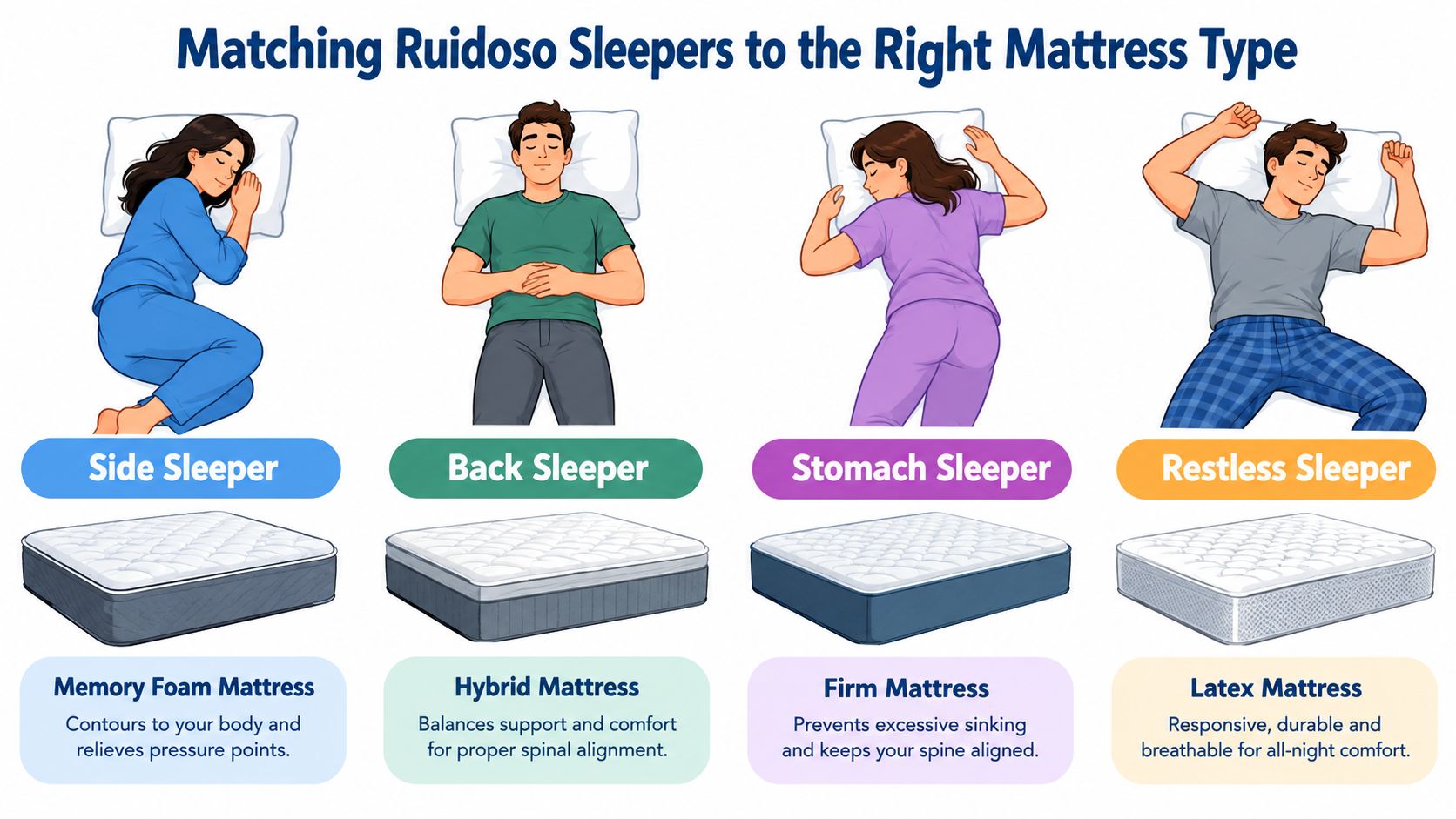
Matching Ruidoso Sleepers to the Right Mattress Type
Ruidoso has its own sleep patterns. People hike, work outdoors, ski, travel up and down the mountain, host family, and furnish cabins that need to please many kinds of guests.
That local reality changes how a mattress comparison chart should be used.
The mountain-active sleeper
For active residents in Ruidoso and Alto, recovery matters. Hips, shoulders, and lower back often need both cushioning and stable support after long days on the trail, jobsite, or slopes.
A medium-firm hybrid is often the practical target here. It tends to give enough contour for tired joints while keeping enough coil support underneath for easier movement and a steadier sleep posture.
The sleeper with back or neck concerns
This sleeper shouldn't shop by softness alone. What matters is whether the mattress keeps the spine in a more neutral position while easing pressure at the contact points.
Construction matters as much as the label. One study found that a progressively firmer top-to-bottom layer structure increased low-pressure areas, reduced high-pressure areas, and lowered pressure indices, showing that comfort comes from build design, not just one surface rating, as noted in this study on mattress layer structure and pressure relief.
That's why targeted designs in pressure-relieving mattresses are often more helpful than choosing the softest bed in the room.
Couples who sleep differently
Couples in Lincoln County often need compromise more than perfection. One partner may sleep hot. The other may wake easily. One may want contouring foam, while the other wants stronger edge support.
The best category here is often one of two directions:
- Foam-forward models for better motion absorption
- Balanced hybrids for a mix of motion control, edge stability, and easier repositioning
The wrong move is buying strictly for the partner who falls asleep fastest. The better move is choosing the bed that reduces disturbance for the lighter sleeper while still supporting the heavier pressure points.
Vacation rental and cabin owners
Guest mattresses have a different job. They need broad comfort appeal, dependable support, and enough durability to handle changing body types from one stay to the next.
For many rental settings, a medium to medium-firm hybrid or supportive foam design is the safest direction. It avoids the extremes that tend to divide guests.
A cabin owner also has to think practically:
- Broad comfort range helps more guests rest well
- Stable edges make the bed feel larger and easier to use
- Simple care and durable materials matter when turnovers are frequent
Local conditions shape comfort choices
Ruidoso's dry mountain air can make some sleepers prefer breathable surfaces and less heat retention. Others want a cozy, contouring feel year-round. That's why a mattress chart should never stop at brand and firmness.
It should connect the sleeper's life to the bed's construction. That's where the chart becomes useful, not just neat.
Making the Purchase Decision with Confidence
By the time a shopper narrows the field, the hardest question usually isn't comfort. It's risk.
People worry about choosing wrong. They worry that the mattress that felt fine for ten minutes won't feel right after ten nights. That concern is reasonable, and it's one reason local buying still matters in a category this personal.
What reduces the risk
Three things matter most when the purchase becomes real:
- A comfort policy that protects the decision
- Clear pricing without online confusion
- Delivery that finishes the job properly
That's where the practical side of local mattress shopping becomes hard to replace.
Why the Comfort Promise matters
The fear of picking the wrong bed stops a lot of people from moving forward. A Comfort Promise addresses that fear directly because it gives the shopper a path if the first choice doesn't feel right after sleeping on it at home.
That matters more than showroom talk. A mattress has to perform in the bedroom, not just under bright lights.
Why local pricing still counts
The global mattress market was valued at about $34.52 billion in 2024, and the U.S. market was projected at $11.57 billion in 2024. The same industry summary notes that consumer spending has nearly tripled over the last 15 years, with one cited jump of 30% between 2014 and 2015. It also reports average prices by construction at about $1,000 for coil mattresses, $1,150 for foam and memory foam, $1,300 for hybrids, and $1,500 for memory foam or latex hybrids in this mattress sales statistics overview.
Those differences are exactly why comparison shopping has to be grounded in type, feel, and use case, not sticker shock alone.
The service piece online shopping often misses
A mattress purchase isn't finished when the order goes through. It's finished when the right bed is set up correctly in the room where it will be used.
Full-Service Delivery with Professional Setup matters in Ruidoso, Alto, and across Lincoln County because many homes and cabins aren't simple drop-off locations. Stairs, tight turns, and older setups can turn delivery day into a headache fast.
For shoppers who want a guided selection process, Mattress Pro by Miller Waldrop provides mattress-buying guidance, Comfort Promise support, Low Price Promise protections, financing options, and professional setup through its local showroom process.
Buying locally doesn't guarantee a perfect mattress. It does give the shopper better odds of making a well-supported decision and getting help if the first pick needs adjustment.
Ready to transform your sleep? Visit our Sleep Pros at the Mattress Pro showroom located at 2801 Sudderth Drive, Suite F, in Ruidoso. From luxury brands to budget-friendly solutions, we're here to help you wake up loving your mornings. Browse our collection online or stop by Monday through Saturday.
Frequently Asked Questions About Mattress Comparison Charts
How often should a mattress comparison chart be updated
At minimum, it should be reviewed whenever model lines, comfort options, or pricing change. Mattress collections shift regularly, so an old chart can steer shoppers toward outdated assumptions.
Should price be the deciding factor
No. Price should be one column, not the whole decision. The better question is whether the mattress type, feel, and support profile fit the sleeper well enough to make the cost worthwhile.
How long should a trial period be
Long enough for the sleeper to adjust and notice patterns, not just first impressions. A meaningful trial matters because comfort, pressure relief, and partner disturbance often become clear only after several nights of normal use.
A mattress comparison chart works best when real people help interpret it for real sleep habits, and that's exactly what Mattress Pro by Miller Waldrop offers in Ruidoso. Shoppers can compare Tempur-Pedic, Sealy, Stearns & Foster, and Sherwood with guidance shaped by local needs, plus the Comfort Promise, the Low Price Promise, and Full-Service Delivery with Professional Setup. Visit the showroom at 2801 Sudderth Drive, Suite F, and let a Sleep Pro help match the chart to the bed that fits.