

What Is Sleep Hygiene? Habits That Work at Altitude


Sleep hygiene is a set of daily habits and bedroom conditions that support consistent, restorative sleep, not just spending more time in bed. Those habits fall apart when the mattress under you keeps a shoulder, hip, or low back from settling.
You are awake again after a long day in the hills, listening to a heater click on in a cabin near Alto. The air feels thin and dry, the room cooled fast, and a soft dip in the bed has your spine slightly twisted. You already tried going to bed earlier. Extra time in a poor setup rarely fixes the night. Neighbors across Lincoln County run into the same mismatch between a careful routine and a surface that will not hold them still.
What Sleep Hygiene Means and Why It Matters
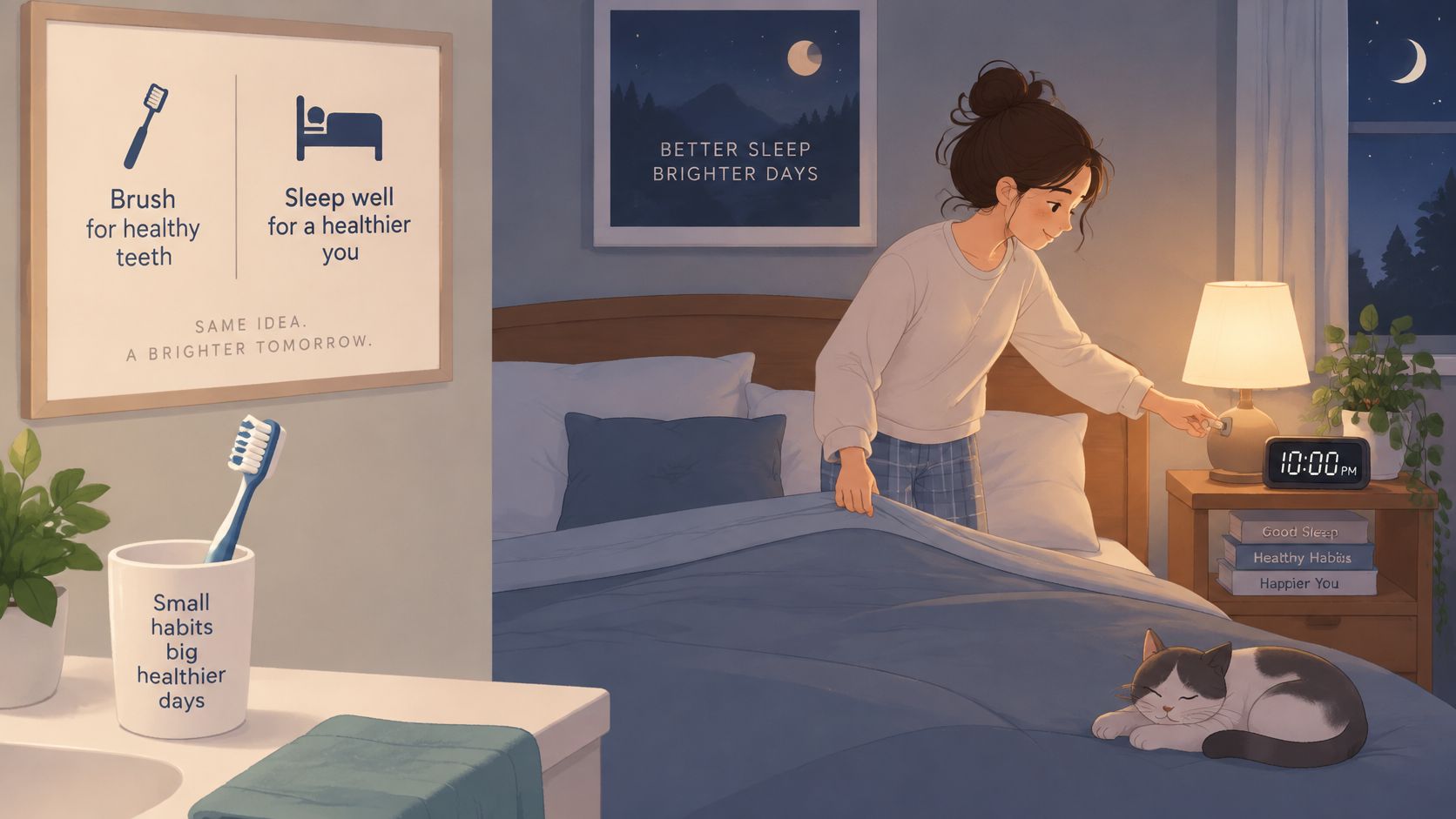
Sleep hygiene is the daily care that keeps sleep working, much as brushing your teeth protects dental health. It is a set of repeatable practices and bedroom conditions, and its value shows up over weeks; one early bedtime after a poor night in a cold cabin rarely resets it.
The American Academy of Sleep Medicine describes sleep hygiene as practices that give the body steady cues: a regular schedule, a consistent wake time, a bed used mainly for sleep, and a room that is quiet, relaxing, and comfortably cool. Those cues lower arousal from a drifting schedule, bright light, and worry about being awake. If you have tried a stricter routine and still wake unrested, the routine may be doing its job while something else, such as altitude, dry air, pain, or an unsupportive mattress, keeps interrupting the night.
The stakes are easy to see in the numbers. The Centers for Disease Control and Prevention notes that adults aged 18 to 60 should generally get at least 7 hours in a 24-hour period, and its adult sleep data show about 30% of adults in Vermont reported fewer than 7 hours in 2022, compared with 46% in Hawaii. Missing that minimum across a community is a public health pattern, and it is one reason sleep hygiene gets discussed so often.
A repeatable routine protects sleep opportunity and quality. Ongoing trouble needs a professional evaluation.
Sleep Pros at Mattress Pro by Miller Waldrop, a 70-year family business on Sudderth Drive, hear this story from neighbors across Lincoln County. A clear picture of what sleep health means makes the next choice, habit or mattress, easier to see. If the bedroom is already dark and quiet, and mornings still feel heavy, a sleep specialist or a mattress consultation may be the more useful next step.
The Core Habits Every Sleep Hygiene Routine Includes
Sleep habits work together, like steady marks on a clock. Use these targets to identify which parts of your routine may need attention.
| Habit | Practical target | Why it helps |
|---|---|---|
| Fixed wake time | Same time every day, weekends included | Anchors the body clock |
| Weekend gap | Within about 1 hour of the weekday schedule | Prevents social jet lag |
| Bedroom temperature | About 65 to 68°F (18 to 20°C) | Supports the body's natural cooling for sleep |
| Screens | Off at least 30 minutes before bed | Reduces bright light and mental stimulation |
| Caffeine | Avoid in the afternoon and evening | Stays active long enough to delay sleep onset |
| Alcohol | Avoid close to bedtime | Causes early sleepiness, then fragmented sleep |
| Large meals | Avoid close to bedtime | Digestion can keep you alert |
| Naps | 20 minutes or less, before 3 p.m. | Protects the sleep pressure you need at bedtime |
| Bed use | Reserve mainly for sleep | Builds a strong link between bed and sleep |
| Awake in bed | Get up after about 20 minutes | Stops frustrated tossing and turning |
Why regularity comes first
A consistent wake time gives your body clock a dependable cue. That can matter more than extending time in bed by an hour one night and shifting your schedule the next. The CDC's sleep guidance emphasizes regular sleep and wake times, while the National Heart, Lung, and Blood Institute suggests keeping the weekend schedule within about one hour of the weekday one.
Start by choosing a wake time you can maintain. Then allow enough time for sleep before it, rather than trying to make up for an irregular week with a late morning in bed. In dry, high-altitude mountain communities, everyday conditions can also affect how restful sleep feels. A steady schedule offers one useful point of consistency while you notice whether other factors are involved.
If you want more guidance on evening habits, read three things to avoid before bedtime. If sleep remains difficult despite a consistent routine, consider whether discomfort or a health concern needs attention.
How Your Bedroom Sets the Stage for Deep Sleep
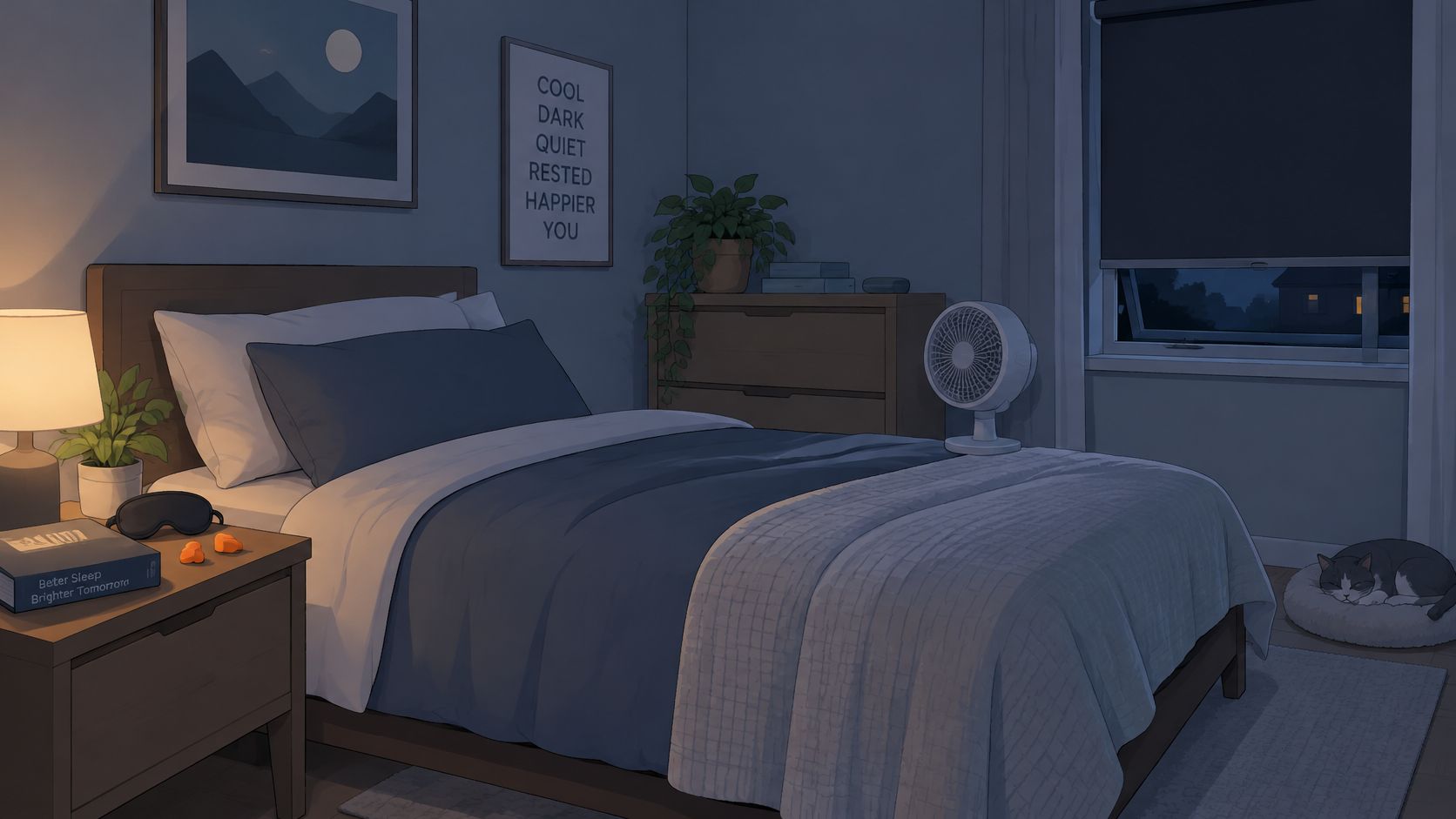
A dark, quiet, cool room is the stage. The mattress is the floor you lie on. Environmental guidance treats temperature, light, noise, meals, exercise, and daylight as linked influences, and it cites about 85% of time in bed spent asleep as a useful sleep-efficiency benchmark. Hours in bed do not equal hours asleep.
Darkness, noise, and temperature
Blackout shades or an eye mask block streetlight and an early mountain dawn. Earplugs or a steady fan cover sudden sounds when the street cannot go quiet. Aim for the cool end of the bedroom range, then use layered bedding so you can add or shed a layer when the night drops. A partner who runs warm can take the lighter layer while you keep a blanket. That compromise beats arguing over one thermostat setting.
What the construction does
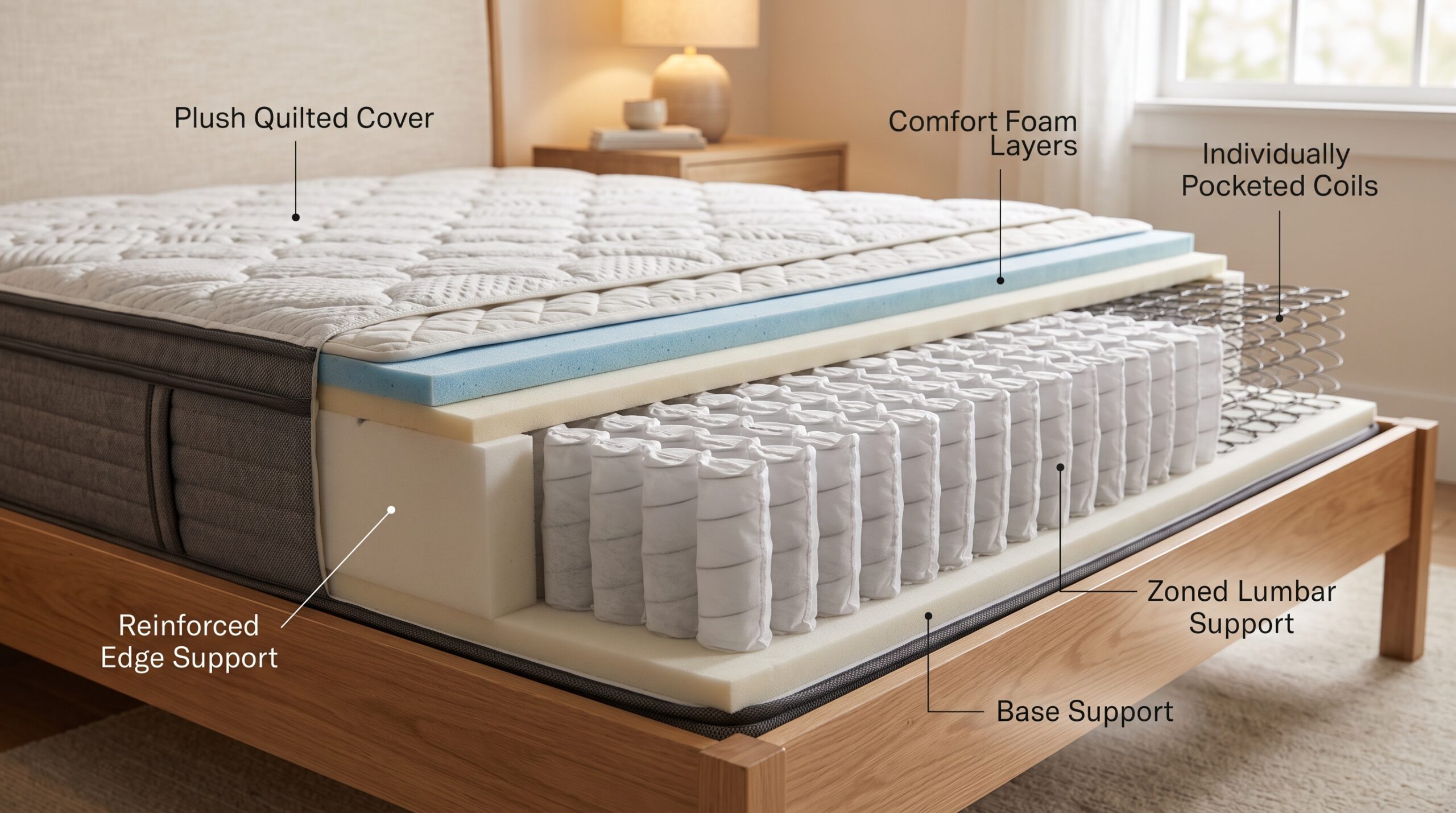
Memory foam conforms and eases pressure at the shoulders and hips, which helps many side sleepers stay still. A hybrid pairs coil support with foam comfort, giving back and stomach sleepers a firmer base under a softer surface. Cooling gel and breathable covers pull heat off the body, useful for warm sleepers in dry mountain air. Tempur-Pedic, Sealy, Stearns & Foster, and Sherwood build these constructions in different feels.
| Construction | How it works | Best for |
|---|---|---|
| Memory foam | Conforms and relieves shoulder and hip pressure | Side sleepers who want a still, cradled feel |
| Hybrid | Coil support paired with foam comfort layers | Back and stomach sleepers who want firmer support with a soft surface |
| Cooling gel and breathable covers | Pull heat away from the body | Warm sleepers, on any base construction |
Lie on your usual side tonight. Notice whether the spine stays in a straight line and whether the hips or shoulders sink too deep. Pressure-point pain on waking means the bed may be undoing otherwise solid habits. Light, temperature, and the mattress have to work as one room, which is the point of a sleep sanctuary built from lighting, temperature, and bedding.
How Mountain Life Shapes Sleep
Dana guides trails in the hills above Ruidoso. She gets home at dusk, still wired, then wakes near 3 a.m. with a dry throat and a chill across her shoulders. The routine on paper looks fine. The mountain night does not follow that paper.
Newcomers and visitors often sleep lighter during the first nights at this elevation. Dry air irritates the nose and throat and pulls moisture overnight. Days run warm, then the room cools fast. Late summer sun delays the wind-down, and an early sunrise can end sleep before it feels finished. A hard day also makes bedtime drift earlier than the clock you meant to keep.
A local read of the night
| Local factor | How it disrupts sleep | Practical adjustment |
|---|---|---|
| Dry mountain air | Dries the nose and throat and wakes you at night | Use a humidifier and drink water earlier in the evening |
| Cold nights after warm days | The room cools unevenly and breaks comfort | Use layered bedding you can add or remove |
| Long summer sunsets | Light delays the wind-down signal | Dim lights early and use blackout shades |
| Early fatigue after active days | Bedtime drifts because you are tired too soon | Keep a fixed wake time and schedule exercise earlier |
| Woodstove or heater dryness | Overnight air becomes very dry | Run a humidifier away from the heat and keep water by the bed |
Dry air plus a hot sleeper is a mattress problem as much as a climate problem. A cover that traps heat will wake you even when the humidifier is doing its job.
Sleep Pros live and work in Ruidoso, so these swings are familiar, not theoretical. If lighter sleep started after a move up the mountain, read how altitude can affect sleep before you blame willpower. Adjust the air and the layers first. If the throat stays raw and the bed still feels uneven, the surface deserves a look alongside the habits.
When Habits Are Not Enough
Three weeks of the same bedtime, a dark room, and you are still awake at 2 a.m. The habit list has already had its turn. The next question is whether the night needs a clinician, a different mattress, or both.
The National Institutes of Health states that continuing sleep difficulty calls for an evaluation, and possibly a sleep study, because it can signal insomnia or sleep apnea. Habit education gives many people a steadier night. When the pattern holds for weeks, book the medical check.
Signs that call for a clinician
- Breathing at night: Loud snoring or gasping during sleep.
- Daytime load: Sleepiness that stays even after a full night in bed.
- Long-running trouble: Weeks of difficulty falling asleep or staying asleep.
- Enough opportunity, poor sleep: The schedule is steady and the night is still broken.
Struggle like this is common. The CDC's National Center for Health Statistics reported that in 2024, 15.4% of U.S. adults had trouble falling asleep most days or every day.
When the bed is the disruptor
In high, dry country, a broken night can come from disordered breathing or from a mattress that fights how you lie. Gasping belongs with a clinician. Pain in the back, neck, or hip on waking, or a surface that feels uneven under you, points to the bed. The mattress works like the ground under a tent. A lumpy surface keeps you shifting no matter how carefully the blankets are arranged.
A Sleep Pro at Mattress Pro by Miller Waldrop starts with your sleep habits and what you want from the night, then helps you choose a mattress. You can visit the showroom and lie on mattresses before you buy. Keep that conversation separate from medical care. Breathing symptoms go to a clinician. Pressure and alignment questions go to someone who can match a bed to how you lie. A closer look at that split is in what causes insomnia and what you can do.
Your Evening Wind-Down and Two-Week Reset
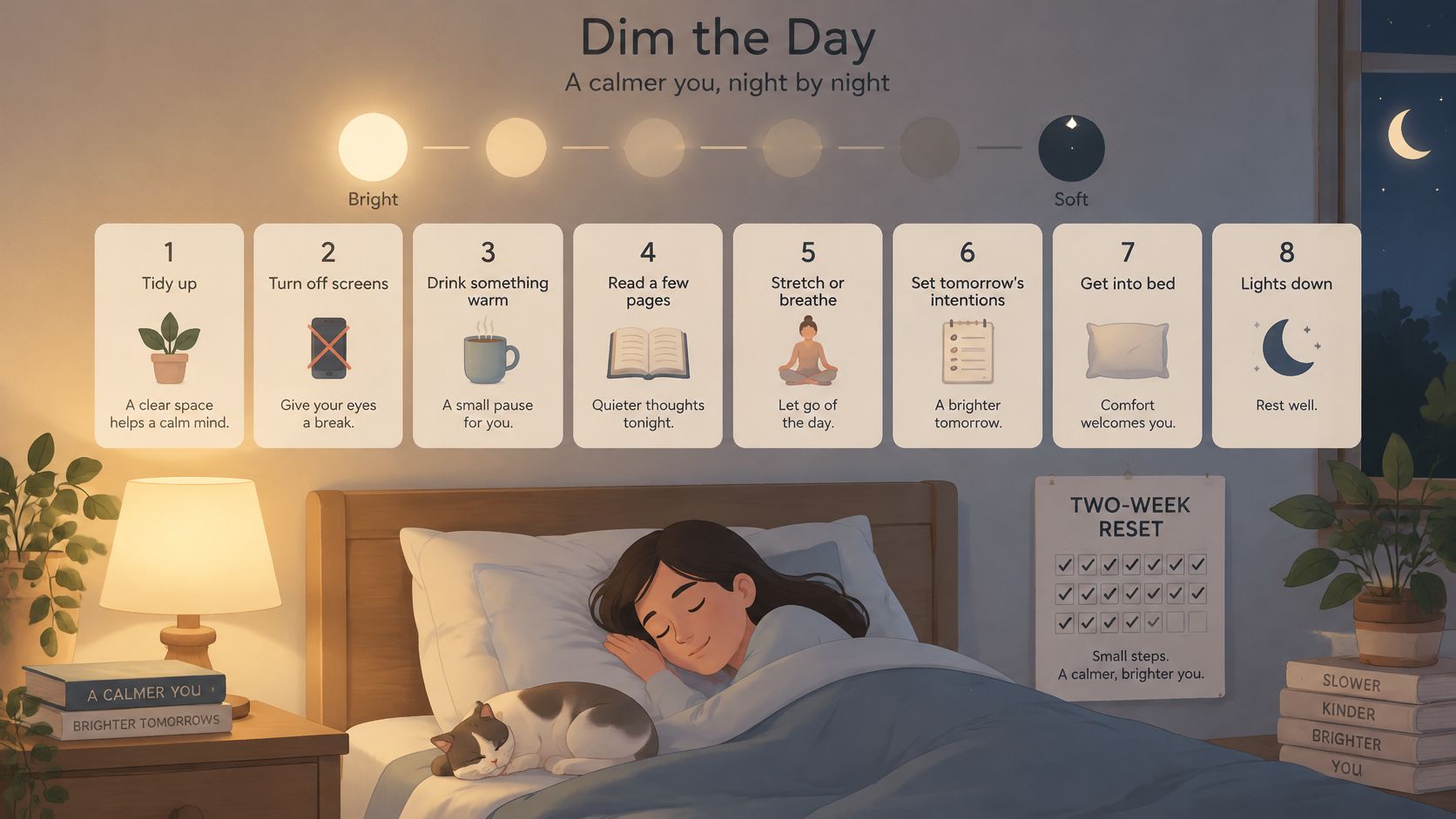
Start with the lights. Up to 90 minutes before bed, dim them and ease the heat down. A cooler, darker room is the first signal your body reads, and the steps after it come easier.
The evening sequence
The habit checklist holds the rules themselves. This is the order to run them in, so each step builds on the last rather than competing for the same half hour.
- Dim the lights and cool the room, up to 90 minutes out.
- Take a warm shower or bath about 90 minutes before bed. The temperature drop afterward helps signal sleep.
- Switch off screens and charge phones outside the bedroom around 30 minutes before bed, so notifications cannot tug you back.
- Read a paper book or stretch gently in dim light about 20 minutes out. Keep the effort easy.
- At bedtime, confirm the room is dark, cool, and quiet, then get in only when you feel sleepy.
Most evenings, three of the five will happen and two will slip. The pattern across a week matters more than any single night.
Two weeks on paper
Week one locks a fixed wake time, checks bedroom temperature, and moves screens out of the last half hour. Week two adds the full wind-down and keeps naps inside the short, early limit from the habit checklist. Each morning, log bedtime, wake time, and a rested score from 1 to 5.
Two weeks is short enough to stay with and long enough to show a direction. If the log improves, keep the same pattern. If it does not, bring the pages to a Sleep Pro. That conversation starts with your sleep habits and what you want from a night before any mattress is suggested, and you can have it in the showroom after testing a few surfaces in person. In dry mountain air, those temperature notes are the most useful line in the log.
Your Sleep Questions Answered
How long should habit changes run before you get help?
Give a focused reset about two weeks, then check the log. If sleep is still broken, or if breathing problems and daytime sleepiness appeared sooner, do not stretch the experiment. Habits and a medical check can happen in the same month.
Does the mattress count as sleep hygiene?
Yes. The bed is part of the environment, next to light and temperature. A surface that twists the spine or creates hot spots raises awakenings even when caffeine, screens, and wake time are in line. In mountain homes, dry air and fast evening cooling make those spots easier to notice. Testing a few feels in person beats guessing from a photo.
Are sleep aids a sign the routine failed?
Not by themselves. The National Center for Health Statistics reported that in 2024, 12.9% of U.S. adults used sleep aids most days or every day to fall or stay asleep. Aids are a medical topic for a clinician. They do not replace a steady schedule or a bed that supports your position.
What if you share the room?
Split the easy parts. One person can use an eye mask, the other a lighter blanket, and both can keep the same wake time within about an hour. If one sleeper has pain and the other does not, the construction may need to favor the person who wakes sore, then fine-tune pillows for the other.
Write the question you keep asking at 2 a.m. If it is about pain, heat, or an uneven bed, a mattress fitting is the useful next step.
Visit the Sleep Pros at 2801 Sudderth Drive, Monday through Saturday, and test a few in person. The Comfort Promise backs the choice, and Mattress Pro by Miller Waldrop has the collection.