

Sleep Hygiene for Adults and the Bed You Need

In 2020, 35% of U.S. adults typically slept fewer than seven hours in a 24-hour period, according to the CDC's adult sleep indicator. That's common, not a personal failure. But if short nights have become the norm, it's worth looking at the routine and the bed that's meant to support it.
Why Adult Sleep Hygiene Changes Your Mornings
Sleep hygiene means the repeatable habits and bedroom conditions that protect enough time for sleep. For most adults, that starts with a regular bedtime and wake time, a cool, quiet, dark room, and fewer evening stimulants. The CDC also reports insufficient sleep among 37% of men and 39% of adults aged 45–64, a reminder that many people are trying to manage the same challenge.

The habits are only half the system
A typical evening might look simple: someone in Ruidoso finishes work late, scrolls in bed, then gets up early for the next day. The problem isn't a lack of discipline. The routine keeps shrinking the sleep opportunity, and the mattress may make it harder to stay asleep even when there's time to rest.
For adults, regularly sleeping six hours or less isn't considered appropriate for optimal health. A usual adult range is seven to nine hours, though individual needs vary. Regular short sleep has been associated with risks that include type 2 diabetes, heart disease, high blood pressure, stroke, weaker metabolism, and low mood.
Sleep hygiene can help remove avoidable barriers, but it can't diagnose sleep apnea or cure chronic insomnia. Persistent trouble falling or staying asleep deserves professional evaluation rather than another round of generic bedtime rules.
The bed is part of the habit
A good schedule can't fix a mattress that sags under the hips, traps heat, or leaves the shoulders sore. Neighbors in Ruidoso, Alto, and Lincoln County may blame stress when an uncomfortable sleep surface is another part of the problem.
The practical approach is to check both sides: protect a regular sleep window, then notice whether the room and mattress let the body use it. Sleep Pro guidance should stay focused on sleep, not on selling a quick fix. The hours, the room, the routine, and the bed all matter.
The Adult Sleep Targets You Can Actually Use
Start with the row that matches your age, then check the habit rows against last night. The table turns sleep hygiene into a few decisions you can make before bedtime.
| Control | Adult target | What it protects |
|---|---|---|
| Ages 18 to 60 | At least 7 hours a night | Immunity, mood, heart health, and metabolism |
| Ages 61 to 64 | 7 to 9 hours | The same health floor with a wider range |
| Age 65 and older | 7 to 8 hours | Restorative sleep without chasing extra time in bed |
| Caffeine | Stop about 8 hours before bed, around 2 p.m. for a 10 p.m. bedtime | Falling asleep; coffee, tea, soda, and chocolate all count |
| Schedule | Same bed and wake time, with a weekend shift of about 1 hour or less | A stable sleep-wake rhythm |
| Light and screens | Quiet hour before bed, devices off at least 30 minutes prior | The signal that night has started |
| The bed | Cool, quiet, dark room and a comfortable mattress and pillow | Staying asleep for the hours you protected |
Match the target to your age
The National Heart, Lung, and Blood Institute's healthy-sleep guidance sets adult targets at at least seven hours for ages 18–60, seven to nine hours for ages 61–64, and seven to eight hours for adults 65 and older. Meeting those targets supports immune function, mood, heart health, and metabolism, and is linked with lower risk of type 2 diabetes, heart disease, high blood pressure, and stroke.
Time in bed isn't the same as continuous, restorative sleep. If you allow enough hours but wake repeatedly or feel unrested, look at the room and sleep surface as well as the clock.
Use clear cutoffs, not guesswork
Caffeine can interfere with sleep for about eight hours after consumption. So if bedtime is 10 p.m., stop around 2 p.m. Coffee and tea count, but so do caffeinated soda and chocolate. If you're sensitive, move the cutoff earlier.
Keep bedtime and wake time steady, including weekends. A weekend shift of about an hour or less helps limit disruption; after travel or an unusual workday, return to the usual timing as soon as practical. Use the hour before bed for quiet, dim activities, and turn screens off at least 30 minutes before lights out.
Your mattress is the final control in the table, not an afterthought. A schedule can set aside the hours, but a bed that's too warm or unsupportive can break them up. For more context on sleep stages and why continuity matters, explore what REM sleep is and why it matters.
Write down tonight's bedtime, the caffeine cutoff eight hours earlier, and whether the mattress lets you stay asleep through that window.
Your Bedroom and Mattress in Dry Mountain Air
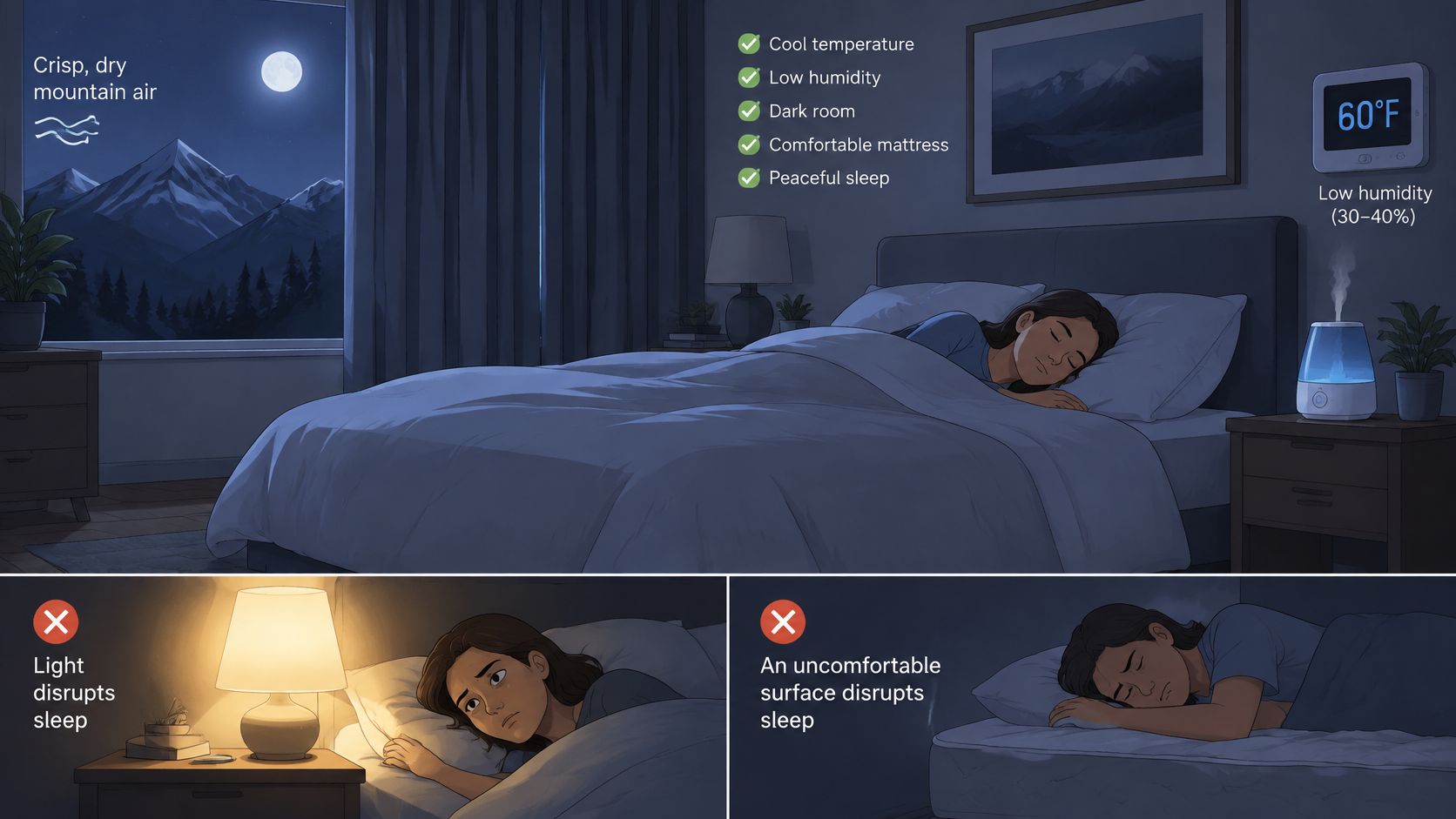
A sleep-friendly room should be cool, quiet, and dark, and the bed itself should feel comfortable. Bright light and an uncomfortable mattress or pillow can interrupt the transition to sleep and make it harder to stay settled, as the NHLBI's sleep brochure explains.
Check the room and the fit
Ruidoso's cool nights and dry mountain air can make comfort issues noticeable. A mattress that holds heat or a pillow that tilts the neck can undo an otherwise steady schedule.
- Block outside light: Use blackout or heavy curtains where early light reaches the bed.
- Move the phone: Charge it away from the mattress so the bed stays a place for sleep.
- Manage dry-air comfort: Try a fan or breathable bedding if the room feels warm or stuffy.
- Level the neck: Choose a pillow height that keeps the neck roughly in line with the spine.
- Check hip support: Notice whether the mattress dips under the hips or leaves a lasting body impression.
Spinal alignment means the spine stays roughly neutral in the sleep position you use most. Side sleepers generally need enough give at the shoulder and hip; back sleepers need support through the lower back; stomach sleepers usually do better with a thinner pillow.
Compare mattress construction
| Type | Core strength | Best fit | Brands to test |
|---|---|---|---|
| Memory foam | Pressure-point relief at shoulders and hips | Side sleepers and people with joint discomfort | Tempur-Pedic |
| Hybrid or innerspring | Coil airflow with edge support and contouring | Couples and hot sleepers | Sealy, Stearns & Foster, Sherwood |
Memory foam contours around the body to ease pressure at the shoulders and hips. Hybrid and innerspring designs combine cushioning with coils, which can support airflow and edge stability. Cooling gel layers and open coil paths may suit a warm sleeper better than adding a heavy topper.
For more on sleep in the mountains, read about how altitude can affect sleep. Mattress Pro by Miller Waldrop's Comfort Promise is designed to ease the fear of picking the wrong bed, while its Low Price Promise and full-service delivery with professional setup offer a local alternative to choosing from a screen alone.
When should you replace your mattress?
A mattress may be the problem if it sags at the hips, leaves you waking hot or achy, or holds a body impression after you've spent a night elsewhere. Ruidoso's cool nights and dry air can make changes in heat and firmness easier to notice, so test a replacement in your usual sleep position before deciding.
When you wake, note whether you feel hot, achy, or as if your body has settled into a lasting dip.
An Evening Routine That Protects Your Sleep Window
Sleep hygiene works best as a set of behavioral and environmental controls, not one bedtime trick. Consistent timing, fewer evening stimulants, and a comfortable room can protect sleep opportunity, but a routine needs to fit real life. The CDC's sleep guidance supports treating these habits as a system.
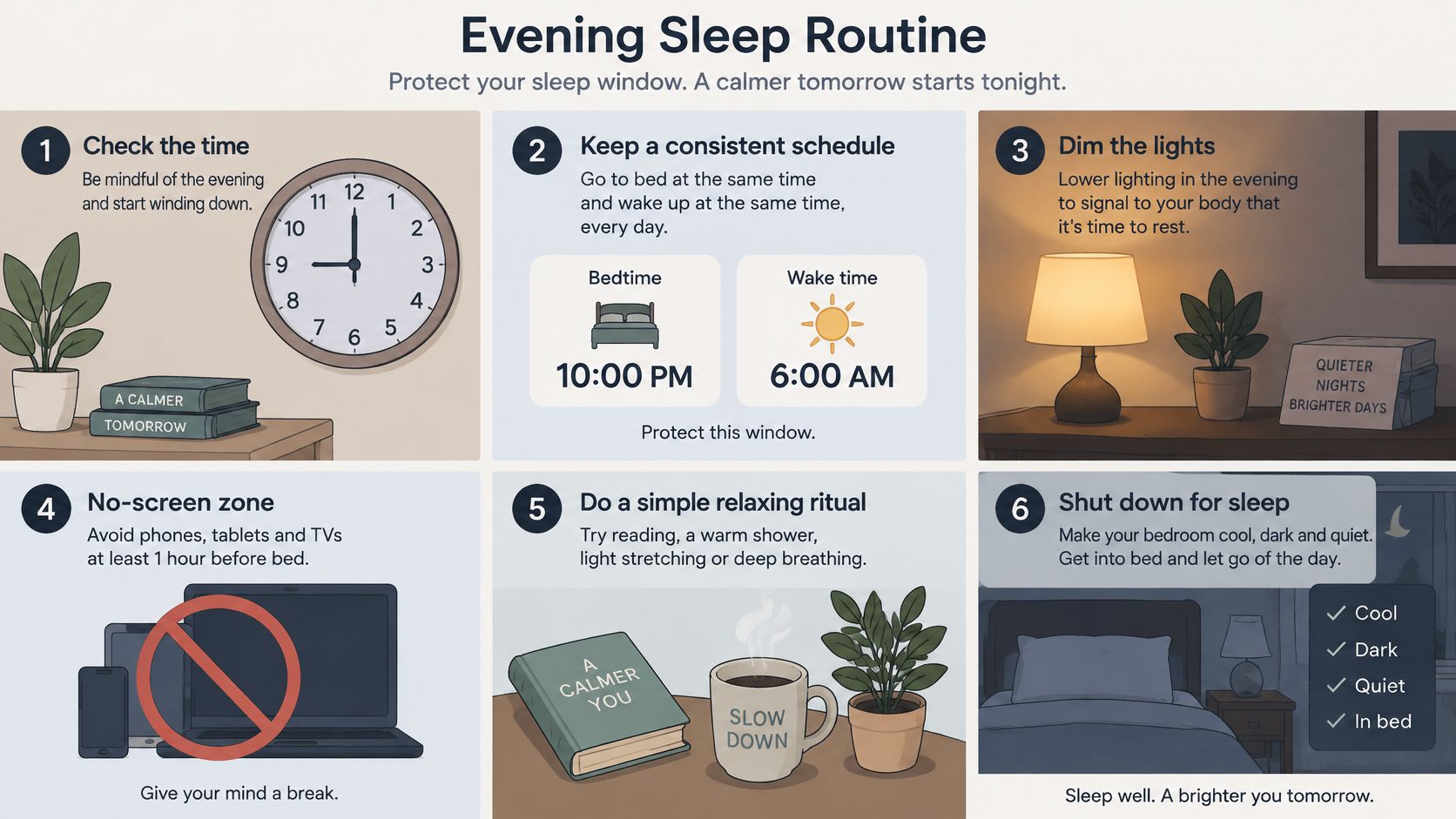
Choose a wake time first. Pick one you can keep across the week, then count back enough time for sleep. A common miss is a weekend sleep-in that shifts the schedule well beyond the usual hour.
Move during the day. Daylight and ordinary exercise, such as a walk or a hike, can fit naturally into the day. A hard workout in the last hour before bed may leave the body too stimulated to settle.
Keep the caffeine cutoff. Stick to the time you chose and avoid evening nicotine. An afternoon soda or chocolate bar can catch people by surprise.
Finish heavy food and alcohol earlier. Large meals and alcohol can fragment sleep even when alcohol initially makes someone feel drowsy. A nightcap isn't a reliable way to protect rest.
Make the last hour quiet. Dim the lights and put screens away before bed. Scrolling under the covers keeps the mind engaged when the room should be winding down.
Reserve the bed for sleep. Get into a surface that stays cool and supportive. Working or watching television in bed can make it harder to treat the mattress as a place for rest.
In 2024, 54.8% of U.S. adults reported waking well-rested most days or every day, according to the CDC's National Center for Health Statistics. The point isn't to earn a perfect score. It's to give sleep a dependable setting and remove the disruptions that can be changed.
For common evening habits that can get in the way, see three things to avoid before bedtime. Try this routine for a week before changing the mattress or adding supplements.
How Different Adults Adjust the Same Rules
Which change matters most for someone's age, schedule, and bedroom? The answer often becomes clearer when the person changes one thing at a time rather than trying to perfect every habit at once.
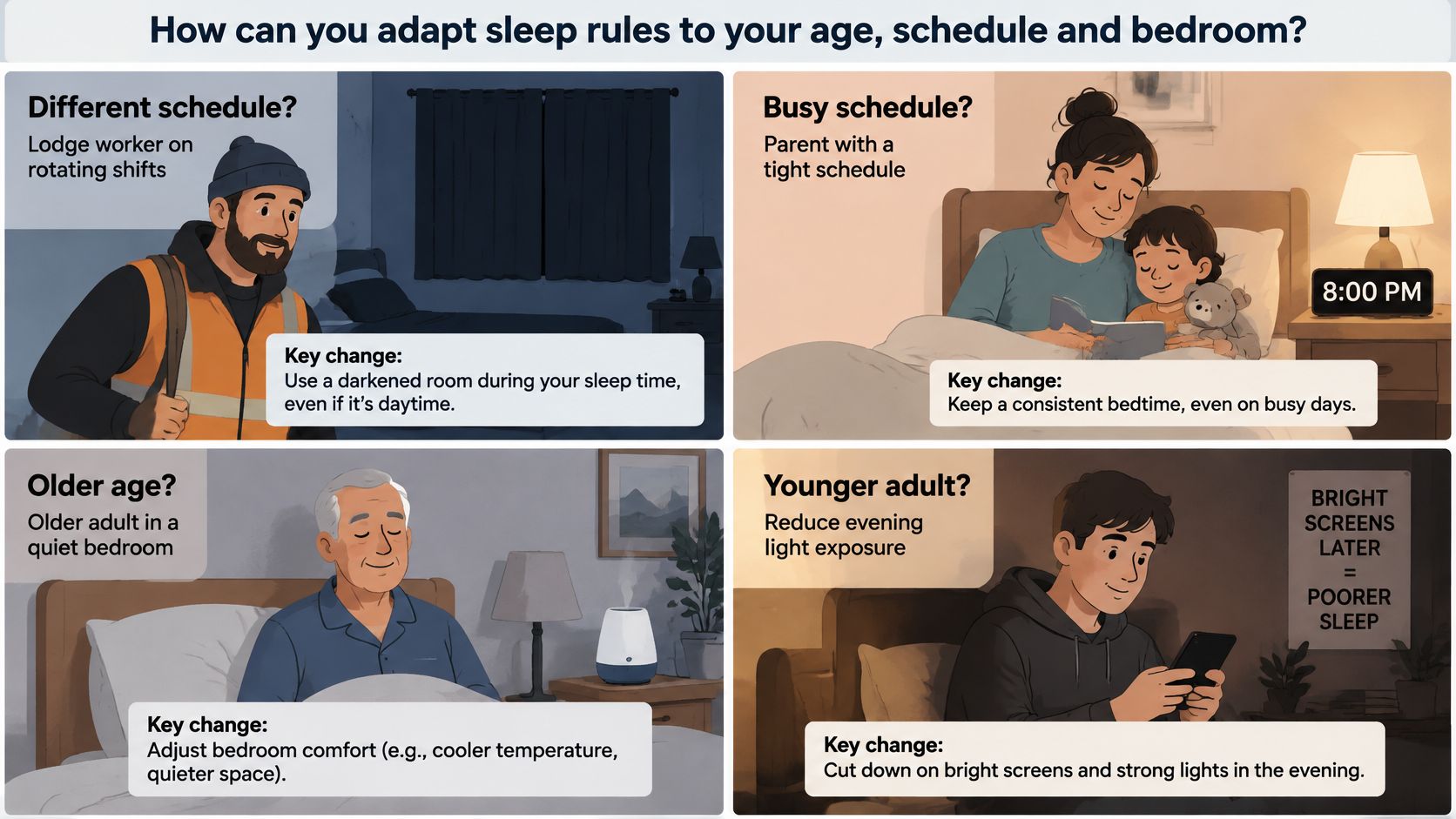
Four local situations, one adjustment at a time
A lodge worker on rotating shifts may not control the roster, but can keep wake time as steady as the schedule allows. Blackout curtains and a cool mattress can help make daytime sleep darker and more settled.
A couple in an Alto cabin may disagree about warmth. Instead of piling on blankets, they can test a hybrid from Sealy or Stearns & Foster and see whether coil airflow suits both sleepers.
A side sleeper over 60 with a sore shoulder can test pillow height alongside a pressure-relieving Tempur-Pedic or Sherwood mattress. The useful measure is whether the shoulder feels better in the morning and alertness holds through the day, not whether a wearable gives a perfect score.
A homeowner near Sudderth Drive may first stop scrolling in bed for seven nights before replacing anything. If the mattress still sags, the Low Price Promise can help keep a replacement within reach.
A 2025 study of adults aged 50–80 found that video-based sleep-hygiene education, with or without text messages, improved perceived sleep quality, daytime sleepiness, and reported habits, without significant changes in objective sleep measurements. Feeling better and showing a measurable change in sleep are different outcomes, and both can matter.
Rigid rules don't account for multigenerational households, nighttime bathroom trips, pain, or medication effects. A routine should be workable, not another reason to blame yourself. Change one variable for seven nights and record morning stiffness, how long it takes to fall asleep, and whether you feel rested.
When Better Habits Still Leave You Tired
Stop stacking bedtime tips and seek structured care when sleep trouble or daytime impairment persists after you've addressed schedule, light, caffeine, and the bed. Loud snoring, gasping, or other warning signs also call for medical evaluation, not another bedding adjustment.
| Sign | More likely meaning | Next step |
|---|---|---|
| Unrefreshed despite 7 or more hours in bed | Heat, noise, or a worn sleep surface | Recheck the room and mattress before adding more tips |
| Hard to fall or stay asleep most nights for months | Chronic insomnia pattern | Ask about CBT-I instead of another hygiene list |
| Loud snoring, gasping, or morning headaches | Possible sleep apnea | Medical evaluation, not a new pillow alone |
| Strong urge to move the legs at night | Possible restless legs | Clinician review |
| Alcohol or sleep medication needed to knock out | A masked sleep problem | Professional help plus a stable wake time |
| New neck or low-back pain that tracks with the bed | Lost support or the wrong pillow | A hands-on alignment test on a real mattress |
Supportive habits aren't insomnia treatment
The 2025 VA/DoD clinical practice guideline recommends against using sleep-hygiene education alone to treat chronic insomnia. A 2025 meta-analysis of 42 randomized trials involving 4,245 adults found that hygiene education improved insomnia severity by about 3.4 points, but was less effective than CBT-I, partial CBT-I, exercise, and acupressure. Most included trials were judged to have a high overall risk of bias.
For example, someone who gets enough time in bed but wakes unrefreshed may first check for heat, noise, or a mattress that no longer supports the hips. Someone who gasps, snores loudly, or wakes with headaches needs a medical assessment; a softer pillow can't rule out sleep apnea.
Restless legs, pain, depression, anxiety, daytime impairment, or relying on alcohol or sleep medication are also reasons to seek professional help. Struggling to follow a generic rule isn't a moral failure, especially when shift work, health conditions, or chronic pain complicate the night.
A two-stage audit keeps the next step clear. First, check timing, light, noise, temperature, alcohol, caffeine, and mattress comfort. If the difficulty persists, speak with a clinician; a supportive bed may remove a physical barrier, while CBT-I or a physician addresses a disorder. For more on persistent sleep trouble, see what causes insomnia and what can help.
Test the Bed That Has to Hold Those Hours
If the sleep targets and a steady routine are in place but you still wake hot, stiff, or in a sag, the next useful step may be a real mattress test, not another app. Lie in your usual sleep position and compare pressure relief, spinal alignment, and cooling across Tempur-Pedic, Sealy, Stearns & Foster, and Sherwood.
Sleep Pros at Mattress Pro by Miller Waldrop live in the same mountain climate and can match a mattress to body type, sleep position, and budget. That hands-on comparison is different from choosing a bed-in-a-box without trying the surface first; in-store mattress testing lets the body assess comfort directly.
The Comfort Promise can ease the fear of choosing the wrong bed. The Low Price Promise, flexible financing, and full-service delivery with professional setup offer practical support for local households and cabin owners. The showroom helps with the sleep surface; a clinician handles suspected apnea or chronic insomnia.
Ready to transform your sleep? Visit the Sleep Pros at the Mattress Pro showroom at 2801 Sudderth Drive, Suite F, in Ruidoso, and compare luxury and budget-friendly mattresses for the hours your sleep routine protects. Mattress Pro by Miller Waldrop offers personalized mattress guidance and professional setup, and you can browse online or stop by Monday through Saturday.