

How to Sleep Cooler at Night: A Complete Guide


You wake up in a damp T-shirt, kick the covers toward the foot of the bed, and turn the pillow over for the cool side. In Ruidoso, the dry mountain air can make evenings feel comfortable while the mattress, protector, blankets, and body heat create a warm pocket beneath the covers. If that pattern repeats, the bedroom thermostat may not be the only problem.
Learning how to sleep cooler at night starts with the sleep surface. Room temperature matters, but a mattress that holds heat against the body can defeat a cool bedroom. The right combination of mattress materials, breathable bedding, sensible airflow, and an evening routine can make a bigger difference than buying a product labeled “ice cool” without checking what it does.
Why You Keep Waking Up Hot and What to Do About It
A typical overheated night follows a predictable pattern. A sleeper goes to bed comfortable, falls asleep beneath several layers, then wakes later with a hot neck, sweaty back, or damp sheets. After the covers come off, the body cools briefly, but the cycle repeats when the sleeper settles back onto a heat-retaining mattress.
The reason temperature affects sleep is biological, not merely aesthetic. Core body temperature naturally drops as bedtime approaches, and Utah Health explains that this decline is about 1–2°F. A hot room, dense foam, heavy bedding, or a warm pillow can interfere with that cooling process and make sleep onset and continuity harder.
A foundational review of sleep-temperature research found that the most efficient nighttime sleep occurred around 20–25°C, or 68–77°F, while increasing nighttime temperature from 25°C to 30°C was associated with a clinically relevant 5–10% decline in sleep efficiency and an estimated 60-minute reduction in total sleep time as temperatures rose from 22°C to 30°C. The same sleep-temperature research review links warmth with disrupted sleep onset, continuity, and duration.
Practical rule: If the room feels cool but the sleeper still wakes hot, the sleep surface deserves attention before the thermostat gets lowered further.
The mattress can be the hidden heat source
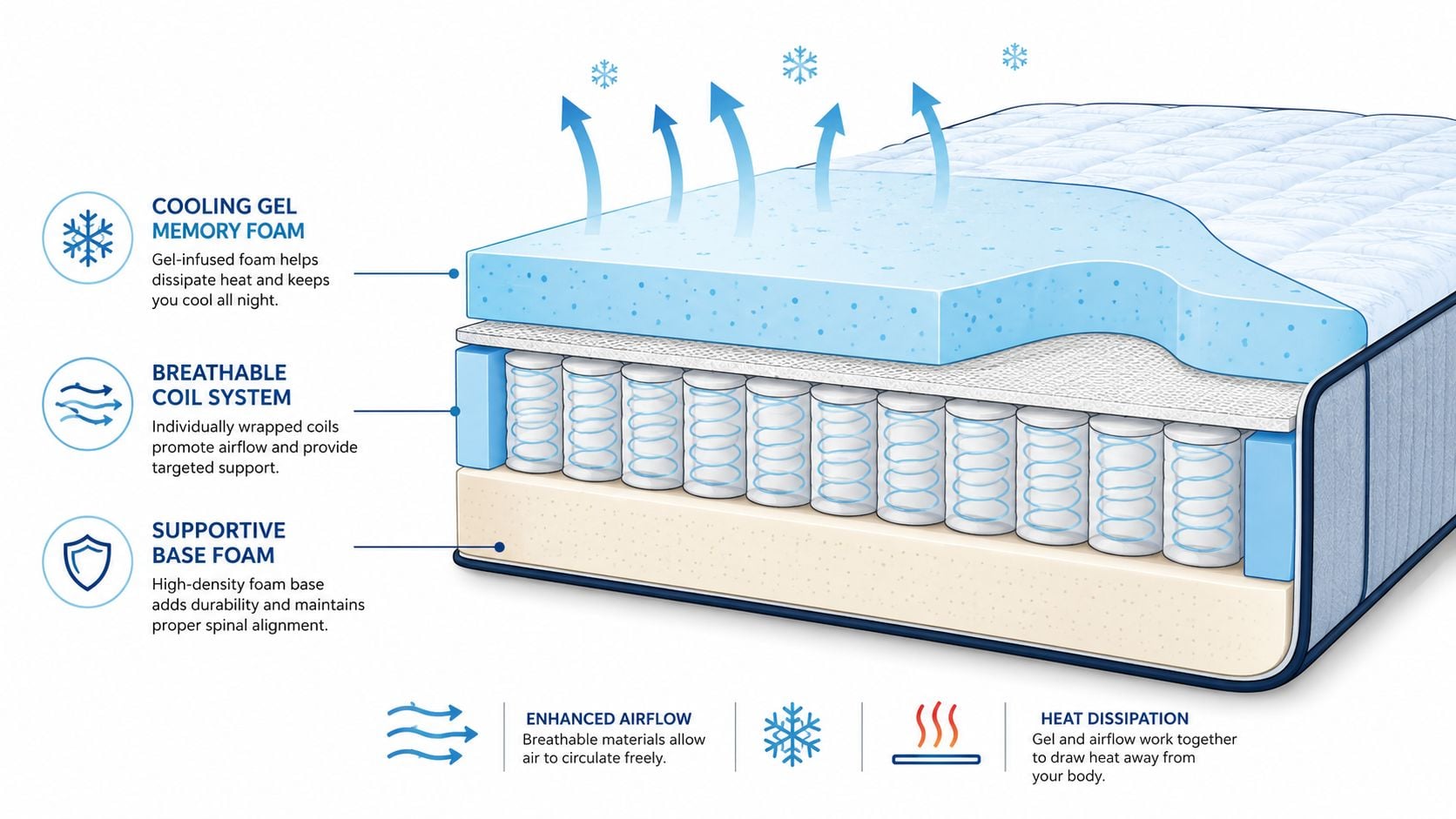
A mattress supports the body, but it also determines how easily heat escapes from the back, hips, shoulders, and legs. Dense foam can contour closely and reduce air movement around the sleeper. A breathable cover, ventilated comfort layers, or a coil support system can create a more open sleep surface.
The most useful troubleshooting order is straightforward:
- Check the surface first. Remove heavy pads, thick protectors, and decorative blankets that sit between the body and the mattress.
- Notice the heat pattern. A sweaty back points toward surface contact and airflow, while a hot head often points toward the pillow or pillowcase.
- Separate comfort from cooling. A fabric can feel cool when first touched yet still hold warmth after hours of contact.
- Test one change at a time. Changing the mattress pad, bedding, and room temperature simultaneously makes it difficult to identify the cause.
A practical overview of the relationship between temperature, mattress construction, and sleep is available in this guide to how temperature affects sleep and what a mattress has to do with it. The central lesson is simple: a cooler bedroom helps, but the bed itself must also release heat.
Setting the Right Bedroom Temperature for Better Sleep
For most adults, a sensible target is 60–67°F, according to Cleveland Clinic's guidance on ideal sleeping temperature. That guidance also states that temperatures above 70°F can be too hot and temperatures below 60°F can be too cold. Harvard Health recommends keeping the room around 65–68°F, which fits comfortably within that practical range.
The target isn't a rigid rule for every sleeper. A person using light bedding may prefer the upper end, while a hot sleeper on a heat-retaining mattress may need a cooler setting. The key is to create a room that supports the body's natural nighttime temperature decline without forcing the sleeper to pile on blankets.
A practical cooling setup for Ruidoso bedrooms
Ruidoso's mountain climate can bring sharp shifts between daytime warmth and nighttime coolness. That makes timing more important than running cooling equipment continuously.
- Cool the room before bedtime. Set the thermostat early enough for the mattress, walls, and bedding to lose stored heat, rather than waiting until the sleeper is already uncomfortable.
- Use a fan for air movement. A ceiling fan can circulate warm air upward, while a floor fan can move air across the bed. The goal is steady circulation, not an uncomfortably strong draft.
- Ventilate when outdoor air is cooler. Open windows when conditions are comfortable and secure, especially when a cross-breeze can move warm air out of the bedroom.
- Block daytime sun. Close blinds or curtains when direct sunlight warms the room, then open windows after outdoor temperatures fall.
- Adjust for the sleep surface. If a mattress traps heat, lowering the room temperature alone may create a cold room with a warm bed. Pair airflow with a breathable pad or mattress design.
A coordinated room and bed setup can be found in this guide to creating a sleep sanctuary with lighting, temperature, mattress, and bedding.
Know when the room is too warm
Research offers a useful warning sign beyond personal discomfort. A 2025 experimental study found that bedroom temperatures above 29°C degraded sleep quality and thermal comfort, supporting a proposed overheating limit for UK bedrooms, as described in the experimental study on overheated bedroom conditions.
A room thermometer can reveal whether the bedroom is warm or whether the mattress is creating a localized heat pocket. If the room is within the recommended range and the sleeper remains hot, the next purchase should usually address the mattress surface, not add more mechanical cooling.
Choosing a Cooling Mattress That Actually Works
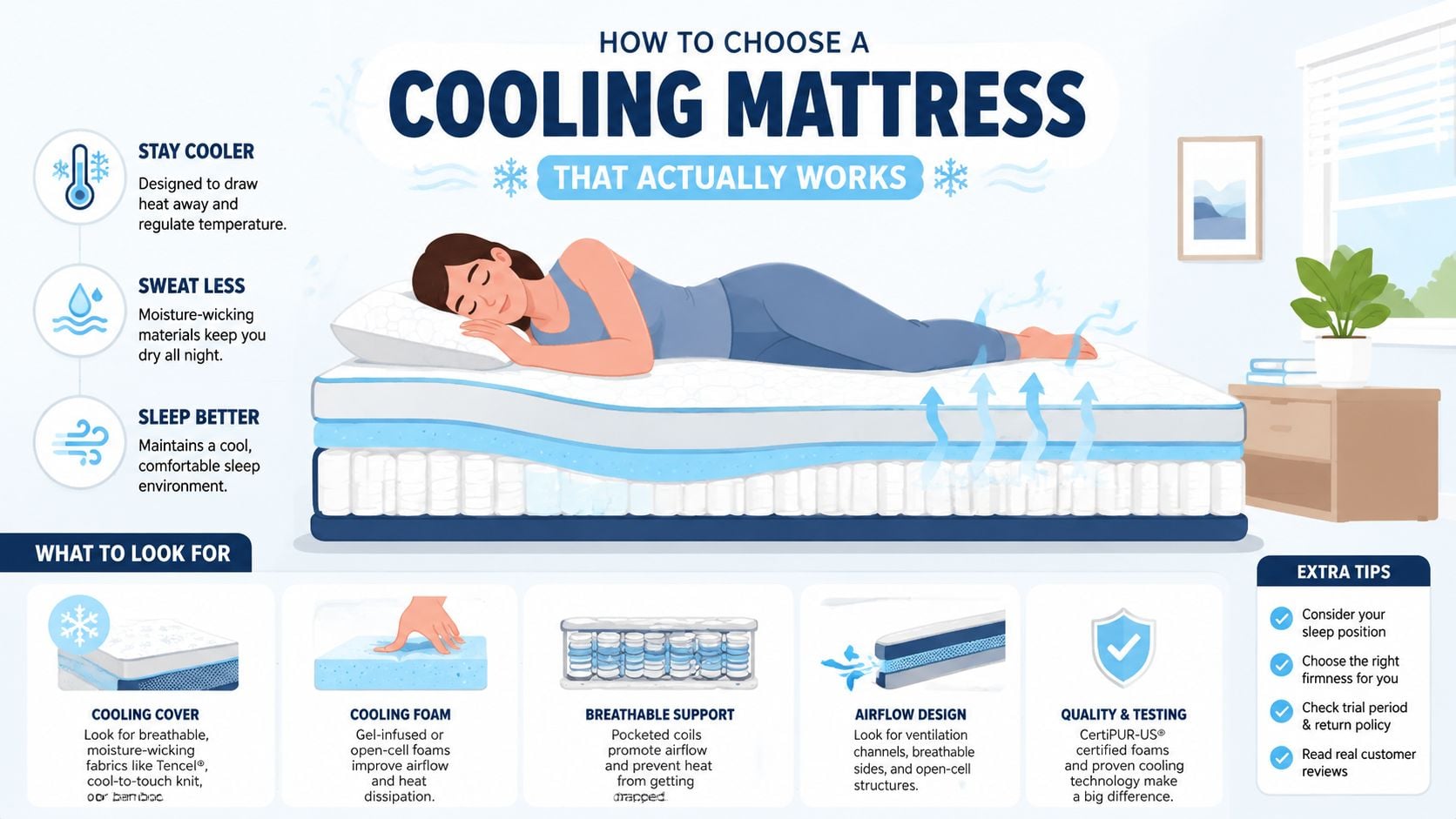
A cooling mattress should manage airflow, pressure, and body heat together. Marketing language matters less than the actual construction. A sleeper needs to know whether the bed uses breathable covers, ventilated foam, gel-infused comfort material, or coils that leave space for air to move.
Memory foam, hybrid, and innerspring designs
Memory foam excels at pressure point relief because it contours around the shoulders, hips, and other load-bearing areas. That contouring can support spinal alignment, especially for side sleepers, but close body contact can also reduce ventilation. Cooling gel technology, breathable covers, and more open foam structures may help manage that warmth, but a cooling label doesn't automatically guarantee an all-night result.
Hybrid mattresses combine foam comfort layers with pocketed coils. The foam can provide pressure relief and alignment, while the coil unit creates a more open support core. For many hot sleepers, that balance is a stronger starting point than a thick, dense foam design.
Innerspring mattresses generally emphasize coil airflow and a less enveloping feel. They can suit sleepers who dislike the deep contour of foam, although the comfort layers and cover still determine how warm the surface feels. Stearns & Foster, Sealy, Sherwood, and Tempur-Pedic each offer different constructions, so the brand name alone shouldn't decide the purchase.
Match cooling features to the sleeper
A side sleeper needs enough cushioning for the shoulder and hip without sinking so much that heat becomes trapped around the torso. A back sleeper typically needs balanced support and a surface that lets the lower back remain aligned. A stomach sleeper often benefits from a more stable feel that limits excessive sink.
Body shape also changes the experience. More contact with the mattress means more pressure relief may be needed, but it can also increase warmth. Couples should test the bed together because one partner may sleep hot while the other prefers a warmer surface.
Tempur-Pedic's cooling-focused designs, including TEMPUR-Breeze® options described by the brand as using SmartClimate® cover technology and heat-absorbing materials, can appeal to sleepers who want contouring with a dedicated cooling approach. Sealy's breathable design options and hybrid constructions can suit shoppers who want pressure relief with more surface ventilation.
For a material-focused overview, review this guide to a temperature-regulating mattress. A local test remains essential because “cool” depends on body contact, sleep position, clothing, bedding, and the feel each sleeper can tolerate.
The right cooling mattress shouldn't merely feel cold in the showroom. It should let the sleeper maintain alignment without creating a sealed-in pocket of heat.
Miller Waldrop's Comfort Promise addresses the fear of choosing the wrong bed by giving shoppers a local path to resolve comfort concerns. The Low Price Promise and Full-Service Delivery with Professional Setup also matter when a mattress must fit a real bedroom, frame, and household routine.
Bedding and Sleepwear That Keep You Cool All Night
Bedding sits directly against the skin, so it can either release heat or hold it close. Cotton, linen, and bamboo-derived fabrics are practical starting points because they generally feel breathable and manage moisture better than heavy, tightly packed synthetic layers.
Build a lighter sleep surface
Percale cotton often feels crisp and airy, while linen has a loose texture that encourages airflow. Bamboo-derived fabrics can feel smooth and moisture-managing, but shoppers should inspect the label for the actual fiber composition rather than relying on the word “bamboo” alone.
Thread count isn't a reliable cooling score. A very high count can mean a denser fabric that feels heavier and less ventilated. Weave, fiber quality, fabric weight, and how the sheet feels after washing matter more than a large number on the package.
A cooler bedding setup usually includes:
- A breathable fitted sheet. Choose cotton percale, linen, or a moisture-managing material that doesn't feel plasticky.
- A light top layer. Replace thick quilts and insulated comforters with a lightweight blanket or a single breathable cover.
- A washable pillowcase. Heat and moisture collect around the head, so a breathable, removable cover is important.
- Loose sleepwear. Lightweight cotton or another breathable fabric is preferable to thick flannel or dense polyester.
- Fewer decorative layers. Throws and folded quilts can look attractive while adding insulation exactly where heat needs to escape.
Choose the pillow as part of the cooling system
A pillow can keep the head and neck warm even when the mattress sleeps comfortably. Ventilated foam, a breathable cover, and a height that maintains neutral neck alignment are more useful than a pillow that only feels cold for the first few minutes.
A waterproof protector may protect the mattress but can also create a less breathable barrier. If protection is necessary, shoppers should look for a thin design that doesn't turn the top of the bed into a sealed surface.
A cooling pad can add a temperature-regulating layer between the sleeper and mattress. Mattress Pro by Miller Waldrop offers cooling mattress pads for shoppers who want to test a surface change before replacing the entire mattress. The cooling mattress pad guide can help clarify whether a pad fits the current bed and the sleeper's heat pattern.
Cooling Accessories Worth Your Investment
Cooling accessories deserve a priority order. The first purchase should address the largest source of discomfort, whether that is a hot mattress surface, a warm pillow, stagnant air, or excessive bedding. A product that feels cool on contact may improve initial comfort without changing the entire night.
A 2026 study reported that a targeted cooling mattress topper improved thermal comfort, increased total sleep time by 19 minutes, and reduced time to fall asleep by 10 minutes in overheated bedrooms, according to the reported mattress topper study. That result supports the sleep surface as a serious intervention, especially when the room is already reasonably cool.
The evidence isn't uniform. A 2025 systematic review found that bedding interventions often improved body-cooling markers but produced no consistent changes in sleep architecture or total sleep time, with evidence certainty ranging from very low to low, as summarized in the same cooling mattress research coverage. Shoppers should treat bedding as a comfort and heat-management tool, not a guaranteed insomnia treatment.
Cooling Accessories Comparison
| Accessory Type | Effectiveness | Cost Range | Best For |
|---|---|---|---|
| Cooling mattress pad | Can improve the contact layer and reduce heat buildup | Lower to moderate | A comfortable mattress with a hot surface |
| Cooling mattress topper | May change thermal comfort and surface feel more substantially | Moderate to higher | An overheated bedroom or heat-retaining mattress |
| Breathable pillow | Helps release heat around the head and neck | Lower to moderate | Sweaty head, neck discomfort, or a warm pillow |
| Fan or improved airflow | Helps move stagnant air and support evaporation | Lower to moderate | Rooms that feel stuffy despite a reasonable thermostat |
| Targeted cooling device | Can cool a specific body area without chilling the whole body | Moderate to higher | Sleepers who need local cooling |
| Lightweight bedding | Reduces insulation around the body | Lower | Anyone using thick covers in a warm season |
Targeted cooling deserves careful use. One clinical pilot using a dual-temperature-zone mattress and warming pillow reduced sleep-onset latency by an average of 48.6 minutes and improved subjective sleep quality versus control, while a controlled forehead-cooling study using 14–18°C settings reported beneficial insomnia effects over 4 weeks in 30 participants, as documented in the clinical cooling study. The useful principle is targeted heat loss without whole-body discomfort.
Evening Routines That Lower Your Body Temperature
A strong evening routine helps the body arrive at bed already prepared to cool. It doesn't need expensive equipment, but it does require consistency and enough time for heat from movement, digestion, or stress to settle.
A practical pre-bed sequence
- Finish strenuous exercise earlier. Intense activity raises internal heat and can leave the body alert. Moving workouts earlier gives temperature and arousal time to fall.
- Choose a lighter evening meal. Large meals demand digestive work and may leave the sleeper feeling warm. Earlier, lighter food is usually more comfortable on hot nights.
- Use a lukewarm shower. A gentle shower can leave the skin feeling refreshed without the stimulating shock of very cold water. Afterward, evaporation supports the body's natural cooling process.
- Dim the bedroom and reduce screen stimulation. Bright screens and stressful content can keep the nervous system activated, which makes overheating feel worse.
- Hydrate steadily during the day. Regular fluid intake supports normal temperature regulation. Drinking a large amount immediately before bed can create unwanted bathroom trips.
- Prepare the bed before the final routine. Remove unnecessary layers, turn down the room temperature, and select the lightest comfortable sleepwear.
Timing matters because the body needs a gradual transition. A shower taken roughly 90 minutes before bed is often used as a practical routine, but the right timing depends on how quickly the sleeper feels comfortable afterward. The purpose isn't to create a freezing bed. It's to support a smooth decline in body temperature.
Stress can also create a hot, restless feeling. Quiet reading, gentle breathing, or a short walk in cooler evening air may help the body shift away from alertness. In Ruidoso, outdoor temperatures can change quickly after sunset, so the bedroom should be checked rather than assumed to be cool.
A useful test lasts several nights and changes one habit at a time. If a lukewarm shower helps but heavy bedding still causes waking, the next adjustment should be the sleep surface rather than a more elaborate routine.
When Night Sweats Signal a Bigger Problem and How to Get Help
Environmental heat is common, but persistent night sweats can also relate to medications, hormonal changes, illness, or sleep disorders. If sweating continues after the room, bedding, mattress surface, and evening habits have been adjusted, a healthcare provider should evaluate the pattern.
Medical attention is especially appropriate when night sweats are new, severe, accompanied by other symptoms, or unrelated to bedroom conditions. A sleep professional can help identify whether the bed is creating pressure, heat retention, or poor alignment, but mattress changes shouldn't replace medical care.
A practical troubleshooting sequence is:
- Measure the room. Confirm whether the bedroom is warm.
- Simplify the bed. Remove thick layers and test breathable bedding.
- Check the mattress surface. Consider whether foam, a protector, or a worn comfort layer holds heat.
- Track the pattern. Note whether sweating affects the whole body or mainly the back, neck, or legs.
- Seek a sleep consultation. A local fitting can connect body type, sleep position, mattress materials, and temperature preferences. Sleep consultation near me is a practical starting point for Ruidoso and Lincoln County sleepers.
Miller Waldrop has served local families for 70 years, with Sleep Pros focused on mattresses and sleep systems rather than generic furniture. The Comfort Promise, Low Price Promise, and Full-Service Delivery with Professional Setup reduce the risk of choosing a bed that doesn't suit the sleeper or the mountain climate.
Mattress Pro by Miller Waldrop helps Ruidoso sleepers compare Tempur-Pedic, Sealy, Stearns & Foster, Sherwood, cooling pads, and breathable sleep surfaces through one-on-one guidance. Visit Mattress Pro by Miller Waldrop at 2801 Sudderth Drive, Suite F, in Ruidoso, and test a setup designed around body type, sleep position, budget, and nighttime heat.