

Best Mattress for Hot Sleepers: A 2026 Ruidoso Guide

You kick the covers off. A few minutes later, you pull them back on. Then you flip the pillow to the cool side, shift to the edge of the bed, and stare at the ceiling wondering why you're still awake.
If that sounds familiar, your mattress may be working against you.
Around Ruidoso, I hear this all the time from neighbors in town, from Alto, and across Lincoln County. They'll say, “The room feels fine, but I still wake up hot.” That usually points to the bed itself, not just the thermostat. A mattress can either let heat escape or hold it close to your body all night.
At Miller Waldrop, our family has helped this community with home comfort for 70 years. That history matters when you're trying to solve a problem that online mattress quizzes often oversimplify. If you're looking for the best mattress for hot sleepers, you need more than catchy cooling labels. You need to understand what helps you sleep cooler, and how to test it in a way that fits your body, your habits, and our mountain climate.
Table of Contents
- Tired of Waking Up Sweaty and Unrested?
- Understanding the Science of Sleeping Hot
- The Anatomy of a Cooling Mattress
- How to Choose the Right Cooling Mattress for You
- Cooling Your Sleep Environment Beyond the Mattress
- Why Buying Local is a Hot Sleeper's Best Bet
- Your Next Step to Cooler Deeper Sleep
Tired of Waking Up Sweaty and Unrested?
If you're reading this after another rough night, you're probably not looking for hype. You want relief. You want to stop waking up damp, irritated, and more tired than when you went to bed.
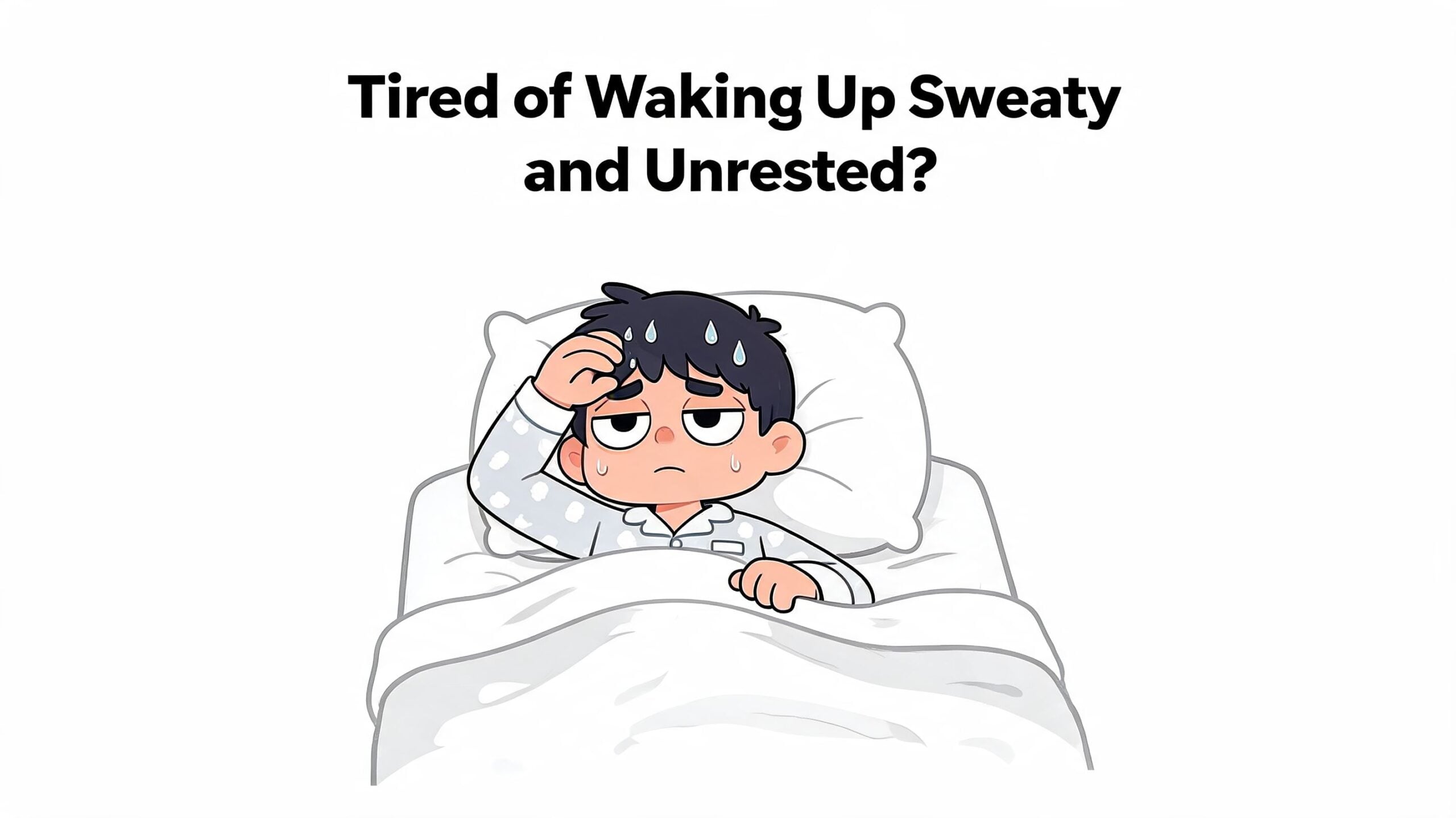
A lot of hot sleepers blame themselves first. Maybe you assume it's age, stress, hormones, or just one of those things you have to live with. Sometimes those factors do matter. But very often, the mattress is turning a manageable warmth issue into a nightly battle.
I've seen this with couples especially. One partner says the bed feels cozy. The other feels like they're sleeping in a heat pocket. That usually happens when the mattress hugs too closely, holds onto body heat, or doesn't move enough air through its core.
Practical rule: If you feel warm within the first part of the night, before the whole room heats up, your mattress and bedding deserve a close look.
That's why the best mattress for hot sleepers isn't just the one with the flashiest cooling name. It's the one that balances airflow, support, pressure relief, and comfort for the way you sleep.
In a place like Ruidoso, where days and nights can swing in temperature, the wrong mattress can feel fine in the showroom and frustrating at home. That's also why people appreciate a local Sleep Pro who can listen, ask the right questions, and help them sort out whether they need the buoyant feel of a hybrid, the contour of advanced cooling foam, or a more breathable setup overall.
Understanding the Science of Sleeping Hot
Your body doesn't sleep well when it can't release heat. That's the simple version. The full story is still easy to understand once you break it down.
Your body is trying to cool down
As you settle in for the night, your body wants a sleep-friendly temperature. If heat gets trapped around you, your body has to work harder instead of drifting deeper into rest.
That trapped warmth often shows up in familiar ways:
- Restless shifting because one spot on the mattress starts feeling too warm
- Sweaty shoulders or lower back where your body presses deepest into the bed
- Uncovering and recovering over and over because your sleep temperature keeps swinging
- Morning fatigue even when you technically spent enough hours in bed
If you want a deeper look at sleep habits and sleep setup, our sleep knowledge guide is a helpful place to keep learning.
Four common heat traps
The mattress is important, but it's not the only factor.
Your metabolism affects how much body heat you produce. Some people naturally run warmer than others.
Your environment matters too. Ruidoso's dry mountain air can cool quickly at night, but bedrooms still collect heat from sun exposure, poor airflow, or heavy bedding.
Your sheets and protector can cause problems without you realizing it. If they don't breathe well, they can trap warmth right at the surface where you feel it most.
Your mattress is often the biggest factor because it controls both airflow and surface contact. Consumer Reports explains that foam tends to retain more heat, so innerspring or hybrid models are most often recommended for people who sleep hot. In the same testing approach, heat retention is evaluated first, then filtered with overall performance factors such as support, motion stability, durability, comfort, and owner satisfaction from surveys covering nearly 66,000 mattresses purchased between 2013 and 2023. Consumer Reports also notes that the innerspring mattresses in its roundup trapped less heat than nearly 80% of the other mattresses it rated, which shows why construction matters so much for hot sleepers (Consumer Reports mattress heat-retention testing).
A cooling mattress doesn't create cold air. It reduces heat buildup so your body can do what it already wants to do.
That's where many shoppers get confused. They expect a mattress to feel icy. Instead, what matters is whether it stays more temperature-stable once your body has been on it for a while.
The Anatomy of a Cooling Mattress
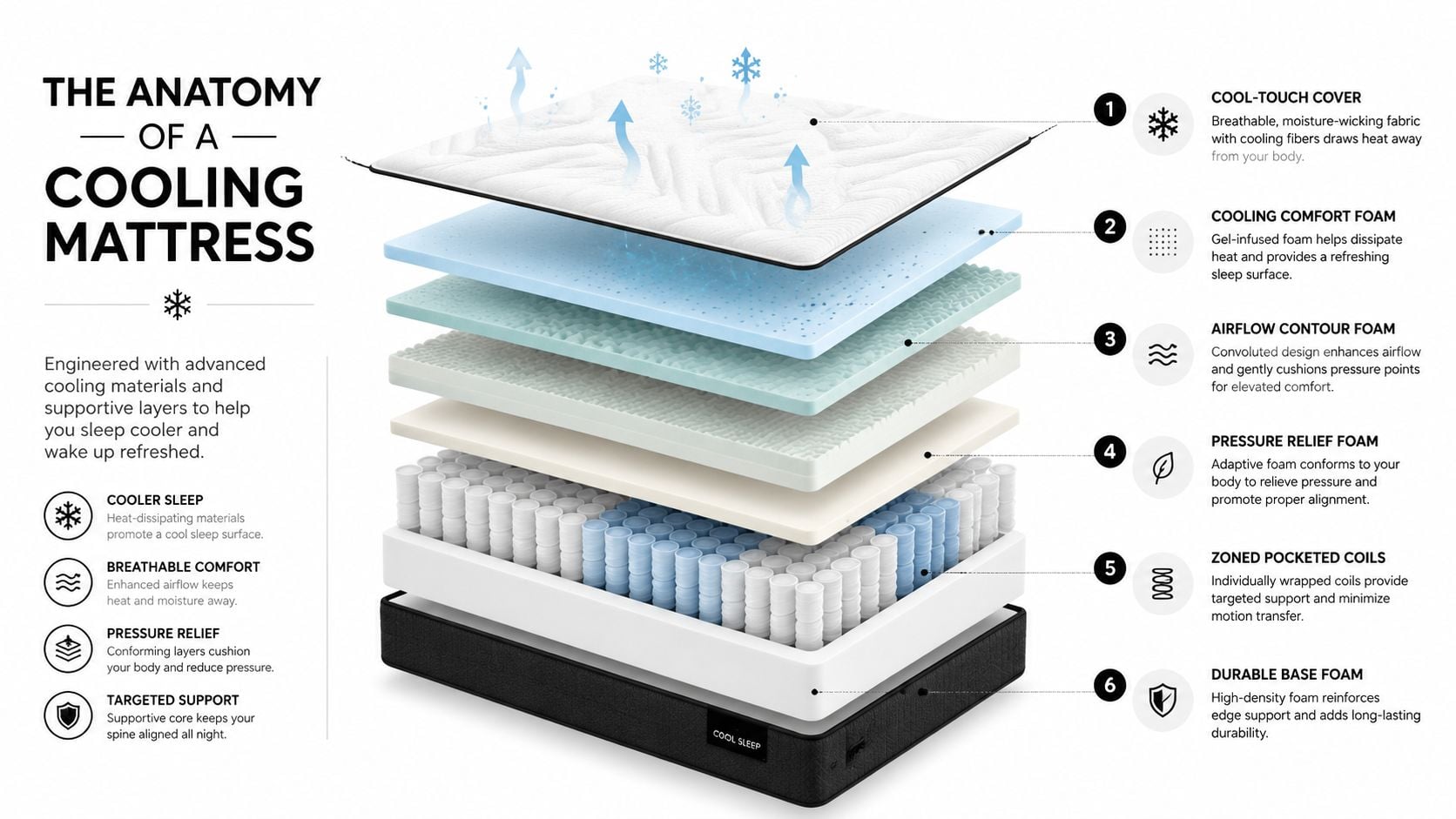
A cooling mattress works like a house built for summer in Ruidoso. The goal is not to create cold air. The goal is to let heat and moisture move away from your body instead of getting trapped around you all night.
Why construction matters more than labels
The word “cooling” on a tag does not tell you much by itself. The build does.
As noted earlier, innerspring and hybrid mattresses usually sleep cooler than traditional all-foam designs because they have more open space inside. That space gives body heat somewhere to go. A coil system works like the ventilated crawl space under a mountain cabin. Air can circulate instead of sitting still and warming up.
Dense foam behaves differently. It can feel wonderfully pressure-relieving, but if it is packed too tightly or layered too thickly, it can hold warmth close to the body. That is why two mattresses with the same “cooling” label can feel completely different after an hour.
If you want a plain-English explanation of coil-and-foam design, this guide to what a hybrid mattress is makes the structure easier to picture.
How each layer affects temperature
Start at the top. The cover is the part touching your sheets and, indirectly, your skin. Breathable covers help heat and moisture leave faster. Materials such as Tencel and other moisture-managing fabrics can feel less clammy because they do a better job of releasing humidity instead of letting it linger at the surface.
Next is the comfort layer. Gel, graphite, and open-cell foams are all attempts to solve the same problem. Traditional memory foam can store heat, much like a dense sofa cushion that warms up and stays warm. Open-cell foam adds more tiny air pockets. Gel and graphite are used to help move heat away from the spots where your body presses in most.
That does not mean every foam mattress sleeps hot. Some newer foam designs do a much better job than older memory foam. Good Housekeeping points to breathable open-cell foam and added ventilation as features that can help hot sleepers, especially in models designed to avoid that deep, stuffy sink (Good Housekeeping on cooling foam design).
Then you reach the support core, and this layer often decides whether the mattress still feels comfortable at 2 a.m., not just for the first ten minutes. Coils usually allow the most airflow through the middle of the bed. Foam cores can still work, but they need careful design, especially for sleepers who already know they run warm.
That is why showroom testing matters so much. A mattress can feel cool to the touch for a minute and still sleep warm later if the deeper layers do not release heat well. Buying locally in Ruidoso gives you the advantage online brands cannot match. You can lie on different builds, feel the difference in airflow and sink, and pair that with a Comfort Promise that gives you more peace of mind if your first choice is not quite right.
Cooling Mattress Material Comparison
| Material Type | Primary Cooling Mechanism | Best For |
|---|---|---|
| Hybrid | Coil airflow plus breathable comfort layers | Hot sleepers who want balanced support and less heat buildup |
| Innerspring | Open coil structure that allows more air movement | People who like a lifted, traditional feel |
| Modern cooling memory foam | Open-cell foam with gel or graphite that helps move heat away | Sleepers who want contouring without the stuffy feel of older foam |
| Latex or latex hybrid | Naturally buoyant, more breathable surface feel | People who want less sink and more airflow around the body |
Here is how that usually shows up in real shopping conversations around town:
- Tempur-Pedic can work for sleepers who love close contouring but want newer cooling materials instead of the warmer feel older dense foam was known for.
- Sealy and Stearns & Foster often attract shoppers who want a hybrid or innerspring design with more built-in airflow.
- Sherwood can make sense for value-focused shoppers who want to focus on mattress structure, not just cooling claims on a hangtag.
If you dislike the “stuck” feeling, pay attention to how deeply you sink and how easily air can move around your body. Those two details usually matter more than the marketing name of the cooling feature.
How to Choose the Right Cooling Mattress for You
Choosing a cooling mattress gets easier once you match the mattress to the way your body creates heat at night. I see this all the time around Ruidoso. One person gets hot because their shoulders and hips sink too far and heat gets trapped around them. Another sleeps warm because two people are sharing one bed and creating a bigger heat pocket together. Same complaint, different cause.
That is why the right pick is rarely about chasing the coldest-sounding material on a sales tag. It is about choosing a bed that keeps your body in a comfortable temperature range for your sleep position, your comfort preference, and the way your room feels through our mountain seasons.
If you sleep on your side
Side sleepers usually need more pressure relief at the shoulders and hips. The tricky part is that extra softness can also let you sink in too far, and that reduces the air moving around the parts of your body carrying the most weight.
A good comparison is a hand pressed into a couch cushion. If the cushion hugs too tightly, heat stays close to the surface of your skin. If the surface has some give but still keeps you more lifted, warmth has more room to escape. That is why many side sleepers do well with a hybrid that cushions pressure points on top and keeps better airflow underneath with coils.
Some Tempur-Pedic models can also be a good fit if you want closer contouring without the stuffy feel older memory foam was known for. The key is to test whether the mattress relieves pressure without making you feel buried.
If you share the bed or heat up quickly after lying down
Couples usually notice heat problems faster because there is more body warmth in one sleep space. If one partner sleeps hot and the other moves a lot, the mattress has to do two jobs at once. It needs to release heat reasonably well and keep movement from spreading across the bed.
That combination usually points shoppers toward balanced designs rather than extremes. A plush top over coils often makes more sense than a very deep foam bed if you want cushioning without as much heat buildup. If motion control matters just as much as cooling, pay close attention to how the center of the mattress feels when both people are on it.
A simple way to narrow it down:
- If you heat up fast, choose a mattress that keeps you more lifted and allows easier airflow
- If your partner tosses and turns, check that the comfort layers absorb motion without swallowing you in heat
- If you want a softer feel, look for pressure relief near the surface instead of thick sink-in foam
For a broader fit guide that covers firmness, support, and sleeping position, our article on how to choose a mattress can help you sort through the basics before you visit a store.
How Ruidoso changes the decision
Ruidoso sleepers have a slightly different challenge than shoppers in muggy, low-elevation areas. You may not need a mattress that feels aggressively cold. You need one that does not trap your own body heat once the room is already comfortable.
That is an important difference.
In our area, I usually encourage people to shop for temperature balance. A mattress should help you avoid that warm pocket under your back and hips, but it should still feel comfortable on cooler nights and during seasonal swings in a cabin or mountain home. Sealy and Stearns & Foster hybrids often appeal to shoppers who want airflow and a more traditional, lifted feel. Tempur-Pedic tends to make sense for people who need stronger pressure relief and want newer cooling materials. Sherwood can be a sensible option when budget matters and you still want the construction to hold up logically under real use.
Buying local helps here too. Cooling features can sound great online, but your body notices details a product page cannot show you, like whether the surface lets you settle in comfortably or makes you feel stuck after ten minutes. In a local showroom, you can compare those differences for yourself and shop with the added reassurance of a Comfort Promise if your first choice is close, but not quite right.
Cooling Your Sleep Environment Beyond the Mattress
Even the right mattress can't do all the work if the rest of your sleep setup traps heat.
Start with bedding that can breathe
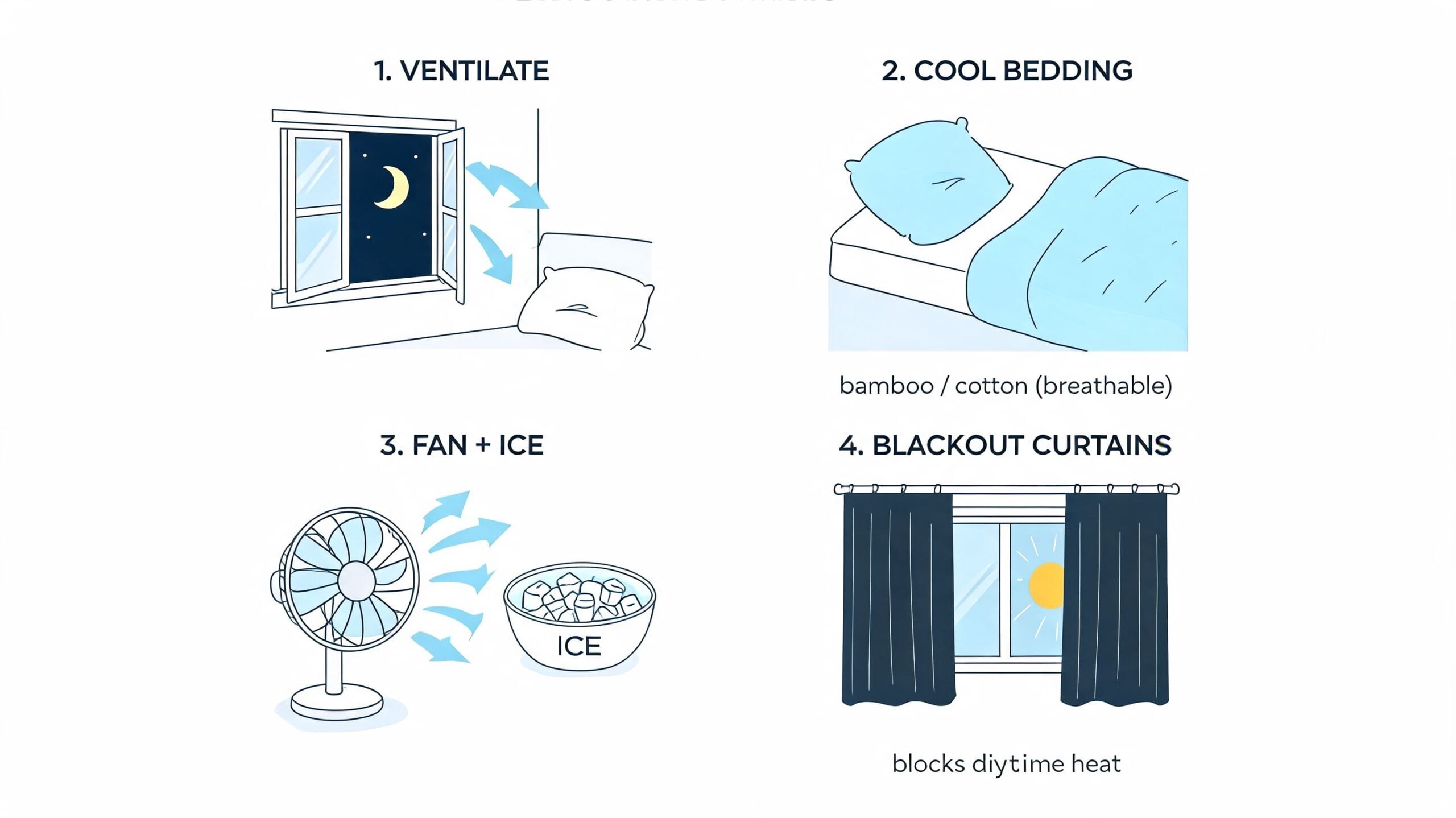
Your sheets are the first layer above your skin, and your protector sits right above the mattress. If either one holds heat, you'll feel it fast.
I usually suggest simple, breathable choices over overly slick “high-tech” ones unless you've tested them and know you like them. Cotton, Tencel-style fabrics, and lighter layers tend to feel more natural for many sleepers in Lincoln County's dry climate.
A cooling pillow matters too. A mattress can lower heat buildup underneath you, but if your head and neck stay hot, you'll still wake up uncomfortable.
Your bed is a system. Mattress, protector, sheets, pillow, and room airflow all affect the same problem.
If you want ideas for building that full setup, our article on creating a sleep sanctuary with lighting, temperature, mattress, and bedding working together is a good next read.
A simple cool-sleep checklist
Try these adjustments together, not one at a time:
- Use lighter sheets: Choose breathable bedding that won't cling or hold warmth close to your body.
- Check your mattress protector: A waterproof protector should still allow airflow. Some protect well but sleep stuffy.
- Swap the pillow if needed: A cooler mattress won't fully solve a heat issue if your pillow traps warmth around your head.
- Let the room vent before bed: In Ruidoso, evening air can help if you use it wisely and close up before outdoor temperatures shift too far.
- Reduce heavy layers: One thick blanket often sleeps hotter than several lighter layers you can adjust.
These changes won't replace a bad mattress. But they can make a good cooling mattress work the way it's supposed to.
Why Buying Local is a Hot Sleeper's Best Bet
Cooling is one of the hardest mattress features to judge online.
Why online cooling claims are hard to judge
A website can tell you a mattress has gel foam, graphite, a cool-touch cover, or coils. What it can't do is tell you how that bed will feel to your body after you've been lying on it for a while.
That's where people get stuck. They order based on buzzwords, then realize the mattress still sleeps too warm, feels too soft, or doesn't support their shoulders and hips the right way.
Mattress Nerd makes this point well. Technical data like a mattress temperature rise of 6 or 7 degrees in a five-minute test can be useful, but a trained Sleep Pro helps translate what that means in real life, especially for couples or people with specific comfort or health concerns (Mattress Nerd on interpreting cooling test data).
What local guidance changes
Buying in Ruidoso, instead of guessing from a screen, becomes a real advantage.
A local Sleep Pro can help you compare whether you prefer:
- A buoyant hybrid feel from brands like Sealy or Stearns & Foster
- A closer, pressure-relieving feel from Tempur-Pedic with cooling-focused design
- A more budget-conscious option that still avoids the worst heat-trapping constructions
They can also factor in things a website usually misses. Do you sleep on your side? Do you share the bed? Is this for your full-time home or a cabin? Are you trying to solve heat and back pain at the same time?
At Mattress Pro by Miller Waldrop, that conversation happens face to face, with local context built in. That's different from chasing online review lists and hoping the description matches your body.
Buying local lowers the risk of choosing the wrong feel. For hot sleepers, that matters because “cooling” only helps if the mattress is also comfortable enough to keep.
Then there's the peace of mind piece. The Comfort Promise helps reduce the fear of getting stuck with the wrong bed. The Low Price Promise adds confidence that you're shopping fairly. And Full-Service Delivery with Professional Setup means you're not wrestling a heavy mattress into place and wondering if it will feel different once it finally expands in the bedroom.
That kind of support matters on Sudderth Drive and across Lincoln County because it turns mattress shopping into a guided decision instead of a gamble.
Your Next Step to Cooler Deeper Sleep
If you've been overheating at night, the answer usually isn't to just buy the mattress with the loudest cooling label. It's to find the mattress construction that matches how you sleep.
For some people, that's a hybrid with airflow through the coil system. For others, it's a newer foam design that relieves pressure without the old heat-trapping feel. The right answer depends on your sleep position, your comfort preference, your bedroom setup, and how your body handles warmth through the night.
That's why trying beds in person still matters so much. You can feel the difference between supportive and stiff, contouring and confining, breathable and stuffy. You can also ask questions that an online product page can't answer in a way that fits your life in Ruidoso, Alto, or anywhere else in Lincoln County.
If you're tired of waking up sweaty, restless, and frustrated, don't guess. Get help narrowing it down to a mattress that supports cooler, deeper sleep.
Ready to transform your sleep? Visit our Sleep Pros at Mattress Pro by Miller Waldrop showroom located at 2801 Sudderth Drive, Suite F, in Ruidoso. From luxury brands to budget-friendly solutions, we're here to help you wake up loving your mornings. Browse our collection online or stop by Monday through Saturday.