

How to Improve Sleep Quality: Your Guide to Better Rest


Some nights in Ruidoso feel made for sleep. The air cools down, the house gets quiet, and you finally lie down expecting relief. Then your mind speeds up, your shoulder starts talking back, your lower back never settles, or you wake up tired even after what should have been a full night.
If that sounds familiar, you’re not failing at sleep. You’re dealing with a problem that usually has more than one cause. Better rest comes from the right routine, the right room, and the right support under your body. After serving Lincoln County families for generations, we’ve seen the same pattern again and again. Small changes help, but the right combination is what changes mornings.
Table of Contents
- Why Restful Sleep Feels Just Out of Reach
- Build Your Nightly Wind-Down Routine
- Design the Perfect Bedroom Sanctuary
- Find the True Foundation of Great Sleep Your Mattress
- Power Your Nights with Smarter Days
- When Sleep Still Won't Come What to Do Next
- Start Your Journey to Better Sleep Tonight
Why Restful Sleep Feels Just Out of Reach
A lot of people think poor sleep means they just need to try harder. Go to bed earlier. Put the phone down. Drink less coffee. Those things can matter, but they don't solve every problem.
Sleep usually slips when several stressors stack up at once. A busy schedule keeps your brain alert. Pain makes it hard to stay in one position. Dry mountain air can leave you uncomfortable. An unsupportive mattress turns a normal night into hours of tossing and turning.
You’re also not alone in this. About 1 in 3 adults in the United States do not get the recommended 7 hours of sleep per night, according to Healthy People 2030 sleep data. That shortfall affects health, mood, and cognitive function.
For many people in Lincoln County, sleep trouble doesn’t look dramatic. It looks ordinary. You wake up stiff. You switch sides all night. You drift off on the couch, then feel wide awake once you get into bed.
Good sleep rarely comes from one fix. It comes from removing the things that keep your body on alert.
That’s why learning how to improve sleep quality has to be practical. Not trendy. Not complicated. You need habits you can keep, a bedroom that helps instead of hurts, and a mattress that supports your body the way it sleeps in real life.
In mountain communities like Ruidoso and Alto, local experience matters. The same advice that works in a big city apartment doesn’t always match a cabin, a dry climate, or a sleeper dealing with back and pressure-point pain after long days outdoors.
Build Your Nightly Wind-Down Routine
Your body doesn’t switch from full speed to deep sleep on command. It needs a runway.

Start earlier than you think
Many individuals start their bedtime routine too late. If you wait until your head hits the pillow, you’re asking your brain to brake from highway speed to zero.
Try building a buffer zone during the last part of your evening. Keep it simple and repeatable.
- Pick a steady bedtime: Go to bed and wake up at roughly the same time each day. Your body likes rhythm more than occasional catch-up sleep.
- Dim the house gradually: Bright overhead light tells your brain to stay ready. Softer lamps help shift you toward rest.
- Create a stopping point: Decide when work emails, chores, and problem-solving end for the night.
- Swap stimulation for something quieter: Reading, stretching, light journaling, or calm music usually works better than scrolling.
If you want more practical habits, this guide on sleep hygiene tips for better sleep is a useful place to start.
A simple routine that people actually keep
The best wind-down routine is the one you’ll still be doing next month. It doesn’t need to be elaborate.
A workable version often looks like this:
- An hour or so before bed, lower the pace. Shut down mentally demanding tasks.
- Keep screens from taking over the last part of the night. If you do use a device, lower brightness and make the session short.
- Do one calming activity. A warm shower, easy stretching, or reading a few pages is enough.
- Go to bed when sleepy, not just when the clock says you should. That helps you connect bed with sleep instead of frustration.
Practical rule: If your routine feels like one more job, it’s too complicated.
There are trade-offs here. A late movie, an extra hour of work, or catching up on messages might feel harmless. For some people, it is. For others, those habits become the difference between drifting off and staring at the ceiling.
Consistency beats perfection. You don’t need a flawless evening. You need enough repetition that your body begins to expect sleep.
Design the Perfect Bedroom Sanctuary
A bedroom can look nice and still work against sleep. The goal isn’t decoration first. The goal is to make the room easy for your nervous system to trust.
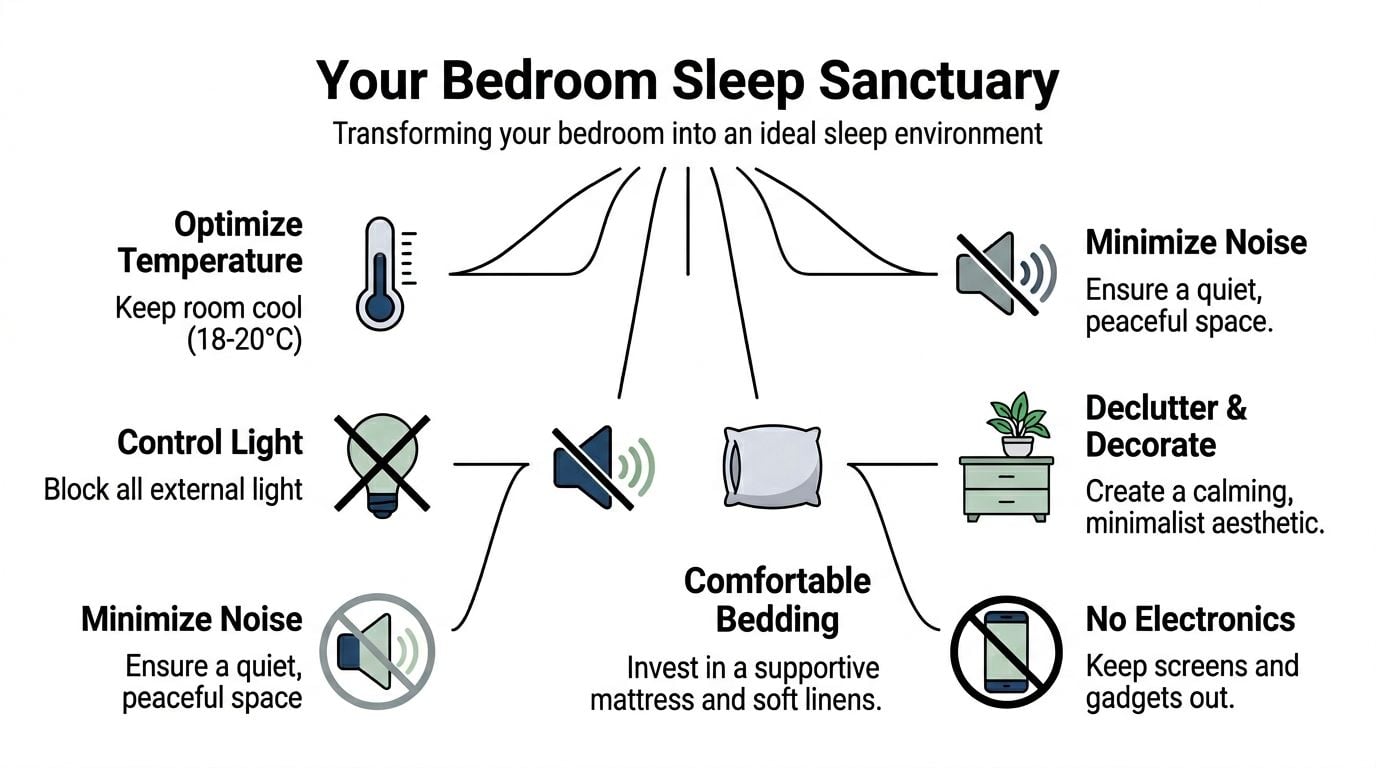
A helpful overview of how light, temperature, bedding, and setup work together is in this article on creating a sleep sanctuary.
Darkness matters more than most people realize
Your bedroom should send one clear message: It's for sleep.
Light is often the first problem. Porch lights, hallway glow, alarm clocks, and television standby lights all add up. You don’t need a costly remodel to fix that.
Try these adjustments:
- Block outside light: Blackout curtains or a well-fitted shade can make a bigger difference than people expect.
- Cover small LEDs: A tiny point of light can be surprisingly distracting once the room is otherwise dark.
- Keep the bed for sleep: If possible, avoid turning the bed into your office, dining spot, or late-night scrolling zone.
A calmer visual field also helps. Clutter doesn’t cause insomnia by itself, but a crowded room can make it harder to settle.
Quiet and temperature shape sleep depth
Noise in Ruidoso can be inconsistent. One night it’s very still. Another night it’s traffic, wind, wildlife, or a neighbor arriving late. The fix doesn’t have to be fancy.
- Use steady background sound: A fan or soft white noise can smooth out random disruptions.
- Check the room itself: Loose blinds, rattling doors, and noisy vents often matter more than outside sounds.
- Layer bedding instead of guessing: Mountain temperatures can change fast, especially overnight.
A cool room usually helps, but comfort still wins. If you’re cold at elevation, you won’t sleep deeply just because the room is technically ideal.
That trade-off matters in New Mexico’s dry mountain climate. Overcooling the room can leave some sleepers tense and wakeful. Under-cooling can make others restless. The answer is usually a room that feels comfortably cool, plus bedding layers you can adjust without fully waking up.
A sanctuary doesn’t need to be expensive. Darker, quieter, cooler, cleaner. Those four changes carry a lot of weight.
Find the True Foundation of Great Sleep Your Mattress
You can build a better routine and improve your room, but if your mattress doesn’t support your body, you’re still fighting the bed every night.
That matters even more in our area. Residents in high-altitude areas like Ruidoso, at over 6,900 feet, can experience more fragmented sleep due to lower oxygen levels, and a 2020 PMC study on sleep disparities and geography points to the importance of customized support in conditions that can aggravate back and joint strain.
Signs your bed is working against you
Most mattresses don’t fail all at once. They fade. Support gets inconsistent. Pressure relief stops being where you need it. You start adjusting around the bed instead of resting on it.
Watch for signs like these:
- You wake up achy: Shoulder, hip, neck, or lower back discomfort that eases once you get moving often points to poor support.
- You sleep better somewhere else: A hotel, guest room, or even the recliner feels better than your own bed.
- You notice visible wear: Sagging, body impressions, or edges that feel weak are obvious clues.
- You and your partner disturb each other: One person moves, the other wakes.
These are comfort issues, but they’re also alignment issues. If your spine falls out of a neutral position for hours at a time, your muscles stay busy when they should be off duty.
What different mattress types actually do
Mattress shopping gets confusing when every model claims to be supportive, cooling, and pressure relieving. The question is simpler. What problem are you trying to solve?
Memory foam, especially in well-built systems like Tempur-Pedic, is often a strong fit for sleepers who need close contouring. It distributes weight more evenly and can reduce pressure at the shoulders and hips. That makes it useful for side sleepers and for people who wake up sore from pressure points.
Hybrids combine coil support with comfort layers on top. That design often gives you a steadier lift through the midsection, easier movement, and better airflow. Sealy and Stearns & Foster hybrids are common choices for people who want both support and a more responsive feel.
Traditional innerspring or value-focused support models, including options from Sherwood, can suit guest rooms, growing households, or shoppers who want a simpler feel without sinking far into the bed.
Here’s a quick comparison.
| Mattress Type | Best For… | Key Benefit |
|---|---|---|
| Memory Foam | Side sleepers, pressure-point pain, motion-sensitive couples | Close contouring and pressure relief |
| Hybrid | Combination sleepers, hot sleepers, couples | Balanced support, airflow, easier movement |
| Support-focused traditional feel | Guest rooms, budget-conscious shoppers, sleepers who prefer a firmer surface feel | Stable support and a familiar feel |
One useful read if you’re weighing the health side of this decision is why investing in a high-quality mattress matters for long-term health.
There are real trade-offs between these categories.
- Softer isn’t always better: Plush comfort can feel great for ten minutes and leave your lower back unsupported all night.
- Firmer isn’t always healthier: Too much firmness can drive pressure into the shoulders, hips, and ribs.
- Cooling claims vary: Materials, room temperature, bedding, and your body all affect how warm a mattress sleeps.
For mountain-area sleepers, those trade-offs show up fast. Active people in Alto and Ruidoso often come in with sore shoulders, tight hips, or lower back fatigue from work, hiking, golfing, or time on the road. They don’t just need a “good mattress.” They need a mattress that matches sleep position, body shape, and pressure pattern.
That’s where in-person testing still beats guessing from a photo online. Mattress Pro by Miller Waldrop uses one-on-one fitting to help match sleepers with Tempur-Pedic, Sealy, Stearns & Foster, and Sherwood models based on body type, preferred sleep position, and comfort needs, with options like the Comfort Promise and full-service setup available for local shoppers.
The right mattress should let your body go quiet. If you’re bracing, twisting, or constantly repositioning, the bed isn’t doing its job.
A pillow is part of spinal alignment
People often upgrade the mattress and keep the wrong pillow. That’s a mistake.
A pillow has one job. Keep your head and neck aligned with the rest of your spine. If it’s too tall, too flat, or too soft for your sleep position, your neck works all night.
A few general rules help:
- Side sleepers usually need enough loft to fill the space between shoulder and head.
- Back sleepers usually do better with a pillow that supports the neck without pushing the head too far forward.
- Stomach sleepers often need the thinnest setup, though many feel better after moving away from stomach sleeping altogether.
For couples, don’t assume both people need the same mattress feel or pillow height. Shared bed, different bodies. That’s normal.
Power Your Nights with Smarter Days
Better sleep starts long before bedtime. What you do in the morning and afternoon often determines how sleepy you feel at night.
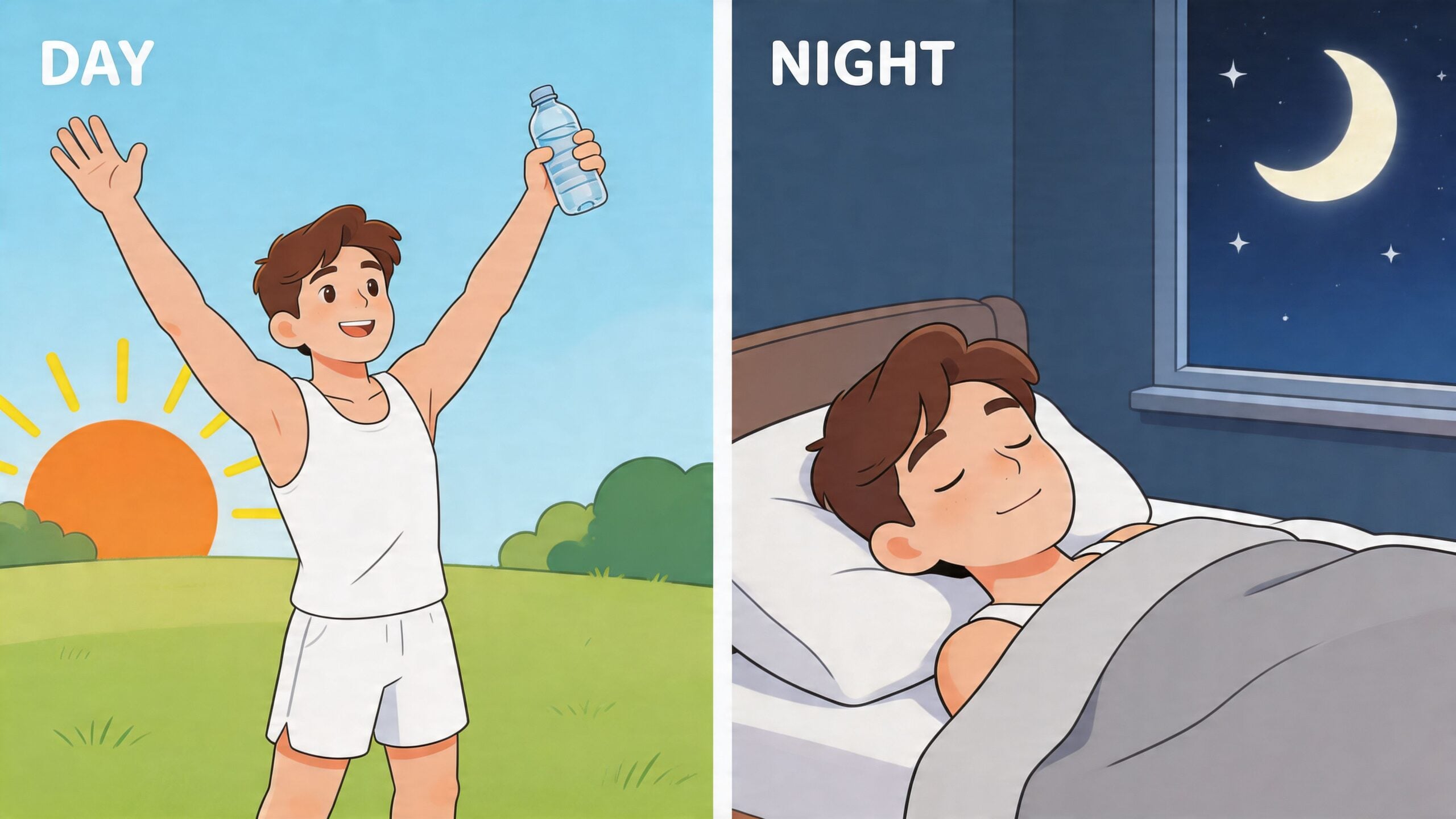
The connection is more significant than commonly realized. In the 2025 National Sleep Foundation poll, 72% of people with good sleep health reported flourishing, compared with 46% of those with poor sleep health, as shown in the NSF Sleep in America report.
Use daylight and movement to set your body clock
Your body clock responds strongly to light and activity. That’s good news in Ruidoso, where daylight is usually not hard to find.
Start with two daytime anchors:
- Get outside early when you can: Morning light helps tell your body when the day starts. That makes it easier to feel sleepy at the right time later.
- Move your body consistently: Walking, yard work, hiking, strength training, or moderate exercise all help build healthy sleep pressure.
If you want a practical local angle on this connection, this article on the connection between exercise and sleep quality is worth reading.
Exercise timing matters, but not in the same way for everyone. Some people sleep fine after an evening workout. Others feel too alert. If night exercise seems to keep you awake, move it earlier and watch what changes.
Food timing and stimulants still matter
A lot of “mystery insomnia” turns out to be simple timing problems.
Caffeine late in the day can stay in the system longer than people expect. Heavy meals too close to bedtime can leave you uncomfortable. Alcohol may make you drowsy at first, but many sleepers find they wake more easily later in the night.
Try a straightforward approach:
- Keep caffeine earlier in the day
- Finish heavier meals well before bed
- Notice your own patterns with alcohol, dessert, and late snacking
- Stay hydrated earlier, then ease up close to bedtime if bathroom trips are a problem
Sleep quality often improves when the daytime is more anchored. Regular light, regular movement, regular meals.
That doesn’t mean your days have to be rigid. It means your body sleeps better when it can predict what’s coming.
When Sleep Still Won't Come What to Do Next
If you’ve cleaned up your routine, improved your room, and you’re still lying awake, it’s time to stop forcing sleep.
Trying harder usually backfires. The bed starts to feel like a place where you struggle instead of a place where you rest.
Borrow the parts of CBT-I that work at home
Cognitive Behavioral Therapy for Insomnia, or CBT-I, helps 70% to 80% of people achieve long-term remission from insomnia, according to this review on CBT-I effectiveness. It often outperforms sleep medication over time.
You don’t have to master the full clinical process on your own to use a few principles well.
- Use the bed only for sleep and sex: Don’t train your brain to associate the bed with frustration, work, or endless phone time.
- Get up if you’re awake too long: A common CBT-I rule is to leave bed if you’ve been awake for more than about 20 minutes. Sit somewhere dim and quiet until you feel sleepy again.
- Keep wake time steady: Even after a rough night, getting up at a consistent time helps reset the next one.
- Challenge panic thinking: “If I don’t sleep now, tomorrow is ruined” usually adds more alertness, not more rest.
This page on what causes insomnia and what you can do to help gives a useful starting point if sleeplessness has become a pattern.
Know when to ask for medical help
A few poor nights happen to everyone. Persistent sleep trouble deserves attention.
Talk with a doctor or sleep specialist if you regularly struggle to fall asleep, wake often, wake gasping, snore heavily, feel exhausted despite enough time in bed, or notice that poor sleep is affecting your mood, safety, or daily function.
That step matters in rural areas where people often try to push through symptoms for too long. Sleep problems can be behavioral, environmental, pain-related, or medical. You don’t want to guess wrong for months.
Start Your Journey to Better Sleep Tonight
The most effective sleep plan is usually the least flashy one. Keep a steady schedule. Wind down before bed. Make the room darker, quieter, and more comfortable. Support your body with a mattress and pillow that fit the way you sleep. Give your daytime habits a chance to help your nights instead of sabotaging them.
That’s how to improve sleep quality in a way that lasts.
For people across Ruidoso, Alto, and Lincoln County, local context matters. Dry air, changing temperatures, shared beds, pressure-point pain, cabin bedrooms, and active lifestyles all change what “comfortable” really means. After seventy years of serving this community, we’ve learned that sleep gets better when the solution is personal.
If your current bed leaves you stiff, overheated, or restless, don’t ignore it. Your mattress is not background furniture. It’s the surface your body relies on every night.
A better night’s sleep doesn’t have to come from guesswork. It can come from a few smart changes, made in the right order, with help when you need it.
Ready to transform your sleep? Visit our Sleep Pros at Mattress Pro by Miller Waldrop showroom located at 2801 Sudderth Drive, Suite F, in Ruidoso. From luxury brands to budget-friendly solutions, we’re here to help you wake up loving your mornings. Browse our collection online or stop by Monday through Saturday.