

RV Mattress Queen Size: Find Your Perfect Fit in Ruidoso


An RV queen mattress is typically 60 x 75 inches, which makes it 5 inches shorter than a standard queen at 60 x 80 inches. That small difference matters a lot when a camper or motorhome has tight walkways, doors, or built-in platforms that leave no room for guessing.
A lot of RV owners around Ruidoso and Alto find that out the hard way. They expect “queen” to mean one universal size, order bedding or a replacement mattress, and then end up with a fit problem that turns a weekend getaway into a chore. A sore back after a night on a thin factory mattress doesn't help either, especially when the next day is supposed to mean hiking, fishing, or just enjoying Lincoln County instead of feeling stiff and tired.
Sleep in an RV gets more complicated because space is doing double duty. The bed has to feel comfortable, but it also has to clear walls, corners, doors, and storage access. In a mountain community where people often balance active days with the need for real recovery at night, that fit-and-comfort balance matters even more.
That's also why good mattress guidance shouldn't feel generic. Local sleep help should account for how people live here, from dry mountain air to active routines and the reality that buying the wrong bed online can feel risky. Good habits matter too, and readers who want to improve the full sleep environment can pair mattress planning with these sleep hygiene tips for better nightly recovery.
Table of Contents
- Introduction: Better Adventures Start with Better Sleep
- Understanding RV Queen Mattress Dimensions
- How to Accurately Measure Your RV Bed Space
- Choosing the Right Mattress for Your Mountain Lifestyle
- Finding the Ideal Mattress Thickness and Weight
- The Miller Waldrop Advantage for RV Owners
- Simple Installation and Care for Your New Mattress
Introduction: Better Adventures Start with Better Sleep
RV travel sounds restful until the mattress says otherwise. A couple parks near the pines, wakes up in beautiful Ruidoso, and instead of feeling ready for the day, they're rubbing shoulders, stretching stiff hips, and wondering why a trip that should feel easy left them more tired than home did.
That's a common RV problem. Factory mattresses often feel thin, overly firm, or cheaply made, and the sizing can be far less straightforward than most buyers expect. When a bed platform is custom-built into a camper, every inch counts.
For people in Lincoln County, sleep quality isn't a small detail. Better recovery supports early trail mornings, long drives, afternoons on the move, and the kind of active mountain lifestyle that's common from Ruidoso to Alto. A mattress that fits correctly and supports the body well can change the entire trip.
Practical rule: In an RV, comfort and fit have to work together. A mattress that feels good but doesn't clear the platform or bedding setup won't stay enjoyable for long.
There's also a confidence issue. Many shoppers feel fine buying a regular home mattress online, but RV beds bring extra uncertainty. Non-standard dimensions, curved corners, and thickness limits create more chances to choose wrong.
That's why clear, step-by-step mattress education matters. A good RV mattress queen size guide should answer the questions shoppers are asking, not bury the important detail under vague product language. It should help a buyer understand dimensions, measure the space properly, choose the right feel, and avoid the common mistakes that lead to returns and frustration.
Understanding RV Queen Mattress Dimensions
The size most people mean
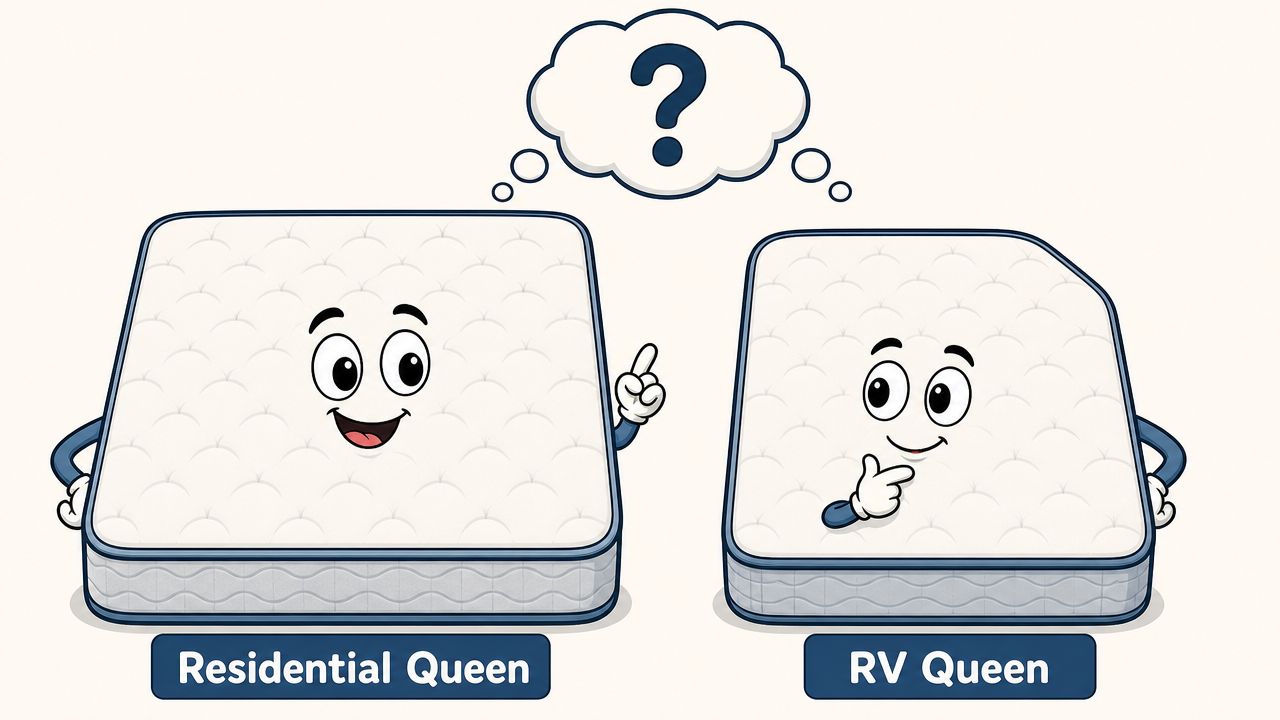
The most common answer to “what is an RV queen?” is this: the RV short queen measures 60 inches wide by 75 inches long, which is 5 inches shorter than a standard residential queen at 60 x 80 inches, according to Purple's RV mattress size guide. That shorter profile is common in recreational vehicles because it preserves floor space without taking away width for two sleepers.
That's the key point many shoppers miss. The width stays familiar, so it sounds like a normal queen. The length changes, and that's where ordering mistakes happen.
A shopper looking for the right RV mattress queen size should treat “queen” as a starting word, not a final measurement. That's especially true in campers where the bed sits close to a closet, bathroom door, or end wall.
Why the wording gets confusing
Some larger RVs use a 60 x 80 inch queen, which matches a residential queen. According to SleepDog's RV mattress size guide, that full-length queen is found in roomier travel trailers, fifth wheels, and motorhomes with enough bedroom space to handle the extra length.
Other models use a short queen, and some older units can vary slightly. That's why one owner says regular queen sheets fit, while another says they bunch up or drag.
A few practical takeaways help cut through the confusion:
- If the RV is compact: A short queen is more likely.
- If the bedroom feels more spacious: A full-length queen may be possible.
- If the mattress label is unclear: The platform measurement matters more than the marketing name.
- If bedding fit has been frustrating: Sizing is probably the reason, not the sheets alone.
Shoppers who want broader mattress shopping context can use this mattress buying guide before comparing materials and comfort options.
Standard queen sheets can be the first clue that something's off. If fabric hangs long at the foot or won't stay tucked, the mattress may be a short queen rather than a residential queen.
How to Accurately Measure Your RV Bed Space
Start with the platform, not the old mattress
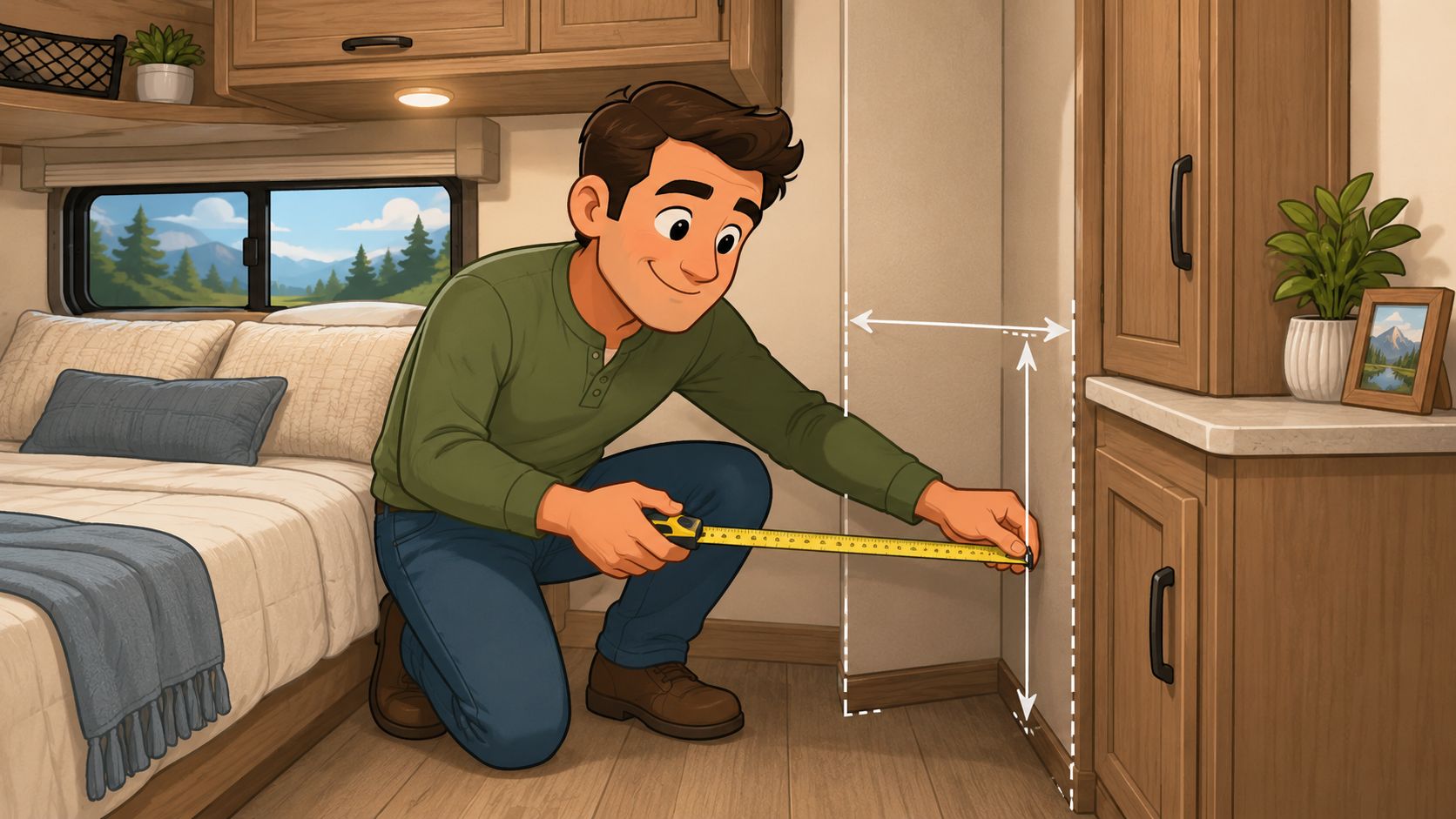
The old mattress isn't always the best thing to measure. Foam can compress, corners can distort, and previous owners may have already used the wrong size. The safer move is to measure the actual bed platform.
A simple process works well:
- Measure width from side to side. Use the inside edges of the platform, not the decorative trim.
- Measure length from head to foot. Follow the longest usable line of the bed space.
- Check more than one spot. Some RV frames narrow slightly near the corners or foot.
- Measure height clearance too. Look at nearby cabinets, folding sections, doors, or slide components.
For a helpful overview of sleep surface planning, readers can also review this broader mattress guide.
How to handle curved corners and tight clearances
Some RVs don't use a perfect rectangle. Airstream-style layouts and other campers can have rounded corners that change what will fit. According to A Better Lifestyle's RV mattress size comparison guide, the correct way to measure a curved corner is to place rulers along the edges, slide them toward the corner until they meet, and then measure the distance from the corner to the side to determine the radius.
That matters because a standard rectangular mattress may hit the cabinetry or wall even if the width and length seem correct on paper.
A careful measuring checklist helps:
- Bring a rigid tape measure: Soft sewing tapes can sag and distort the reading.
- Note corner location: Top right and bottom left aren't interchangeable if only one side is curved.
- Check platform lips or rails: A mattress may need to sit inside them, not just on top.
- Look at access paths: The mattress has to get into the RV bedroom, not just fit once inside.
Rounded corners are easy to overlook. They're also one of the fastest ways to turn an otherwise correct mattress into a frustrating return.
A written note or phone photo of each measurement can save time later. In RV spaces, small details aren't minor details.
Choosing the Right Mattress for Your Mountain Lifestyle
Comfort matters more than old RV myths
A lot of RV shoppers assume the safest choice is the firmest one. That belief hangs on because people connect firmness with durability, but comfort and support aren't the same thing. According to this discussion citing recent RV traveler preference data, 68% of long-term RV travelers prefer medium-plush or memory foam mattresses for comfort, especially because excessive firmness can lead to back pain and sleep disruption.
That aligns with what many active sleepers already feel in practice. After hiking, driving, lifting gear, or spending a long day outdoors in Ruidoso or Alto, pressure relief matters. A mattress that cushions shoulders and hips can support recovery better than a surface that feels rigid all night.
RV Mattress Type Comparison for Mountain Sleepers
Dry mountain air, cooler evenings, and active daytime routines can shape what feels best. Material choice should match how the sleeper rests, recovers, and regulates temperature.
| Mattress Type | Best For… | Key Benefit | Brands to Consider |
|---|---|---|---|
| Memory foam | Side sleepers, pressure-point relief, post-activity recovery | Contours around shoulders and hips to reduce pressure and support spinal alignment | Tempur-Pedic, Sherwood |
| Hybrid | Sleepers who want cushioning plus easier movement | Combines foam comfort with a more responsive feel and added airflow | Sealy, Sherwood, Stearns & Foster |
| Traditional innerspring feel | Guest setups or shoppers who prefer a more familiar surface | More bounce and a straightforward feel | Sealy |
| Luxury conforming feel | Couples who want a more refined, body-hugging sleep experience | Elevated pressure relief and motion control | Tempur-Pedic, Stearns & Foster |
A few material basics help narrow the choice:
- Memory foam: Often works well for sore joints and muscles because it redistributes pressure instead of pushing back sharply against the body.
- Hybrid construction: Gives some contouring but usually feels easier to change positions on, which appeals to combination sleepers.
- Cooling features: Gel-infused comfort layers and breathable covers can help manage warmth, which matters in enclosed RV sleeping areas.
- Motion control: Useful for couples, especially when one person shifts or gets up earlier.
Readers comparing major sleep systems can browse available mattress brands and collections to see how different constructions are positioned.
A mattress doesn't need to feel hard to support the body well. Support means helping the spine stay in a healthier alignment while the comfort layers reduce pressure where the body carries weight.
In mountain communities, that matters. Active routines create real wear on shoulders, low backs, and hips. The best RV mattress queen size choice often isn't the stiffest option. It's the one that combines a correct fit with recovery-focused comfort.
Finding the Ideal Mattress Thickness and Weight
Why factory RV mattresses are so thin
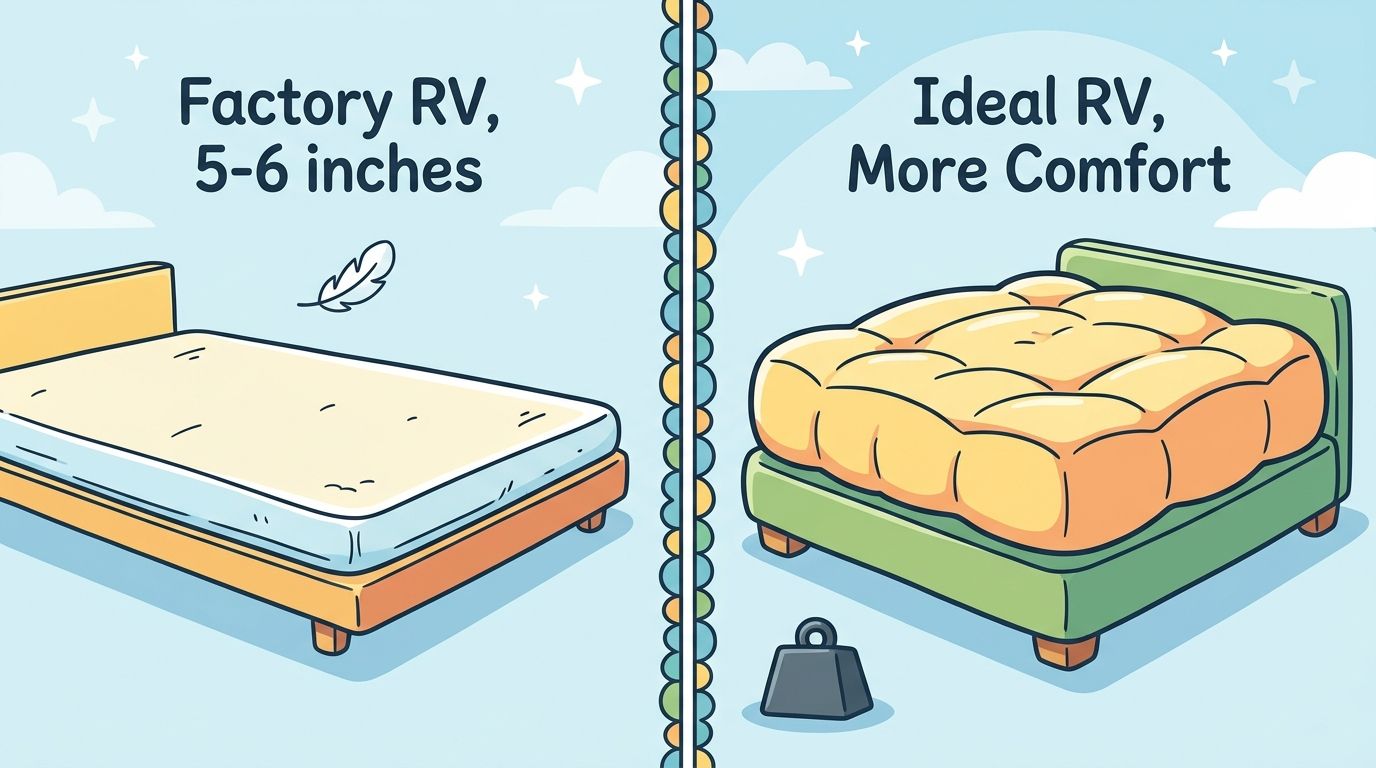
Many RV owners are disappointed by their original mattress, but the thin build usually has a reason. According to DreamCloud's RV mattress sizing article, most camper and RV mattresses are typically 5 to 6 inches thick, and that low profile helps prevent the mattress from sitting so high that doors or curtains can't close properly.
That's a mechanical limitation, not just a comfort shortcut. In a home bedroom, an extra-thick mattress is often no big deal. In an RV, added height can interfere with cabinets, fold-down sections, and enclosed sleeping areas.
How to choose a practical upgrade
Thickness should be treated like a clearance issue first and a comfort issue second. A better mattress still has to let the space function.
A practical way to think through it:
- Measure vertical space: Check the room between the platform and any obstruction above or beside it.
- Test access points: Make sure bed lifts, storage doors, and privacy dividers still work.
- Think about seated height: On some platforms, too much thickness changes how easy it is to get in and out of bed.
- Don't ignore weight: A heavier mattress may be harder to lift for under-bed storage and may add stress to hinged bases.
A well-chosen replacement often lands in the middle. It improves comfort without creating a new problem with closure, clearance, or handling.
Weight doesn't need exact math in every case, but it does need attention. A couple upgrading from a simple foam pad to a denser model should consider who will move it, whether the platform lifts, and how the RV is used. If the bed sits on a storage base that gets opened often, a more manageable mattress can make daily life easier.
The Miller Waldrop Advantage for RV Owners

Why online ordering feels riskier with RV beds
RV mattress shopping creates more risk than standard mattress shopping. A buyer isn't just choosing comfort. The buyer is also trying to avoid a size mismatch, a corner-fit issue, or bedding headaches.
That confusion shows up early. According to PlushBeds' RV queen guide, 75% of new RV buyers struggle to find compatible soft goods within the first 6 months because the common 60 x 75 inch short queen is not the same as a regular home queen. That helps explain why online ordering can feel uncertain. Even sheets can be tricky, so the mattress choice itself can feel like a gamble.
What local guidance changes
That's where a local sleep team offers a different experience. In Ruidoso, on Sudderth Drive, shoppers can speak with people who understand how mountain living and RV use intersect. They can ask questions about support, pressure relief, cooling, setup, and comfort without relying on generic product descriptions.
The value isn't only product knowledge. It's de-risking the decision.
A local, family-owned business with a 70-year legacy in sleep guidance can offer peace of mind that's hard to recreate through a box on a porch. The Comfort Promise helps address the fear of choosing the wrong bed. The Low Price Promise gives buyers confidence that value matters too. Full-Service Delivery with Professional Setup can make the final step easier, especially for shoppers who don't want to wrestle with a heavy mattress on their own.
Those promises matter because RV mattress questions are rarely one-size-fits-all. A couple in Alto may need more pressure relief after active weekends. A cabin owner in Lincoln County may want a guest-ready mattress that feels dependable and easy to maintain. A shopper in Ruidoso may want to compare Tempur-Pedic, Sealy, Stearns & Foster, and Sherwood in person instead of guessing from a screen.
The best mattress purchase often feels less like taking a chance and more like making a well-guided decision.
Simple Installation and Care for Your New Mattress
A smoother setup from day one
The installation process should start with a clean, dry platform. Dust, debris, or trapped moisture under a new mattress can shorten comfort life and create avoidable problems in a compact RV bedroom.
A simple setup routine helps:
- Clear the platform completely. Remove old bedding, inspect the base, and wipe it down.
- Confirm measurements one more time. Before opening packaging, compare the label to the platform notes.
- Position the mattress carefully. In tight RV spaces, it's easier to align corners and edges before fully dressing the bed.
- Check moving parts. Make sure nearby doors, storage lids, curtains, and slide elements still operate normally.
Shoppers who want help beyond the showroom can review local delivery and setup support.
Easy habits that help an RV mattress last longer
An RV mattress benefits from a little more maintenance than a guest room bed. Enclosed spaces can hold warmth and moisture, and road travel adds vibration and movement over time.
A few habits go a long way:
- Use a mattress protector: It helps guard against spills, dust, and general wear.
- Promote airflow: Let bedding breathe when possible, especially after travel days or humid weather.
- Rotate when appropriate: Many mattresses wear more evenly when rotated on a regular schedule, if the model allows it.
- Watch for platform moisture: If condensation or dampness shows up, address that quickly before it affects the mattress.
- Recheck fit after travel: Corners and edges can shift slightly during the road season.
Good care protects comfort. It also helps the mattress keep delivering the recovery, alignment, and support that made the upgrade worthwhile in the first place.
Ready to transform your sleep? Visit Mattress Pro by Miller Waldrop and connect with Sleep Pros at the showroom located at 2801 Sudderth Drive, Suite F, in Ruidoso. From Tempur-Pedic, Sealy, Stearns & Foster, and Sherwood to budget-friendly solutions, the team is here to help neighbors across Ruidoso, Alto, and Lincoln County wake up loving their mornings. The Comfort Promise, Low Price Promise, and Full-Service Delivery with Professional Setup help remove the risk that often comes with online shopping. Browse the collection online or stop by Monday through Saturday.