

Sleep Position for High Blood Pressure: A Ruidoso Guide


You may already be doing the hard parts right. Taking medication as prescribed. Watching sodium. Walking more. Trying to keep stress down. Then morning readings still come in higher than expected, and the question becomes simple and frustrating. What else is affecting blood pressure at night?
One overlooked factor is how the body rests for hours at a time. Sleep position for high blood pressure isn't a magic fix, but it can matter, especially when snoring, reflux, shoulder pain, or possible sleep apnea are part of the picture. The position itself is only part of the story. The pillow, mattress support, and whether the airway stays open all shape what happens overnight.
In Ruidoso and across Lincoln County, many sleepers deal with a mix of mountain living realities. Dry air can irritate the throat. Cabin bedrooms can run cool at night. Old mattresses often make people roll onto the position that hurts least, not the position that helps most. That's where practical sleep guidance matters more than generic advice.
Table of Contents
- Your Hidden Partner in Blood Pressure Management
- How Your Nightly Rest Affects Your Numbers
- A Guide to Sleep Positions and Your Heart
- The Power of Elevation with an Adjustable Base
- Finding Your Foundation The Right Mattress
- When Your Mattress Is Not Enough
Your Hidden Partner in Blood Pressure Management
A common pattern goes like this. Someone in Alto or Ruidoso keeps up with medical visits, owns a home blood pressure cuff, and still wakes up tired with stubborn readings. They assume the problem is daytime stress or diet alone. Often, sleep has been left out of the equation.
That gap matters because the body spends a long stretch each night either recovering well or struggling. If breathing stays smooth, the neck stays neutral, and the sleeper isn't fighting pressure points, rest is usually deeper and less fragmented. If the airway narrows, the shoulders go numb, or reflux keeps pushing the head higher on stacked pillows, the night becomes a series of small disruptions.
Practical rule: A sleep position only helps if the body can maintain it comfortably for most of the night.
This is why the conversation around blood pressure can't stop at “sleep on your left side” or “avoid your back.” Some people really do better off their backs. Others need elevation more than a side switch. Others need to stop chasing positions entirely and deal with snoring or suspected apnea first.
For a family in Lincoln County trying to choose a mattress, that changes the goal. The goal isn't just softness or firmness. It's building a sleep setup that supports breathing, reduces pain-driven tossing, and helps the sleeper stay in a workable position without effort.
How Your Nightly Rest Affects Your Numbers
Healthy sleep usually comes with a natural overnight drop in blood pressure. When sleep is light, broken, or filled with breathing interruptions, that overnight pattern can get thrown off. The body stays more alert than it should, and the cardiovascular system doesn't get the same quiet recovery time.
Sleep quality changes what happens overnight
Poor sleep doesn't always feel dramatic. Sometimes it's snoring. Sometimes it's waking with a dry mouth. Sometimes it's just never feeling fully restored. Those clues matter because blood pressure during sleep can reveal risk that daytime checks may miss.
A 2023 American Heart Association report on more than 11,000 adults found that high blood pressure measured while lying supine was linked to a 1.6× higher risk of coronary heart disease and a 1.86× higher risk of stroke, even when seated readings were less concerning.
That's a useful reminder for anyone focused only on daytime numbers. Nighttime physiology may be telling a different story.
What your overnight readings can reveal
Sleep depth matters too. Different stages of sleep affect breathing stability, muscle tone, and arousal patterns. A helpful overview of what REM sleep is and why it matters explains why fragmented sleep can leave a person feeling exhausted even after spending enough hours in bed.
To put it practically:
- If you wake often, the body may not settle into sustained restorative sleep.
- If you snore or gasp, airway problems may be driving nighttime strain more than mattress comfort alone.
- If you feel worse on your back, position may be affecting breathing and overnight blood pressure patterns.
- If your bed causes pain, discomfort may be forcing constant movement that breaks up sleep.
Sleep isn't separate from blood pressure management. It's one of the places where the body either gets support or loses it.
A Guide to Sleep Positions and Your Heart
The best sleep position for high blood pressure depends less on internet folklore and more on what happens to breathing, alignment, and comfort once the lights go out.
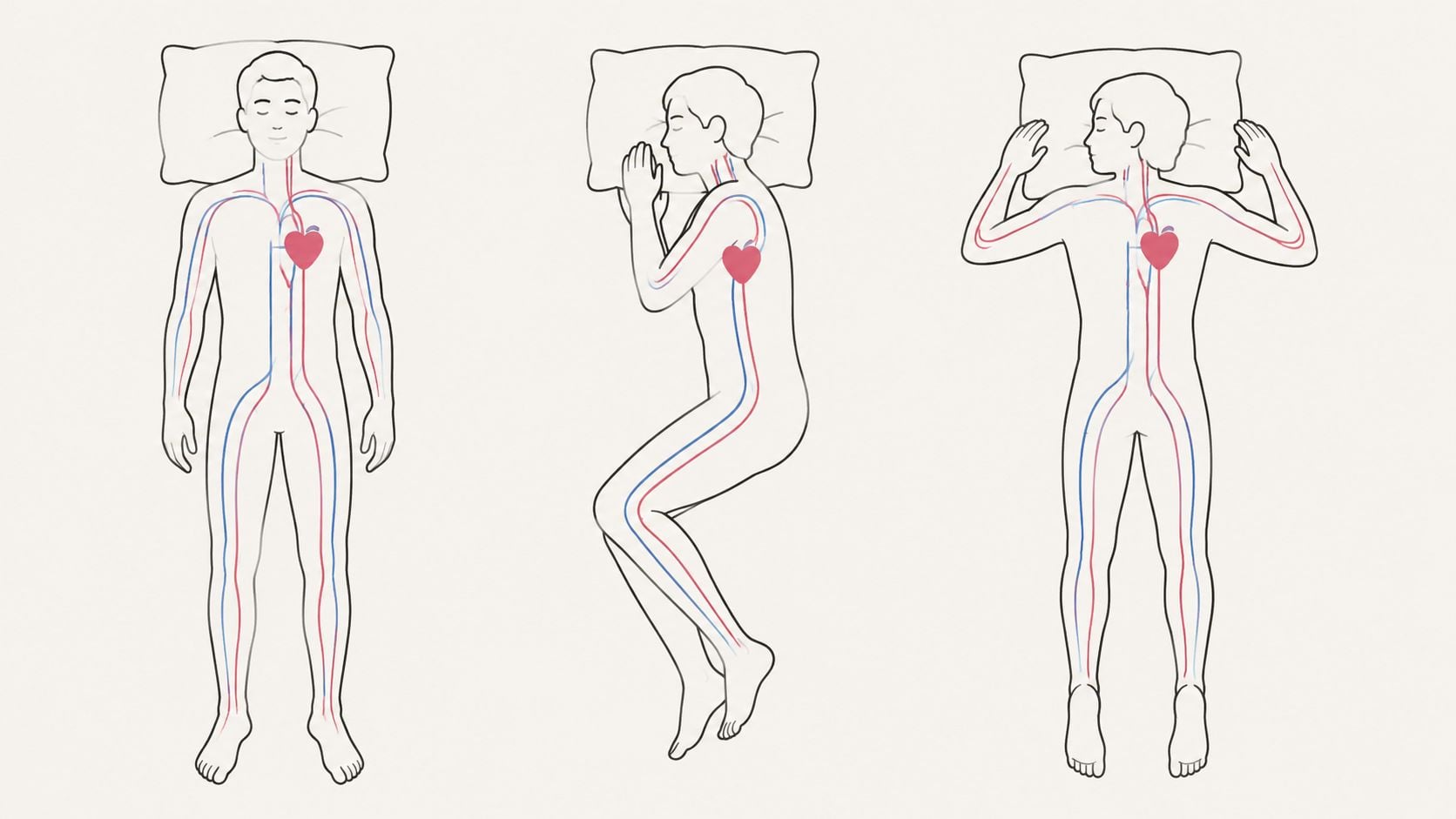
Back sleeping and airway collapse
Back sleeping can be neutral for the spine in some people, but it becomes a problem when the airway narrows in that position. That's why this conversation often circles back to sleep apnea.
In a 1-month study of 13 people with obstructive sleep apnea, preventing back-sleeping with the tennis ball technique led to a reduction in blood pressure in all 13 participants. Average 24-hour blood pressure fell by 6.4/2.9 mm Hg. The same study noted that about one-third of hypertensive patients have OSA.
For a sleeper who snores heavily or wakes choking, “back is comfortable” may not mean “back is helpful.”
Side sleeping and realistic expectations
Side sleeping is often the most practical option because it can reduce airway collapse compared with lying flat on the back. It can also ease pressure on the lower back for some sleepers, especially when the pillow height keeps the neck level and the mattress cushions the shoulder and hip enough to avoid numbness.
Still, side sleeping isn't one-size-fits-all. The evidence doesn't show that one exact side wins for every person. Position matters, but body type, pain points, reflux, and breathing patterns matter too.
A separate overnight blood pressure measurement study found that body posture can affect the reading itself. In a 2024 report on posture and nighttime blood pressure measurement, correcting for cuff-to-heart hydrostatic differences changed classification in 49.0% of patients overall, with 27.4% reclassified for hypertension and 37.2% for dipping-pattern status. The same publication also noted that right- versus left-lateral sleeping can produce blood pressure differences averaging about 15 mm Hg.
That doesn't mean one side is universally “healthy” and the other is “bad.” It means posture changes both physiology and measurement, so consistency matters.
A good side-sleep setup usually includes:
- Shoulder relief: Enough cushioning so the shoulder doesn't jam upward.
- Hip support: Enough contour to keep the pelvis from twisting.
- Neck alignment: A pillow that fills the gap between ear and mattress without pushing the head too high.
- Spinal balance: A surface that helps the body maintain proper spinal alignment while sleeping.
Stomach sleeping usually creates new problems
Stomach sleeping can keep some people off their backs, but it often trades one issue for another. The neck stays rotated for long periods, and the lower back can sag if the mattress doesn't hold the pelvis well.
For blood pressure concerns, this position usually isn't the first place to start. If a sleeper already has neck stiffness, shoulder tension, or frequent position changes, stomach sleeping often makes the night less stable, not more.
The Power of Elevation with an Adjustable Base
For many sleepers, significant improvement doesn't come from left versus right. It comes from slight elevation.
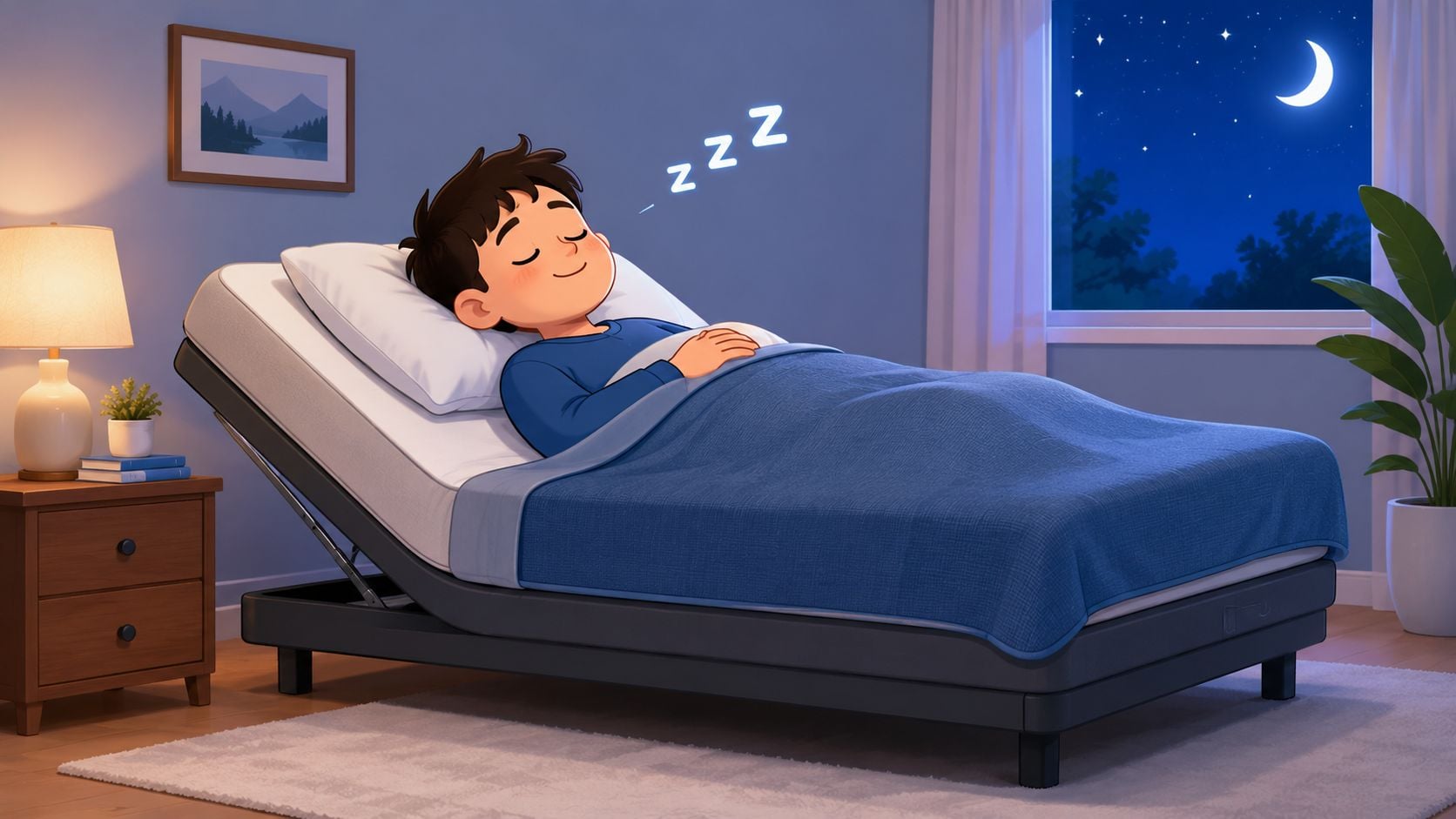
Why slight elevation can help
Raising the head and upper body a bit can make breathing feel easier for people who snore, deal with nighttime stuffiness, or notice reflux after dinner. It can also be easier on the body than trying to build a slope with extra pillows, which often bends the neck forward and collapses support under the shoulders.
In dry mountain air like Ruidoso's, irritated airways can make bedtime breathing feel rougher. A slight incline won't treat a medical condition, but it can reduce some of the mechanical issues that disturb sleep. The same goes for sleepers who wake coughing or feel pressure in the chest after lying flat.
A position that reduces snoring, throat irritation, or reflux may help sleep quality even when it doesn't directly “fix” blood pressure.
When adjustable positioning is worth considering
An adjustable base makes that incline repeatable. You can keep the same angle night after night instead of rebuilding it with pillows that slide around. For couples, it also lets one side change posture without forcing both sleepers into the same setup.
For shoppers exploring how an adjustable base changes sleep posture, useful scenarios include:
- Snoring that gets worse flat on the back
- Reflux that appears soon after lying down
- Shoulder pain from side sleeping all night
- Frequent stacking of pillows under the head
Tempur-Pedic and Sealy adjustable systems are often considered in these cases because the base becomes part of the sleep solution, not just the mattress underneath it.
Finding Your Foundation The Right Mattress
A helpful sleep position only works if the mattress can hold that position without creating pain.

The mattress has to hold the position
Many people get stuck. They decide to sleep on their side, but the mattress is too firm at the shoulder. Or they try a slight incline, but the bed surface sags under the hips. A position that looks right for ten minutes in a showroom can fall apart after four hours.
One review-style discussion of sleep position and blood pressure notes that there's still controversy and that no single sleep position has been proven definitively superior for everyone. That's why the smarter target is a mattress that supports the best position for that person without pain or pressure.
What different mattress types do well
Different builds solve different problems.
| Sleep need | What usually helps |
|---|---|
| Side sleeping with shoulder pressure | Memory foam that redistributes pressure and reduces sharp pushback |
| A more buoyant, easier-to-move feel | A hybrid design with coils for support and foam near the surface |
| Adjustable base use | A mattress built to flex without losing support |
| Back and hip support concerns | Stronger underlying support that limits sagging through the midsection |
Tempur-Pedic is often considered by side sleepers because memory foam can cushion the shoulder and hip while helping keep the spine more level. Sealy and Stearns & Foster hybrids often appeal to sleepers who want contouring but don't want to feel overly cradled. Sherwood can fit shoppers who want a straightforward comfort option without overcomplicating the decision.
How to test for the right fit
A better mattress choice usually comes from body response, not showroom buzzwords. Useful questions include:
- Do the shoulders relax on the side, or do they brace?
- Does the lower back stay supported when lying flatter?
- Can the sleeper stay comfortable in one healthy position, or do they start fighting the mattress quickly?
- Does the pillow work with the mattress height, or does the neck tip up or down?
Mattress Pro by Miller Waldrop offers a mattress selection process built around sleep position, comfort, and support, which is the right frame for this topic. A Comfort Promise matters here because the biggest fear isn't buying a “bad” bed. It's buying a bed that feels fine in-store but can't support a useful sleep posture through the night.
When Your Mattress Is Not Enough
Sometimes the bed helps, but the main issue is bigger than the bed.
Signs that call for medical follow-up
The American Heart Association strongly links obstructive sleep apnea with high blood pressure, and many position guides skip that point. A practical summary in AARP's sleep position guidance captures the core issue well. The key question isn't just left versus right. It's which position keeps the airway open.
That means a mattress change shouldn't delay medical follow-up when these signs are present:
- Loud snoring: Especially if a partner notices pauses in breathing.
- Gasping or choking at night: That's a stronger warning sign than simple snoring.
- Daytime sleepiness: Falling asleep easily in quiet moments can point to poor nighttime breathing.
- Morning headaches or dry mouth: These can show up when breathing is disrupted overnight.
- Blood pressure that stays difficult to control: Even when medication and lifestyle habits are in place.
If breathing is the main problem, comfort changes alone won't solve it.
Practical bedroom changes that support treatment
There's still plenty a sleep setup can do. It can make a recommended position easier to maintain. It can reduce pain that causes tossing. It can support elevation without stacked pillows. It can also help a partner sleep better, which matters in real households.
Useful add-ons include:
- A pillow with the right loft: Side sleepers usually need enough height to keep the neck level. Back sleepers often need less.
- A knee pillow or body pillow: These can help keep the trunk from rolling backward.
- A stable base: Movement and sagging make it harder to stay in a useful posture.
- A sleep consultation: For shoppers in Ruidoso, Alto, or nearby parts of Lincoln County, a local sleep consultation near home can help match symptoms, sleep habits, and mattress feel more carefully than a rushed online purchase.
The most honest answer is this. Sleep position for high blood pressure matters most when it helps you breathe better, sleep deeper, and stay comfortable enough to keep that position all night. It supports treatment. It doesn't replace it.
Ready to transform your sleep? Visit our Sleep Pros at Mattress Pro by Miller Waldrop located at 2801 Sudderth Drive, Suite F, in Ruidoso. From Tempur-Pedic, Sealy, Stearns & Foster, and Sherwood to adjustable bases, the goal is simple: help each neighbor find a sleep setup that supports comfort, alignment, and better rest. Browse the collection online or stop by Monday through Saturday.