

Pressure Point Relief: A Guide to Restful Sleep in Ruidoso

You wake up with a sore shoulder, a tender hip, or a lower back that feels older than it should. By afternoon, the ache eases enough that you move on with the day. Then the same thing happens again the next morning.
That pattern usually points to your sleep surface, not just your daytime routine. A lot of content about pressure point relief focuses on acupressure and hand pressure for temporary calming, but nighttime pain often starts with how your mattress, pillow, and sleep position load the body for hours at a time.
In Ruidoso and across Lincoln County, that matters even more. Active days, mountain living, and dry air all change how the body recovers at night. A sleep system that fits your frame and sleeping habits can reduce the pressure building under your shoulders, hips, and lower back in ways a one-size-fits-all boxed mattress often can't.
Understanding Nighttime Pressure Points
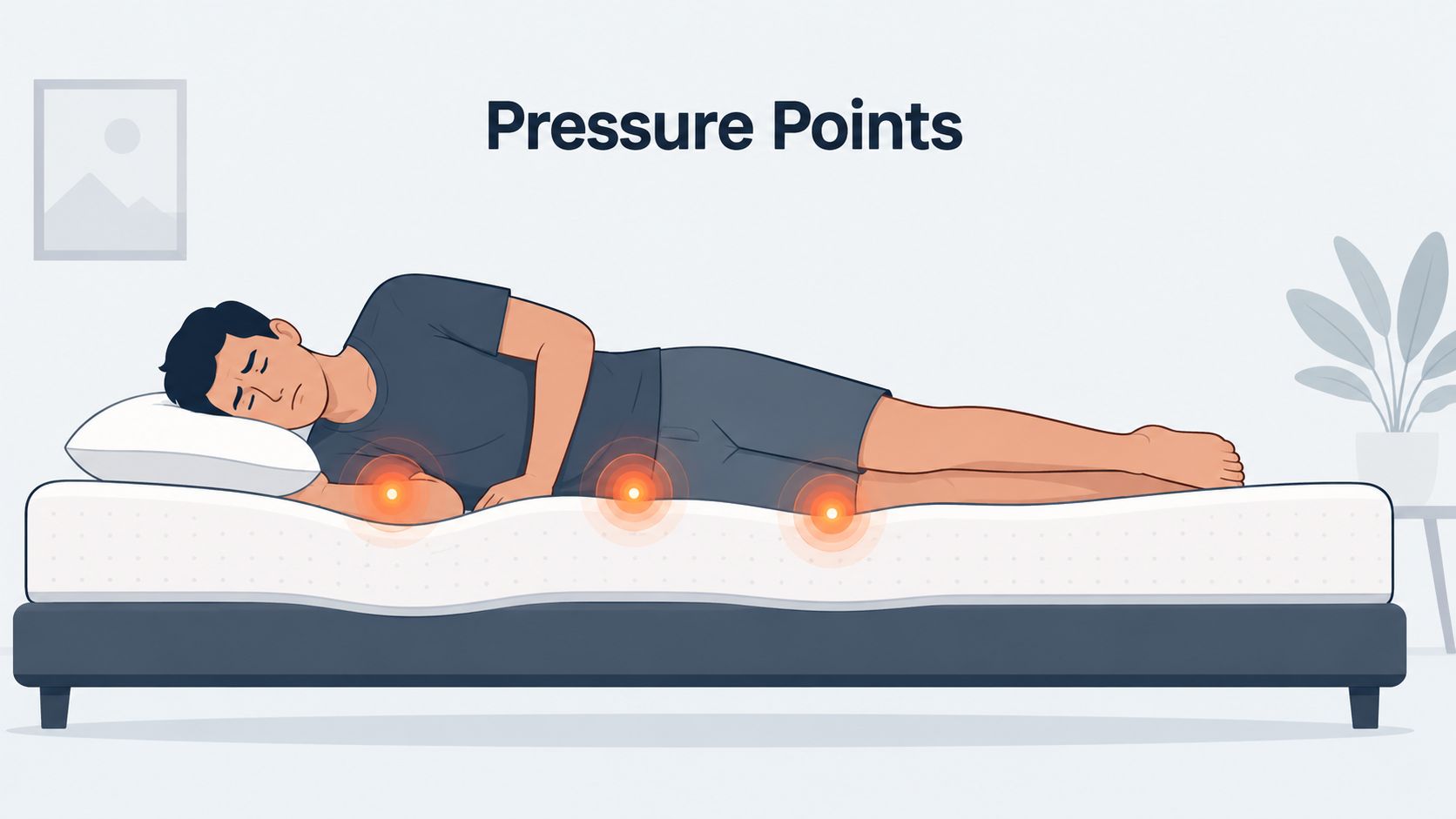
When you lie still for hours, your body weight doesn't spread evenly. It concentrates at heavier or sharper contact areas, most often the shoulders, hips, and sometimes the heels or lower back. If the mattress doesn't contour enough, those spots take too much force. If it contours too much without support, the spine can sag and create a different kind of pain.
Sleep pressure points aren't the same as acupressure points
Traditional acupressure uses a map of 361 standardized acupoints and may help some people feel calmer or less tense for a short period. But that's different from the pressure points that wake you up at 2 a.m. because your hip is sore or your arm has gone numb. Those nighttime pressure points are mechanical. They come from prolonged contact, body weight, alignment, and surface response.
That distinction matters because the solution changes. If the problem starts when you lie down and fades once you're up and moving, the bed is often the first place to look.
Practical rule: If your pain is strongest in the morning and improves as the day goes on, your mattress deserves more scrutiny than your bedtime stretch routine.
Why conventional surfaces often miss the problem
Research confirms that acupressure can offer temporary relief, but there's still a major gap in how mattress materials address nighttime pressure. Mainstream coverage rarely explains why static sleep surfaces fail to redistribute force well for chronic pain sufferers, and 68% of these patients report inadequate pressure redistribution on conventional mattresses according to this discussion of pressure points and anxiety.
That number lines up with what many sleepers feel but can't quite describe. The bed may not seem terrible. It just never lets the body fully relax.
A side sleeper in Alto may feel it as shoulder compression. A back sleeper in Ruidoso may notice a hard push under the sacrum or a hollow under the low back. A couple may feel it when one sleeper rolls toward the middle and both bodies lose stable support.
The signs your mattress is part of the problem
A pressure-related sleep issue usually leaves clues:
- Shoulder soreness: Common in side sleepers when the comfort layers don't let the shoulder sink enough.
- Hip tenderness: Often shows up when the mattress is too firm on top or too thin in the comfort layers.
- Morning stiffness: Usually points to a support issue, especially if the spine isn't staying neutral.
- Frequent tossing: The body keeps trying to escape the same hot spots.
- Better sleep away from home: That often means the current bed isn't matching your body anymore.
If those symptoms sound familiar, a deeper look at why back pain shows up every morning can help connect your morning pain to mattress performance.
Finding Your Perfect Mattress for Pressure Relief
The right mattress doesn't just feel soft. It balances conformity and support. Conformity cushions the body's curves. Support keeps the spine from dipping out of alignment. Pressure point relief happens when both are working together.

Memory foam and why it helps
Tempur-Pedic is often a strong fit for sleepers with shoulder, hip, or joint discomfort because memory foam responds slowly and spreads body weight over a broader area. Instead of pushing back sharply, it molds around the body and reduces concentrated force at the contact points.
That's why many side sleepers prefer it. The shoulder and hip can settle in without the waist or lower back being left unsupported. For people who wake from numbness, tingling, or point-specific soreness, that contouring can make a noticeable difference.
In Ruidoso's dry mountain climate, some sleepers also want less heat retention. Cooling gel and temperature-managing covers can help, especially for anyone who likes the pressure relief of foam but doesn't want a stuffy feel.
Hybrids and why some sleepers choose them
Sealy and Stearns & Foster hybrids take a different approach. They pair comfort foams with a coil support core, so you get contouring near the top with more lift and responsiveness underneath. That can work well for combination sleepers, couples, or anyone who wants pressure relief without the slower feel of dense foam.
Sherwood models can also make sense for shoppers who want cushioning with a practical budget in mind. The key isn't the label “firm” or “plush” by itself. It's how the layers interact with your body shape, weight distribution, and sleep position.
A mattress can feel comfortable for five minutes and still create pressure problems by morning. The body judges support over hours, not minutes.
Stop shopping by firm versus soft
Most shoppers start with the wrong question. They ask whether they need a firm mattress or a soft one. A better question is this: does the mattress keep the spine level while cushioning the body's high-pressure zones?
Here's a simple way to understand it:
| Sleep need | What usually helps |
|---|---|
| Sharp pressure at shoulders or hips | More contouring in the comfort layers |
| Low back strain | Stronger underlying support and better alignment |
| Changing positions often | A more responsive surface, often a hybrid |
| Sleeping warm | Cooling materials and breathable construction |
Why this matters for total sleep health
Sleep quality isn't just about comfort. At least 7 hours of sleep per night is recognized as the benchmark for physiological restoration, and chronic sleep below that level is causally linked to a high probability of obesity, type 2 diabetes, and hypertension according to sleep health guidance from Scripps Digital Trials Center.
If pressure points keep waking you up, the mattress isn't a luxury purchase. It's part of the sleep environment that supports recovery.
For shoppers dealing with soreness, joint stiffness, or tender hips, guidance on choosing a mattress for joint pain is often the most useful next step because it focuses on body mechanics instead of showroom buzzwords.
Fine-Tuning Comfort with Toppers and Pillows
Sometimes the mattress isn't wrong. It's just incomplete. A supportive bed with a slightly too-firm surface can often be improved with the right topper and pillow combination.
When a topper makes sense
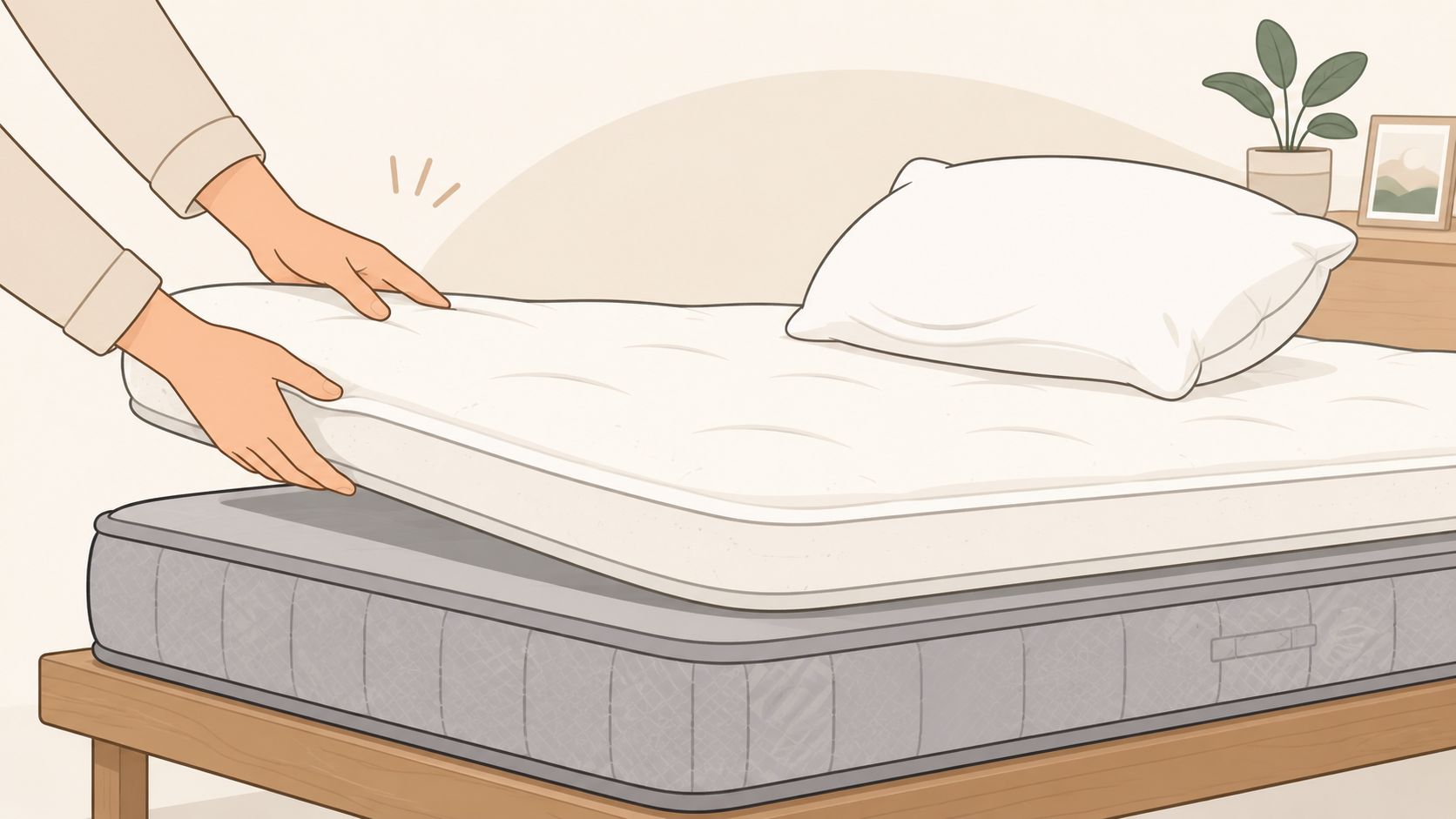
A topper works best when the mattress still holds the spine well but feels too hard at the surface. In that situation, adding a layer of memory foam or latex can soften the contact points without throwing off support too much.
A topper usually helps in these cases:
- The mattress is supportive but harsh: You feel pressure at the shoulders or hips, but not deep sagging.
- The bed is newer and structurally sound: You need surface comfort, not a full replacement.
- The guest room or cabin needs an upgrade: A topper can improve feel without redoing the whole setup.
A topper won't fix a worn-out support core. If the mattress already dips, a soft layer on top can make alignment worse.
The pillow is part of pressure point relief
Pillows don't get enough credit in conversations about pressure point relief. For side sleepers, pillow height affects the neck, shoulder, and upper back every night. If the pillow is too low, the head drops toward the mattress. If it's too high, the neck tilts the other way.
The goal is a neutral line from head to spine. That's what reduces strain through the neck and takes extra pressure off the shoulder joint.
A mattress supports the body from the shoulders down. A pillow finishes the job from the shoulders up.
Back sleepers usually do better with a lower loft than side sleepers. Side sleepers often need more fill to bridge the gap between the head and mattress. Stomach sleepers tend to create neck strain no matter how good the pillow is, which is one reason that position causes trouble.
If the bed feels almost right, a memory foam mattress topper can be a practical adjustment before moving to a full mattress change.
Sleep Positions and Self-Care for Lasting Relief
The mattress does the heavy lifting at night, but your sleep posture still matters. A poor position can overload the same joints and tissues, even on a better bed.
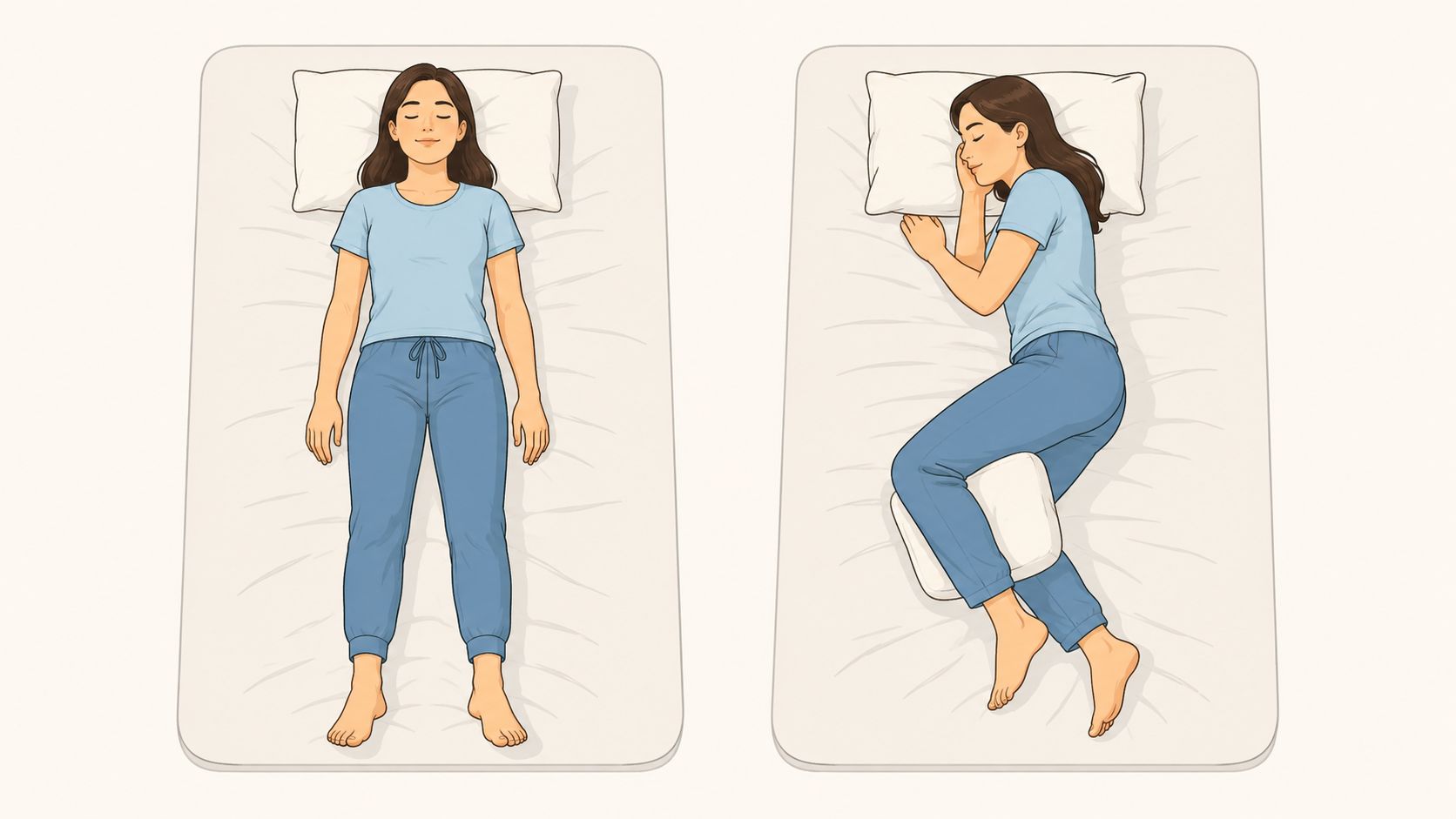
Positions that usually reduce pressure
Back sleeping often spreads weight more evenly, especially when the mattress supports the natural curve of the spine. Side sleeping can also work well, but it usually needs more setup.
A few useful adjustments:
- For side sleepers: Place a pillow between the knees. That can reduce twisting through the hips and pelvis.
- For back sleepers: A small cushion under the knees may ease pull on the lower back.
- For shoulder pain: Avoid sleeping with the arm trapped under the body.
- For stomach sleepers: Try transitioning away from that position if neck or low back pain keeps showing up.
A short bedtime routine helps
Pressure point relief usually lasts longer when the body goes to bed less tense. Gentle stretching can calm the areas that tighten during the day, especially hips, chest, and shoulders.
A simple routine may include:
- Cat-cow movement: Helps loosen the spine after sitting or driving.
- Figure-four stretch: Useful for hips and glutes.
- Doorway chest stretch: Can reduce rounding through the shoulders.
- Slow breathing: Helps settle the nervous system before lights out.
Some people also use acupressure as a pre-sleep relaxation tool. Guidance on acupressure notes that points such as LI4 may be pressed with firm, non-painful circular motion, and short holds are often used for self-care. It's generally considered safe for temporary relief, but it isn't a long-term answer for ongoing anxiety or chronic conditions, as explained in this overview of how pressure points are used for symptom relief.
One habit many sleepers overlook
Food and drink close to bedtime can keep the body from settling. Avoiding large meals and alcohol 3 hours before bed reduces sleep fragmentation, fewer reflux events, and nocturnal awakenings, which matters when discomfort is already making sleep lighter, according to these sleep hygiene recommendations for better rest.
For sleepers trying to reduce pressure through better posture, advice on keeping the spine aligned during sleep can help connect position, pillow choice, and mattress support.
The Miller Waldrop Difference A Mattress Fitting for Your Life
Online mattress shopping sounds simple until the bed arrives and the body says otherwise. Pressure relief is personal. A mattress that feels comfortable to one sleeper may create shoulder compression, hip pain, or low back strain for another.
That's why a real mattress fitting still matters in Ruidoso. Sleepers in Lincoln County don't live generic lives. Some spend weekends hiking near Alto. Some manage old injuries. Some share a bed with a partner who needs a completely different feel on the same surface.
Why expert fitting beats guessing
A careful fitting looks at more than firmness labels. It considers body shape, sleeping position, pain areas, and how the mattress responds after several minutes, not just the first impression.
That's especially important because 42% of insomnia sufferers discontinue acupressure due to nighttime discomfort, and adaptive foam may help extend those benefits by maintaining neutral spine alignment, based on recent sleep-study reporting on acupressure points and nighttime discomfort. In plain terms, self-care can help someone relax before bed, but the mattress still has to carry that relief through the night.
The fear most shoppers have isn't spending money. It's choosing the wrong bed and living with the mistake.
The local advantage on Sudderth Drive
A family-owned business with a long history in sleep can solve that problem better than a boxed mattress selected from a product page. On Sudderth Drive, the process can include testing different feels, discussing whether Tempur-Pedic, Sealy, Stearns & Foster, or Sherwood fits your needs, and narrowing options based on how your body responds.
This is also where the Comfort Promise matters. It reduces the fear of picking wrong. The Low Price Promise keeps value part of the conversation. Full-Service Delivery with Professional Setup means the sleep system is installed correctly, which matters more than people think when foundations, frames, and mattress height affect final feel.
For sleepers who want a guided process instead of guesswork, a local sleep consultation gives structure to the decision.
One option in that process is Mattress Pro by Miller Waldrop, which offers in-store fitting around body type, sleep position, and budget rather than relying on a standard online quiz.
Your Next Steps to Pain-Free Mornings
If pain is severe, persistent, or clearly medical, a doctor or physical therapist should be part of the conversation. But if the discomfort shows up mainly after sleep and eases once the day gets going, the mattress, pillow, and sleep posture are often the first things to evaluate.
The biggest shift is this. Temporary techniques can help you settle down before bed, but they don't replace a sleep surface that supports your body for the whole night. Real pressure point relief usually comes from a sleep system that cushions the shoulders and hips, keeps the spine neutral, and matches how you sleep.
A practical next step looks like this:
- Notice the pattern: Is the pain worst on waking?
- Check the setup: Mattress age, visible sagging, pillow height, and sleep position all matter.
- Test support in person: Spend enough time on the bed to feel pressure points, not just initial softness.
- Use accessories wisely: Toppers and pillows can refine comfort, but they can't rescue a mattress with failing support.
- Reduce the risk: The Comfort Promise matters when you're trying to solve a real sleep problem, not just buy furniture.
Ruidoso sleepers don't need more generic mattress advice. They need pressure point relief that fits mountain living, changing seasons, active bodies, and real budgets.
Ready to transform your sleep? Visit our Sleep Pros at Mattress Pro by Miller Waldrop showroom located at 2801 Sudderth Drive, Suite F, in Ruidoso. From luxury brands to budget-friendly solutions, we're here to help you wake up loving your mornings. Browse our collection online or stop by Monday through Saturday.