

When to Choose a King or a Queen Mattress: Which Size Is


A lot of couples in Ruidoso start this search the same way. One person is sleeping on the edge, the other is waking up every time somebody rolls over, and both are asking the same question the next morning. Is the mattress too small, or is sleep just getting harder?
Most of the time, the problem isn't mysterious. The bed fits on paper, but it doesn't fit real life. That's why knowing when to choose a king or a queen mattress matters so much. The right size can ease nightly friction, protect your space, and help the bedroom feel restful instead of cramped.
Table of Contents
- That Nightly Battle for Blanket Real Estate
- King vs Queen The Numbers That Matter
- Planning Your Bedroom Layout in Lincoln County
- How Your Sleep Style Dictates Your Mattress Size
- The Hidden Logistics of Upsizing Your Bed
- Making the Final Choice with a Ruidoso Sleep Pro
That Nightly Battle for Blanket Real Estate
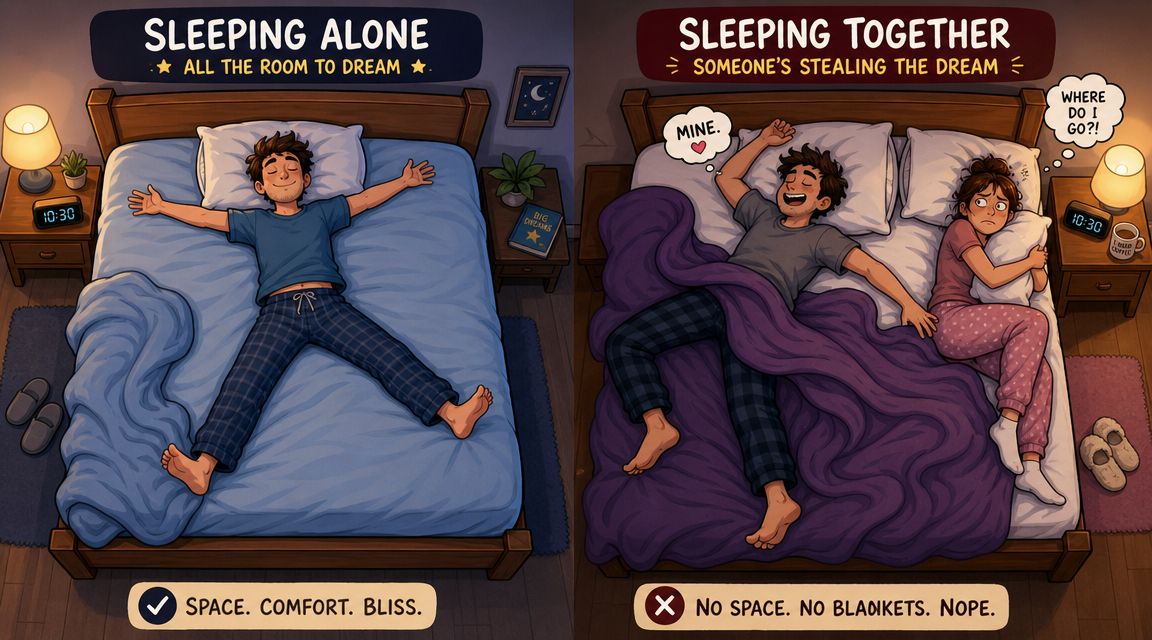
A mattress can feel fine when the lights are on and nobody's trying to sleep. Then the night starts. Somebody turns over. A knee drifts across the middle. An elbow lands where it shouldn't. One sleeper steals the covers, and the other ends up clinging to a few inches of mattress and wondering why they're still tired every morning.
That's the king versus queen question. It isn't about showroom labels or bragging rights. It's about whether the bed gives two people enough room to rest without negotiating for space all night.
In mountain homes around Ruidoso and Alto, this comes up all the time. Some families have a compact primary bedroom and need to protect floor space. Others have room for a larger bed but aren't sure if moving up in size will improve sleep. The answer depends on what's happening at night, not just what looks good in the room.
For couples with different comfort needs, size is only part of the equation. Mattress feel, support, and motion control matter too. That's why many shoppers also benefit from learning more about the best mattress options for couples with different preferences.
A mattress should stop the nightly tug-of-war, not turn sleep into a low-grade argument.
A queen is often the practical choice. A king is often the relief people didn't realize they needed. The job is figuring out which one fits the way a household sleeps.
King vs Queen The Numbers That Matter
The dimensions are simple. The decision is not.
What changes and what stays the same
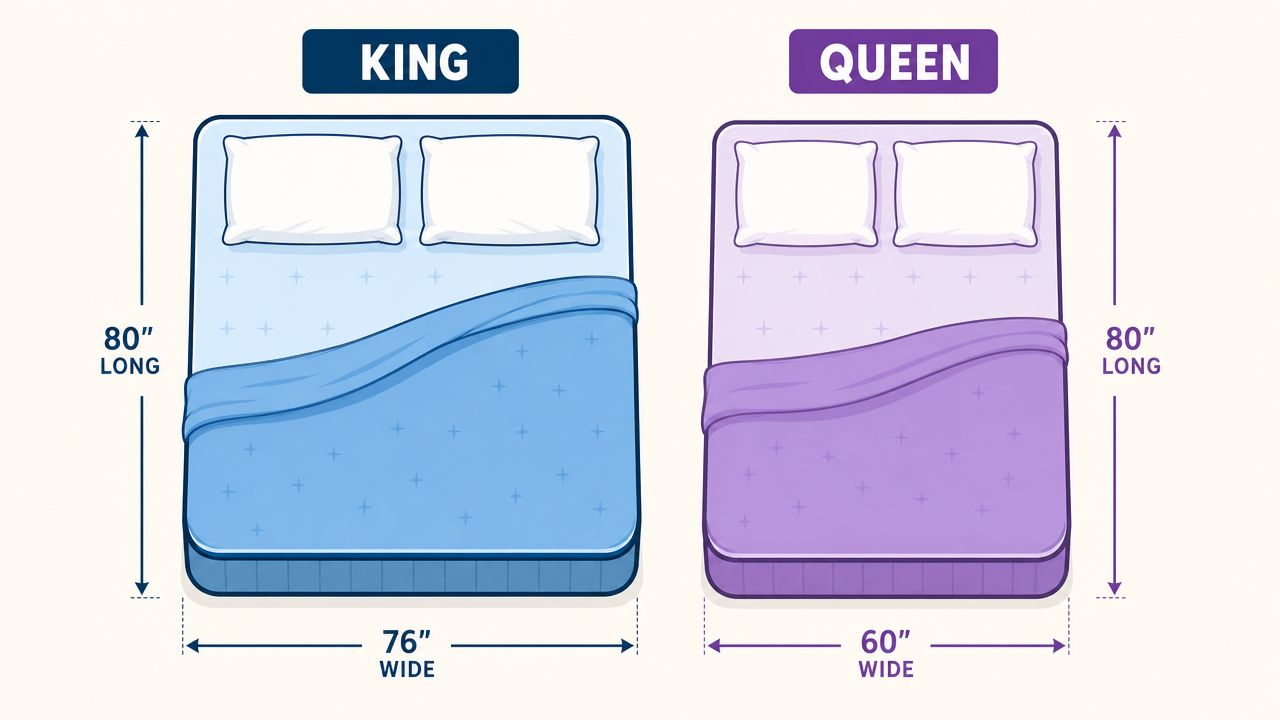
A queen mattress is 60 inches wide by 80 inches long, while a king mattress is 76 inches wide by 80 inches long. That means the king doesn't give extra length. It gives 16 extra inches of width. In surface area, that's 4,800 square inches for a queen and 6,080 square inches for a king, according to Casper's king vs queen size guide.
That same source explains the practical split for couples. A queen gives each sleeper about 30 inches of personal width. A king gives each sleeper about 38 inches.
Here's the simplest way to think about it:
| Mattress size | Width | Length | Sleep surface | Space per sleeper |
|---|---|---|---|---|
| Queen | 60 in | 80 in | 4,800 sq in | about 30 in |
| King | 76 in | 80 in | 6,080 sq in | about 38 in |
What those inches mean in real life
Those numbers matter because sleep is physical. Shoulders spread out. Side sleepers stack pillows. Back sleepers drift. Stomach sleepers sprawl. If two adults already feel crowded, the extra width of a king usually isn't a luxury. It's a correction.
A queen still makes a lot of sense for many households. It's the standard choice for good reason. It works for most couples, fits more bedrooms comfortably, and usually keeps the room from feeling overstuffed. For shoppers trying to compare all available sizes, this local guide to choosing the best mattress size for a home can help narrow the field quickly.
Practical rule: If the problem is shoulder room, elbow room, or waking up too close to the edge, width matters more than anything else.
The raw numbers don't decide for anyone. They do clarify the trade. A queen protects room space. A king protects sleeping space. That's the real fork in the road.
Planning Your Bedroom Layout in Lincoln County
A king only helps if the room still feels functional after it's in place. That's where many shoppers make a costly mistake. They focus on the mattress and forget the bedroom has to work every day.
The room size rule that works
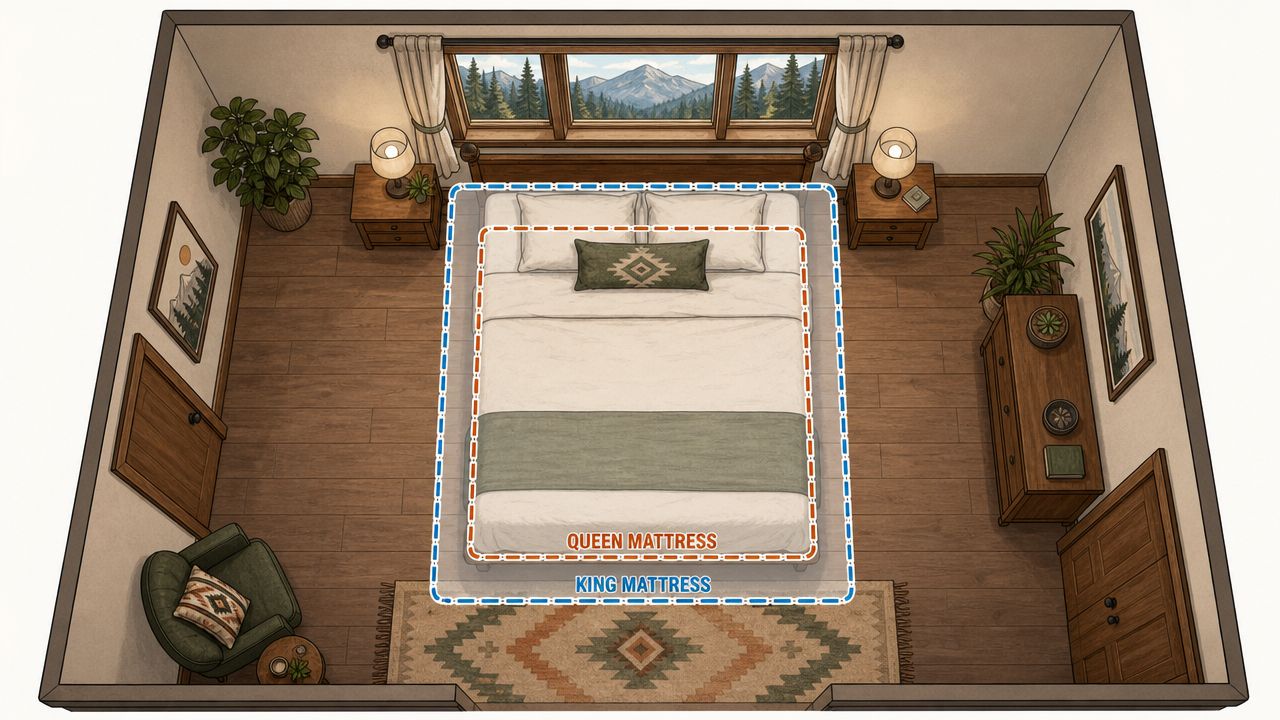
Independent mattress guides commonly identify a 10' x 12' bedroom as a good fit for a queen and a 12' x 12' bedroom as the more comfortable starting point for a king. The reason is straightforward. A king occupies about 42.2 square feet while a queen uses about 33.3 square feet, as noted in this mattress size comparison.
That doesn't mean a king can't go into a smaller room. It means the room may stop feeling easy to live in once the bed, nightstands, dresser, bench, or chest are all in place.
In Lincoln County homes, that trade-off is especially important. A cabin in Alto might have wonderful floorplan charm and tighter bedroom dimensions. A larger primary suite in town may have room to spare. The bed should match the room's reality, not the room's wishful thinking.
How to judge the space honestly
A smart layout check is simple:
- Walk space first: Leave enough room to move around the bed without turning sideways every morning.
- Furniture next: Make sure drawers can open and nightstands still have breathing room.
- Bed-making counts: If making the bed feels like a wrestling match, the room is too tight.
- Visual calm matters: A bedroom should feel like a retreat, not a storage unit with pillows.
A queen usually wins when a room needs balance. A king wins when the room can absorb the larger footprint without losing comfort and flow.
In a mountain bedroom, open space does more than look nice. It makes the room quieter, easier to move through, and more relaxing at the end of a long day.
Dry mountain air, layered bedding, and seasonal furniture changes all affect how a room feels. That's why scale matters. A mattress should improve the bedroom, not dominate it.
How Your Sleep Style Dictates Your Mattress Size
Size decisions get clearer once the focus shifts away from floorplans and onto what happens between bedtime and sunrise. The right answer usually shows up in the sleep pattern.
When a queen is enough
A queen is the right call for many people. It works well for solo sleepers who want extra room, and it still suits plenty of couples who sleep fairly still and don't share the bed with anyone else.
A queen also makes sense when the main problem isn't size. If pressure points, back support, or overheating are the bigger issues, the solution may be mattress construction rather than more width. That's where comparing memory foam, hybrid, and innerspring support systems becomes useful, especially for shoppers sorting through spinal alignment, pressure relief, and cooling needs in Ruidoso's dry climate. This guide to choosing the right mattress for a sleeping style helps frame that decision.
When a king solves a real sleep problem
A king becomes the better choice when sleep is getting interrupted by proximity. According to Mattress Firm's comparison of king and queen mattresses, a king adds 16 inches of width over a queen and gives each sleeper 38 inches across, effectively the width of a twin-size mattress per person. The same source notes that this extra buffer is the stronger technical fit for reducing partner disturbance.
That matters most for households like these:
- Restless couples: One partner changes positions all night and the other wakes easily.
- Mixed sleep styles: One person sprawls while the other sleeps close to the edge.
- Pet households: A dog at the foot of the bed changes the usable space fast.
- Family drift: A child who climbs in at 2 a.m. can turn a queen into a crowded bench.
For those sleepers, a king isn't about indulgence. It's about reducing collisions and forced repositioning.
If one sleeper's movement keeps becoming the other sleeper's problem, the bed is too small for the way that household sleeps.
This is also where premium mattress design can make the size choice work even better. A motion-isolating Tempur-Pedic can help limit disturbance. A supportive Stearns & Foster or Sealy hybrid can improve alignment while still giving bounce and airflow. Sherwood models can offer a practical fit for shoppers who want comfort without overspending. Size and construction work together. One can't fully fix the other.
The Hidden Logistics of Upsizing Your Bed
A lot of mattress advice stops at comfort. That leaves out one of the biggest real-world issues. Bigger beds are harder to live with.
Why a bigger bed can become a bigger hassle
Most guides give the obvious advice. Measure the room. Check the budget. Then choose the larger bed if sleep space sounds appealing. That's incomplete.
A key gap in many king-versus-queen discussions is movability and lifecycle cost. As explained by Sleep Foundation's overview of queen vs king mattress trade-offs, kings are harder to move and have higher bedding costs. That matters even more in mountain and second-home markets, where a queen is often the better fit for people who move frequently or furnish vacation rentals.
In practical terms, the mattress doesn't live only in the bedroom. It has to get through the doorway, around corners, down halls, and sometimes into a home with tighter access than expected.
Who should think twice before going king
A queen often deserves a harder look if any of these sound familiar:
- Frequent movers: A smaller mattress is less awkward during transitions.
- Vacation rental owners: Turnover, replacement, and room flexibility matter.
- Cabin furnishing projects: Some layouts in Alto or across Lincoln County are less forgiving.
- Budget watchers: Sheets, protectors, and bedding usually cost more once the bed gets bigger.
That doesn't mean a king is a mistake. It means the household should count the ownership friction, not just the sleeping surface.
For shoppers who want the larger size without the hauling headache, professional mattress delivery and setup can remove a lot of the stress on day one. It won't change future bedding costs, but it does make the transition much easier.
A queen is often the smarter long-term purchase for people who prize flexibility. A king is worth the hassle only when the extra sleep space solves a problem you feel every night.
Making the Final Choice with a Ruidoso Sleep Pro
The final decision usually comes down to one question. Will the added space change how well the household sleeps, or will it only make the room fuller and the purchase more expensive?

The clearest decision guide
The simplest recommendations are these:
- Choose a queen if the room needs to stay open, the sleepers don't crowd each other much, or flexibility matters more than luxury.
- Choose a king if partner disturbance is a nightly issue and the bedroom can comfortably handle the larger footprint.
- Choose a queen for rentals or second homes if moving, replacing, and reworking the room are part of ownership.
- Choose a king for active sleepers if extra personal space is the difference between broken sleep and steady sleep.
That's the straight answer. Most households don't need more complication than that.
The nuance is whether the wider mattress changes actual sleep quality. According to Purple's discussion of king versus queen buying decisions, the choice often hinges on whether the extra 1,280 square inches will materially reduce partner disturbance. That's why the difference is best judged in person, where shoppers can compare mattresses and decide whether the sleep gain outweighs the room or budget penalty.
Why in-person testing changes the answer
Reading dimensions online helps. Lying down side by side tells the truth faster.
A couple can test a queen and think, “This is fine.” Then one person rolls toward the center, the other spreads an arm, and the compromise becomes obvious. The reverse happens too. Some shoppers assume they need a king, then discover a supportive queen with good motion control gives them everything they need while preserving floor space.
That hands-on comparison is where a local consultation earns its keep. A sleep consultation in Ruidoso gives shoppers a chance to compare feel, support, and size with someone who understands the specific needs of mountain homes, guest rooms, cabins, and full-time family bedrooms.
A mattress decision also feels less risky when the process includes protections. The Comfort Promise matters because it addresses the fear of choosing the wrong feel or size. The Low Price Promise matters because shoppers shouldn't have to wonder whether buying local means paying more. Full-Service Delivery with Professional Setup matters because mattresses are awkward, and nobody wants to wrestle one through a hallway after a long day.
Mattress Pro by Miller Waldrop offers that kind of local, consultative shopping for Tempur-Pedic, Sealy, Stearns & Foster, and Sherwood in Ruidoso. That's useful because size decisions rarely stand alone. Support, pressure relief, cooling, and motion isolation all change whether a queen feels sufficient or a king feels necessary.
The right mattress size should make the whole bedroom work better and the whole household sleep better.
After decades of helping families across Ruidoso, Alto, and wider Lincoln County sort through this exact choice, one pattern stays consistent. A queen is the smart buy when space efficiency and practicality lead the decision. A king is the right buy when poor sleep is being caused by crowding, movement, or shared-bed chaos.
Neither choice is automatically better. The better choice is the one that fits the room, the sleepers, and the life built around that bed.
Ready to transform your sleep? Visit our Sleep Pros at Mattress Pro by Miller Waldrop showroom located at 2801 Sudderth Drive, Suite F, in Ruidoso. From luxury brands to budget-friendly solutions, we're here to help you wake up loving your mornings. Browse our collection online or stop by Monday through Saturday.