

Casa Y Cosas: Your Guide to Sleep Essentials in Ruidoso


A Ruidoso homeowner can spend a weekend refreshing a bedroom, adding attractive bedding, adjusting the lighting, and still wake up with a sore shoulder. A vacation-rental host can create a beautiful cabin, then discover that guests remember the mattress more clearly than the view. That's the practical meaning behind casa y cosas, home and things, when sleep comes first.
The bedroom isn't just another room to furnish. It's the place where the body recovers after time outdoors, where couples notice temperature and motion differences, and where guests decide whether a stay felt comfortable. A sleep-first approach helps Ruidoso households, Alto cabins, and Lincoln County rentals choose fewer, better-fitting essentials instead of collecting products that don't improve the night.
Why Your Bedroom Is the Most Important Room in Your Ruidoso Home
A homeowner on a sunny upstairs floor may notice the problem gradually. The room looks welcoming, but one partner wakes warm, the other turns repeatedly, and both start the day stiff. A host may hear a similar complaint from guests who enjoyed the cabin but struggled to sleep. In both cases, the bedroom is shaping the household's mood, recovery, and impression of the property.
Ruidoso living adds its own considerations. Active days, dry mountain air, changing room temperatures, and cabin layouts can make comfort more personal than a national shopping guide suggests. A mattress that feels supportive in one bedroom may feel too warm, too firm, or poorly matched to a different sleeper.

Sleep performance should lead the room
Decor can make a bedroom attractive, but the mattress carries the daily responsibility of supporting the body. It affects pressure at the shoulders and hips, how easily a person changes position, and how much movement travels across the bed.
A useful bedroom review starts with questions such as:
- Morning comfort: Does the sleeper wake refreshed, or does stiffness appear before the day begins?
- Temperature: Does the bed feel comfortable in Ruidoso's cool evenings and warmer sunlit rooms?
- Shared sleep: Can one person move without repeatedly disturbing the other?
- Guest readiness: Would an unfamiliar visitor find the mattress broadly comfortable and well supported?
The guide to creating a sleep sanctuary can help households coordinate the mattress, bedding, temperature, and light instead of treating each item as an isolated purchase.
A local legacy changes the conversation
Miller Waldrop brings a 70-year family legacy to Ruidoso, with service shaped around local households rather than anonymous warehouse transactions. A Sleep Pro can ask about body type, sleep position, budget, room temperature, and whether the bed serves a primary bedroom or a vacation rental.
That conversation matters because mattress shopping isn't about choosing the softest or most expensive surface. It's about finding a sleep system that supports the way people in Ruidoso live. The Comfort Promise also gives shoppers a practical safety net when a short showroom test can't answer every question.
What Casa y Cosas Really Means for a Sleep-First Home
Casa y cosas means home and things, but a useful mattress-focused interpretation is more selective. It asks whether each bedroom essential contributes to better sleep, easier maintenance, or a more dependable experience for the people using the room.
Before browsing, households can sort sleep essentials into three buckets.
The sleep system
This is the physical structure supporting the sleeper:
- Mattress: The comfort and support surface should match position, pressure needs, and preferred feel.
- Foundation: The foundation must work with the mattress and provide appropriate support.
- Frame: The frame should fit the mattress dimensions and the room's practical demands.
A compatible system reduces guesswork. It also helps a shopper avoid buying a mattress first and discovering later that the existing foundation doesn't suit it.
The sleep environment
The surrounding room can either help the mattress perform or work against it. Bedding, pillows, light control, airflow, and temperature all influence how comfortable the bed feels.
A pillow deserves special attention. Even a well-matched mattress can feel wrong if the pillow leaves the neck unsupported or pushes the head too far forward. In a dry mountain bedroom, breathable materials and adjustable layers can also make temperature management easier.
The sleep routine
The final bucket is behavioral. A calm wind-down, reduced evening stimulation, a darker room, and consistent preparation for sleep can make the bedroom feel more dependable. For a cabin, routine may also include guest instructions, spare bedding, and a simple setup that works after a long day outside.
The core de casa framework offers a related way to think about essential home choices through function and comfort. For shoppers near Sudderth Drive, Alto, or elsewhere in Lincoln County, the key lesson is simple: evaluate the bedroom as a connected system, not as a pile of unrelated purchases.
Practical rule: If an item doesn't improve support, comfort, temperature control, organization, or sleep readiness, it probably doesn't belong at the top of the bedroom budget.
How Mattress Construction Shapes the Way You Sleep
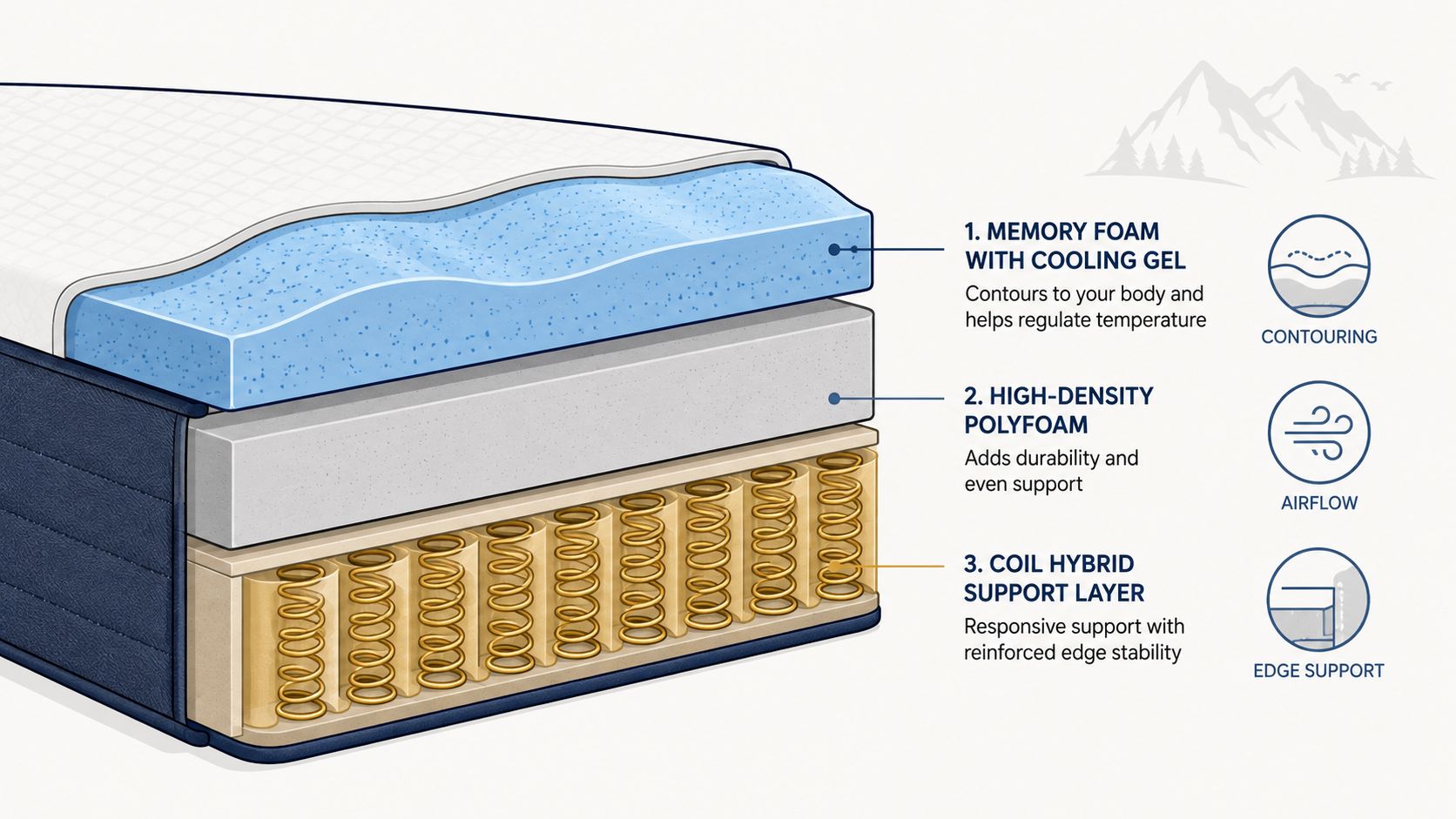
A guest arriving at a Ruidoso cabin may describe a mattress as “too soft” after only one night. Often, the better question is what sits beneath the surface. Memory foam mattresses typically use a high-density polyfoam support core, while hybrids use a coil support system, a distinction explained in this innerspring versus hybrid mattress explanation.
This construction choice affects how the body settles, how easily it moves, and how support feels near the edge.
Memory foam and contouring
Memory foam responds to body heat and pressure, so its surface can mold around the sleeper. The result is broader pressure distribution, which may feel comfortable for side sleepers at the shoulder and hip.
The support core below limits excessive sinking and helps keep the spine supported. Some designs include cooling gel or breathable materials, but the lived-in feel also depends on the bedding, bedroom, and individual sleeper.
On a showroom floor, an all-foam mattress may feel enveloping. Your body settles into the surface, and position changes feel controlled rather than springy. That sensation can work well for someone seeking pressure relief and reduced motion transfer, especially when a partner turns during the night.
Hybrids and responsive support
A hybrid pairs comfort layers with coils. Its support structure can encourage airflow, make movement easier, and provide steadier support near the perimeter when someone sits down, gets up, or shares the bed.
The surface may feel more buoyant than all-foam construction. Instead of slowly settling, the sleeper may notice quicker pushback while changing positions. Neither response is automatically better. The useful question is whether the mattress supports the way you sleep.
Different combinations of cushioning and coil support can produce very different results. Ask what each layer is doing, rather than relying on a plush-sounding description.
A simple showroom test
Use the position you normally sleep in and give your body time to respond.
- Start in the usual sleep position. Notice pressure at the shoulder, hip, and lower back.
- Change positions naturally. Pay attention to whether the surface lets you turn without effort.
- Ask a partner to turn. Observe how much movement reaches your side.
- Check the edge. Sit and lie near the perimeter to assess stability.
This memory foam versus hybrid construction guide offers another comparison of the two designs. At the Mattress Pro showroom at 2801 Sudderth Drive, shoppers can examine construction first, then choose the feel that fits their bedroom, guests, or vacation rental.
Matching Mountain Sleepers to the Right Mattress Feel
After a sunny afternoon in an upstairs bedroom, a sore shoulder from side sleeping, or a long day on the mountain, the right mattress feel can change how the whole room works. Casa y cosas works best here as a sleep-first framework: match the bed to the person, the room, and the way the bedroom is used.

The hot sleeper in a sunny bedroom
A sleeper in an upstairs room with strong afternoon sun may prefer a breathable, responsive feel. A hybrid model can be a useful starting point because its coil system may encourage airflow, while its surface cushions the body without the deeper, enveloping sensation some all-foam designs create.
That does not make every hybrid cool for every sleeper. Sheets, protectors, ventilation, and personal temperature needs still shape the result. Lie down long enough to notice whether the hips settle comfortably and whether turning feels easy.
The side sleeper with shoulder discomfort
Side sleepers generally need cushioning at the shoulder and hip while keeping the spine aligned. A contouring memory-foam option may suit someone who wants pressure relief and a steadier surface.
Pillow height also belongs in the test. A mattress may reduce shoulder pressure while an unsuitable pillow angles the neck upward. The bed and pillow work like two parts of the same support system, so judge the complete setup rather than the mattress name alone.
The active couple
After hiking, skiing, or another outdoor activity, a couple may focus on recovery, pressure relief, and motion control. One partner may prefer foam while the other wants more bounce. A hybrid or responsive hybrid design gives them a useful comparison without forcing both sleepers into the same preference.
Test the bed together. One person can change position while the other remains still, then both can assess edge support and ease of movement. This shared trial often reveals differences that solo testing misses.
The vacation-rental host
A guest room serves sleepers with unknown body types and preferences. A balanced medium feel, durable construction, solid foundation support, and a quality protector can create a broadly approachable setup. Avoid choosing an extreme plush or firm feel unless the room serves a clearly defined sleeper.
Good matching narrows the search. Two or three thoughtfully selected feels can show the right direction without requiring a shopper to test every mattress in the showroom.
The Comfort Promise helps address the worry of choosing incorrectly after a brief test. It gives shoppers room to make a careful decision, since a few minutes in a showroom cannot predict every sleeper's long-term comfort.
Bedding, Pillows, and Sleep Hygiene for Ruidoso's Mountain Air
Ruidoso's dry mountain air can pull moisture from skin and nasal passages, while cool evenings and warmer sunlit rooms can create noticeable temperature changes. The mattress is important, but the layers around it determine whether the sleep environment feels balanced.
Build adjustable bedding layers
A practical setup uses breathable materials and flexible layers:
- Start with a breathable protector: It should protect the mattress without creating a noisy or heat-trapping barrier.
- Choose moisture-managing sheets: Fabrics that move moisture away from the body can feel more comfortable in dry air.
- Add a light layer: A thin blanket makes temperature adjustments simple.
- Keep a warmer layer nearby: Mountain nights can feel different from afternoons, especially in rooms with changing sun exposure.
The aim isn't to create a complicated bed. It's to make comfort adjustable without forcing the sleeper to replace the mattress whenever the room temperature changes.
Match the pillow to the position
A side sleeper usually needs more height to fill the space between the shoulder and head. A back sleeper often needs moderate support that keeps the neck from tilting forward. A stomach sleeper commonly prefers a lower profile.
Pillow material also affects feel. A responsive pillow can make repositioning easier, while a contouring pillow may provide steadier support. If the neck feels strained, the pillow deserves attention before the mattress gets blamed.
Make the cabin bedroom sleep-ready
A short routine can improve the room without a major purchase:
- Darken the windows: Blackout curtains can help when early sunlight enters the bedroom.
- Manage outside sound: White noise may soften sounds through thin cabin walls.
- Cool down before bed: A comfortable evening temperature can support a calmer wind-down.
- Ventilate thoughtfully: Fresh air can help the room feel less stale, while bedding still needs protection from excessive dryness.
The sleep hygiene tips for a calmer routine can help households turn these ideas into repeatable habits.
Furnishing Vacation Rentals and Cabins Guests Actually Sleep Well In
A Ruidoso host furnishing two cabins may have only a narrow window between cleaning, delivery, and the next guest arrival. The challenge isn't just finding attractive mattresses. It's choosing dependable sleep systems, coordinating placement, and avoiding the physical strain of moving large beds through tight cabin stairways.
A local host can make the process more manageable by selecting mattresses for broad comfort, confirming foundation compatibility, and protecting each surface before the first guest arrives. Full-Service Delivery with Professional Setup adds practical value because the delivery team can bring the mattress inside, place it in the chosen room, and complete the setup.

A smoother furnishing sequence
A host can organize the project around the guest experience:
- Measure first: Confirm room dimensions, access routes, stair turns, and existing frame measurements.
- Choose a versatile feel: Avoid an extreme feel unless the room serves a known sleeper.
- Secure the foundation: The support underneath should match the selected mattress.
- Protect the surface: A breathable mattress protector helps defend against ordinary guest use.
- Prepare the room: Add suitable pillows, layered bedding, light control, and clear guest instructions.
The Comfort Promise can reduce uncertainty for an owner who must make several selections without testing every bed in a personal bedroom. A local Sleep Pro can help narrow options based on expected use, budget, and room purpose.
Protect the investment
A simple maintenance checklist supports a more consistent guest experience:
- Use a protector: Keep the mattress surface shielded from spills and everyday wear.
- Check the foundation: Look for movement, noise, or visible support problems.
- Rotate when appropriate: Follow the mattress maker's care guidance rather than relying on a universal schedule.
- Inspect between stays: Notice body impressions, loose components, or bedding damage before the next arrival.
For an out-of-state owner, local delivery and professional setup can also simplify coordination. The host doesn't have to treat a king-size mattress as a do-it-yourself hauling project.
How to Buy with the Low Price Promise, Financing, and the Comfort Promise
A Ruidoso household may be choosing a bed for a primary bedroom, guest room, or vacation rental. Start with two points: the budget and the comfort goal. Compare leading mattress brands by construction, feel, support, and intended room, rather than choosing by label alone.
The Low Price Promise gives local shoppers a way to review a showroom purchase alongside online and big-box options. Read the Low Price Promise information to understand the commitment. A clear comparison leaves room for a thoughtful decision.
Use a de-risked buying path
- Set the use case: Identify the room, sleeper, and expected frequency of use.
- Name the problem: Note heat, motion, shoulder pressure, back support, or difficulty moving.
- Test a short list: Try two or three construction and feel combinations in a normal sleep position.
- Review the full system: Confirm the foundation, frame, protector, delivery, and setup requirements.
- Ask about financing: Available financing terms and approval may help keep the purchase within the household or host's budget.
- Use the Comfort Promise: Treat it as protection against choosing the wrong bed, not as a substitute for careful testing.
A local showroom adds direct conversation, guided testing, and Full-Service Delivery with Professional Setup. For a mountain home, those services connect the mattress to the larger casa y cosas idea: practical home essentials organized around sleep, recovery, and hosting.
Mattress Pro by Miller Waldrop offers Sleep Pro guidance, mattresses from leading brands, the Comfort Promise, Low Price Promise, and Full-Service Delivery with Professional Setup for Ruidoso households and cabin owners. Visit Mattress Pro by Miller Waldrop at 2801 Sudderth Drive, Suite F, in Ruidoso, or browse online before stopping by Monday through Saturday.