


8 Cabin Bed Ideas for Better Mountain Sleep


A beautiful cabin bedroom can still produce poor mornings. In a Ruidoso vacation rental, the frame may match the pine walls perfectly, yet the mattress may create pressure at the shoulders, the foundation may flex, or the layout may make changing sheets unnecessarily difficult. A guest room in Alto can look inviting while blocking a window, trapping heat, or leaving too little room for someone with limited mobility.
The strongest cabin bed ideas begin with the sleep system, not the styling. Pressure-point relief, spinal alignment, dependable support, airflow, cooling, and access all matter before wood finishes or curtains enter the discussion. The broader space-saving sleeping category reflects durable demand. One market estimate values the global bunk bed market at $1.8 billion in 2025 and projects $2.9 billion by 2034, while another places it at USD 1.85 billion in 2024 with a projection of USD 2.76 billion by 2034. These figures describe the wider category, not cabin beds specifically, but they show why multifunctional sleep designs remain relevant for homes and vacation properties. (MarketIntelo bunk bed market analysis)
The eight layouts below are evaluated through a sleep-first Ruidoso lens. Each covers practical fit, advantages and drawbacks, mattress compatibility, sizing considerations, climate maintenance, guest turnover, and delivery realities. Mattress Pro by Miller Waldrop brings a 70-year family legacy to Ruidoso, Sudderth Drive, Alto, and Lincoln County, with the Comfort Promise, Low Price Promise, and Full-Service Delivery with Professional Setup.
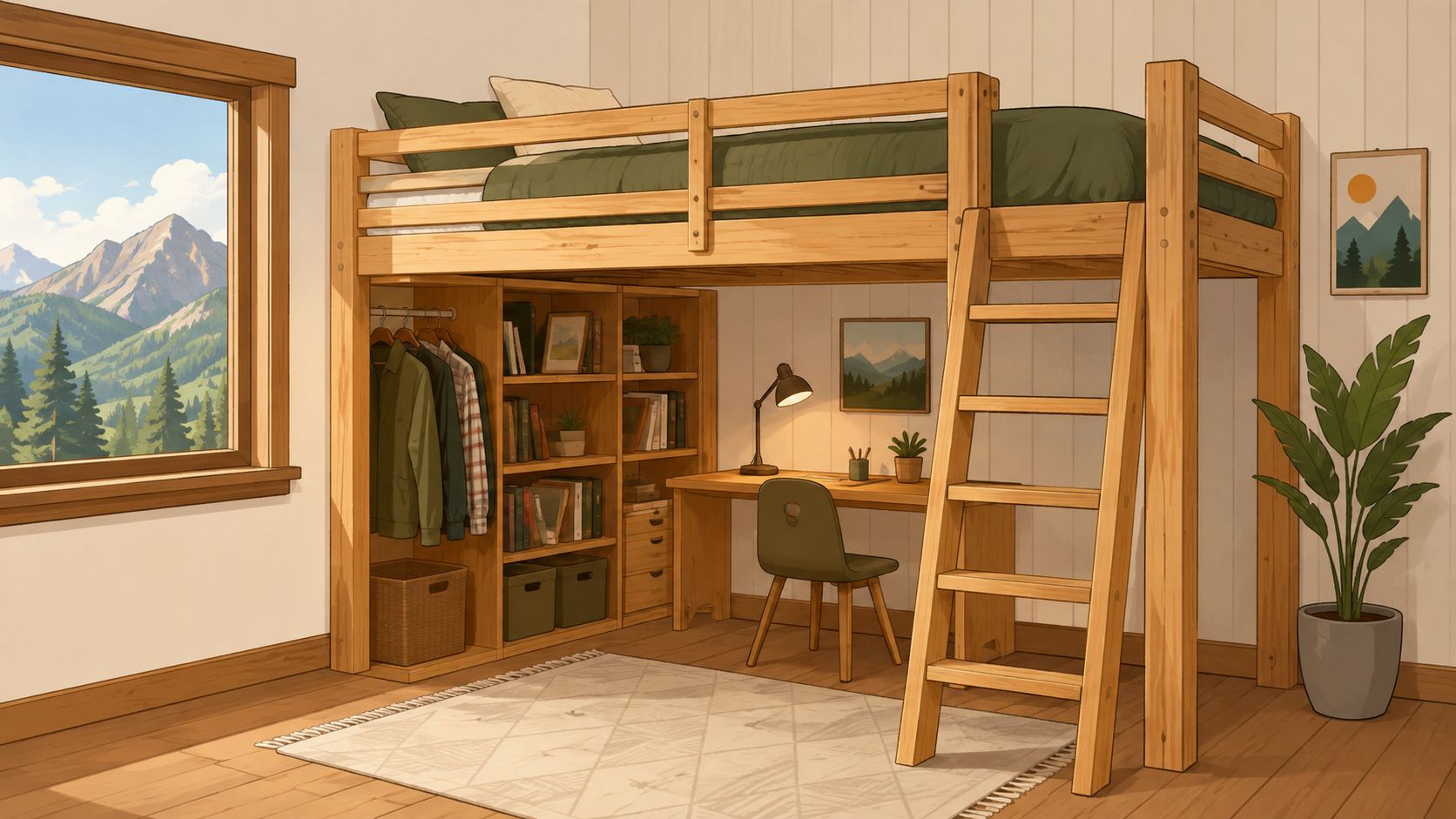
1. Loft-Style Cabin Bed With Storage Underneath
A loft-style cabin bed makes sense when a small bedroom needs to serve more than one purpose. Raising the sleep surface creates room for storage, a desk, or mountain gear underneath, which can help vacation cabins and compact guest rooms feel less crowded. The trade-off is access. Climbing stairs or a ladder may not suit every sleeper, especially someone with knee, hip, balance, or nighttime mobility concerns.
The platform should provide a solid, level foundation rather than relying on a box spring that may not fit the loft structure. A stable surface helps the mattress distribute weight consistently and supports comfortable spinal alignment. For a sleeper who feels joint discomfort during climbing, a pressure-relieving Tempur-Pedic memory foam mattress can make the sleep surface more forgiving once bedtime begins.
Safety first: Measure the guardrail with the mattress installed. Loft-style guidance recommends that the rail extend at least 5 inches above the mattress surface. (Guardrail guidance for loft-style beds)
Best fit and practical compromises
This layout works well in Alto rentals, rustic lodge rooms, and guest spaces where floor area is limited. Under-bed LED lighting can make storage safer and more usable, while non-slip steps are preferable to a narrow ladder on dry mountain floors.
Before selecting the mattress, confirm:
- Ceiling clearance: The sleeper needs enough room to sit up without contacting the ceiling or roof slope.
- Foundation construction: Solid wood or metal support is preferable to an unsupported box spring.
- Access route: Mattress delivery must account for stairways, loft openings, and tight turns.
- Storage access: Dressers and bins shouldn't make the lower zone difficult to clean.
A taller mattress can reduce effective rail height, so the frame and mattress must be evaluated together. Mattress Pro's Full-Service Delivery with Professional Setup can help ensure the mattress sits correctly and the finished arrangement remains stable. For additional room organization, a properly placed eight-drawer chest can keep clothing and gear below the loft without crowding the sleeping level.
2. Rustic Wood Frame Cabin Bed With Natural Finishes
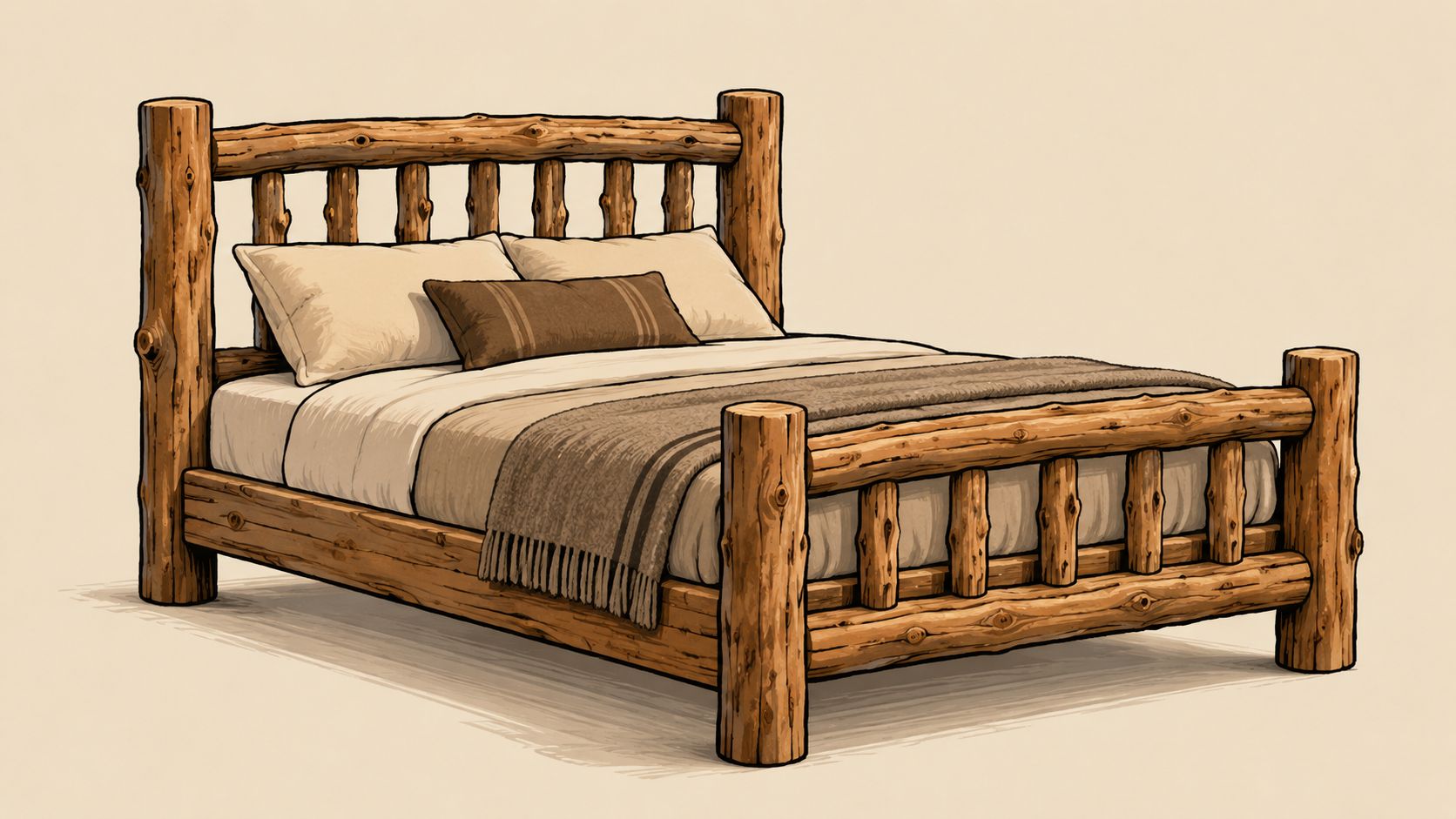
A rustic wood frame suits a cabin that already has exposed beams, log details, or warm natural finishes. Pine, cedar, aspen, reclaimed wood, and mesquite can create the visual character people expect from a mountain bedroom, but appearance shouldn't obscure the foundation's job. The frame needs to stay level and resist movement so the mattress can support the body evenly.
This style pairs naturally with a long-term mattress investment such as Stearns & Foster or Tempur-Pedic. Memory foam can contour around shoulders and hips, while a premium hybrid can combine pressure relief with easier airflow. Sealy and Sherwood also give shoppers practical options when the room needs dependable support without making the mattress the most visually dominant feature.
Support, airflow, and wood care
A solid platform or properly designed slat system may eliminate the need for a box spring. The mattress manufacturer's foundation requirements should always take priority, particularly for foam and hybrid models. Modern support systems generally perform best when slat gaps stay at or below 3 inches, with some recommendations tightening the spacing to 2.5 inches. Memory foam and latex often need spacing under 2 inches to prevent the mattress from settling into the gaps. (Mattress slat-spacing guidance)
In Ruidoso's dry mountain air, airflow still matters even though the room may feel dry. The owner should lift the mattress during cleaning, inspect the platform for dust, and avoid placing the frame directly against a cold exterior wall. A clear protective finish can help preserve the wood, but the sleep surface should remain clean, dry, and level.
A rustic frame is less practical when:
- The room is very tight: Thick posts can reduce circulation space.
- The floor is uneven: Shims or professional leveling may be necessary.
- The property turns over frequently: Decorative crevices take more time to dust.
For a bedroom styled around natural wood, Mexican rustic decor can complement the room while the mattress remains selected for the sleeper's body type, sleep position, and budget.
3. Platform Bed With Integrated Headboard Storage
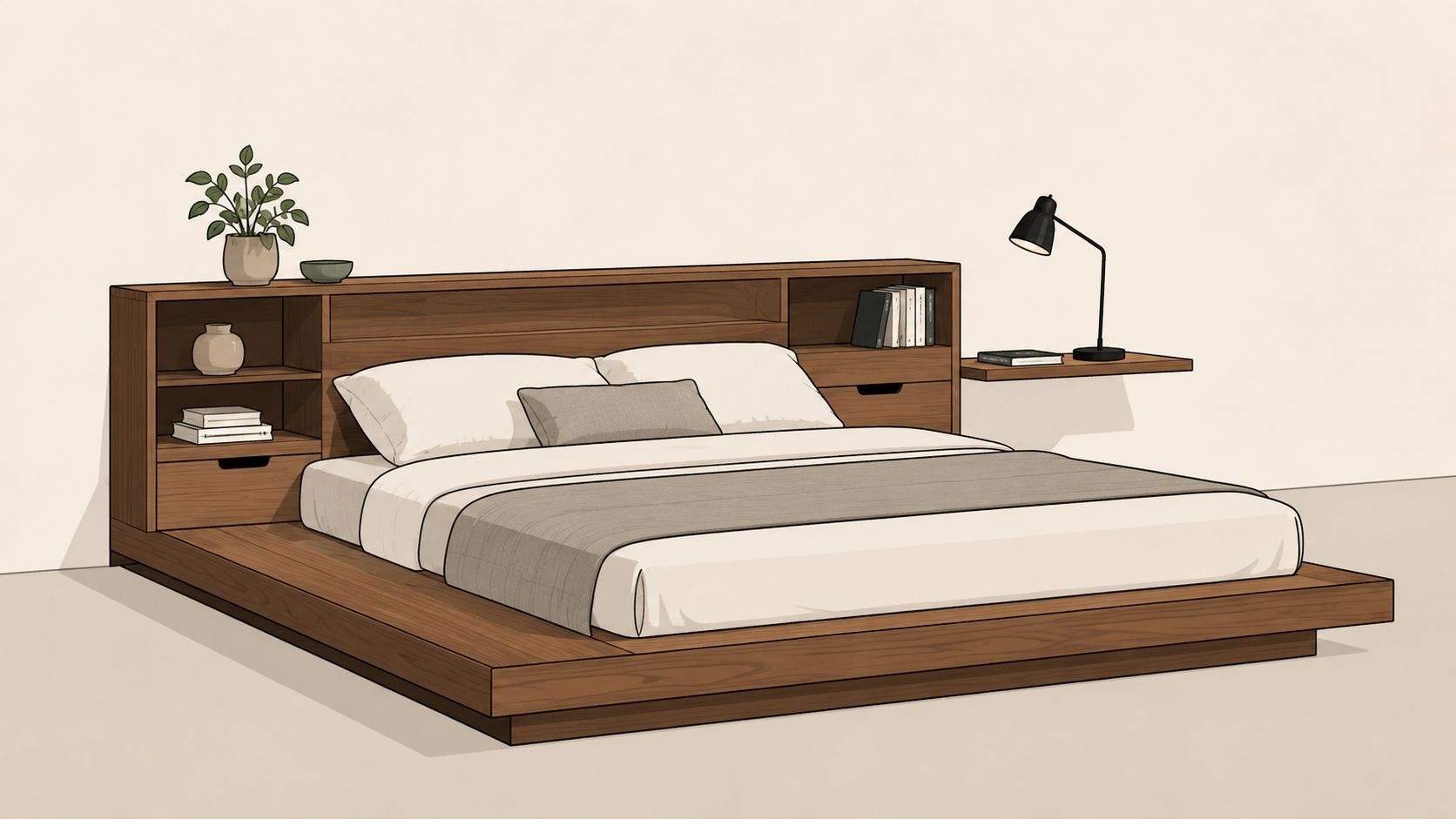
A low-profile platform with storage in the headboard is one of the more efficient cabin bed ideas for rooms where nightstands consume too much floor space. Shelves, cubbies, and enclosed compartments keep glasses, books, chargers, and extra bedding close without spreading objects across the room. The design fits modern cabins in Ruidoso and higher-end rentals in Alto that want a cleaner, contemporary-rustic appearance.
The mattress must match the platform. A solid, well-supported surface can reduce movement across the frame and give foam or hybrid materials a consistent base. For pressure-sensitive sleepers, Tempur-Pedic memory foam can contour around prominent body areas. For couples, a supportive Sealy or Stearns & Foster hybrid may offer a different balance of contouring, resilience, and airflow.
Keep storage from working against sleep
Headboard storage becomes a problem when it turns into a catchall. Clutter near the face can collect dust, create visual distraction, and make housekeeping slower. Owners should reserve the compartments for controlled categories such as spare pillowcases, reading material, or seasonal bedding.
The platform also needs careful structural inspection. Foam and hybrid mattresses generally do best with slats spaced about 2 to 3 inches apart, while traditional innerspring mattresses can sometimes tolerate wider gaps because the coil unit contributes support. (Mattress-specific slat guidance)
A useful setup includes:
- Recessed lighting: LED strips can illuminate shelves without placing a lamp on a narrow surface.
- Accessible outlets: Charging points should remain reachable without loose cords near the pillow.
- Cleaning clearance: Leave enough room to vacuum around and behind the headboard.
- A compatible mattress height: Excessive height can make the headboard storage awkward to use.
A carefully chosen affordable platform bed can preserve the low-profile look while allowing the Sleep Pros to confirm whether a selected mattress needs a platform, slats, or another foundation.
4. Canopy or Four-Poster Cabin Bed With Soft-Close Curtains
A canopy or four-poster bed creates a sheltered sleep zone that suits romantic rentals, historic inns, and lodge-style master bedrooms. Curtains can soften light, reduce visual exposure, and add warmth during cold mountain nights. They can also trap heat and dust if the owner treats them as permanent decoration instead of washable bedding equipment.
The mattress still determines whether the arrangement feels restorative. Stearns & Foster can provide a substantial, supportive feel for sleepers who prefer a traditional luxury profile, while Tempur-Pedic can suit people seeking close pressure relief and reduced partner disturbance. The frame should be chosen only after checking the mattress dimensions and finished height, because thick bedding and tall mattresses can make curtains drag or restrict movement.
Manage privacy without trapping moisture
Thermal or blackout curtains can help control early sunlight and temperature changes, but the panels should remain open during the day. This allows air to move around the mattress and reduces the chance of stale odors in an enclosed arrangement. Hypoallergenic, washable fabric is a practical choice for Ruidoso rentals exposed to dust and frequent guest turnover.
Soft-close hardware or magnetic closures can prevent curtain noise during windy weather. The posts should stand vertically, the frame should remain level, and the curtain tracks shouldn't interfere with changing sheets.
A canopy should create comfort, not eliminate ventilation. Open the curtains during turnover, inspect the mattress surface, and let the room breathe before the next guest arrives.
This option works best when:
- The room has adequate circulation: Curtains shouldn't block doors, windows, or heating equipment.
- The property targets privacy: Couples and guests often value a defined sleep environment.
- Housekeeping has time for fabric care: Dusty, unwashed curtains quickly undermine the luxury impression.
- The mattress is properly supported: Decorative posts don't compensate for a weak foundation.
Mattress Pro's Full-Service Delivery with Professional Setup helps coordinate mattress placement inside a substantial frame, especially when stairs, narrow hallways, or heavy components complicate installation.
5. Low-Profile Japanese-Inspired Tatami or Platform Bed
A very low platform can make a compact cabin room feel open and calm. The sleeping surface sits close to the floor, which suits minimalist retreats, wellness properties, and homeowners who prefer a visually quiet bedroom. It also changes the physical experience of getting in and out of bed. That can be comfortable for some sleepers and difficult for anyone with limited hip, knee, or balance range.
The mattress choice deserves more attention than the frame. A thin traditional futon may match the aesthetic, but it won't automatically provide the pressure relief or spinal support a specific sleeper needs. A suitable Tempur-Pedic mattress can preserve a low visual profile while offering contouring around pressure points, though the owner must confirm that the selected model is approved for the chosen platform.
Airflow is the non-negotiable detail
A low bed sits closer to cool surfaces and has less air movement underneath. Proper ventilation protects the mattress and helps manage moisture during seasonal changes, including spring snowmelt. Guidance for low platforms often emphasizes close slat spacing, with 1 to 2 inches used in this layout to support airflow while maintaining a stable surface.
A breathable underlayment or moisture barrier can help protect the mattress, but it shouldn't seal the underside completely. The owner should lift and inspect the mattress during cleaning, keep the bed away from exterior walls and windows, and avoid placing it where condensation or drafts are common.
Useful additions include:
- Wall-mounted shelves: These preserve floor space for circulation.
- A low nightstand: Keep water, glasses, and medication within reach.
- A clear cleaning route: The platform should be light enough to inspect beneath.
- A compatible foundation: Some mattresses need more support than a basic futon base provides.
The Sleep Pros at Mattress Pro can help identify whether a chosen Sealy, Sherwood, or Tempur-Pedic model is suitable for platform use. The right mattress should reflect sleep position and body type, not the room's minimalist style.
6. Barn-Style Sliding Door Bed Nook With Enclosed Sleeping Space
A barn-style sliding door nook can turn an open-plan cabin into a more private sleeping environment. It's particularly useful in vacation rentals where a bedroom area shares space with a living room, or where guests want separation without building a full wall. The enclosed design can reduce light and visual distractions, but the owner must protect ventilation and access.
A premium mattress makes sense only when the nook is finished correctly. Tempur-Pedic can provide close contouring for sleepers who want pressure relief, while Stearns & Foster can offer a more responsive, substantial feel. The mattress shouldn't be delivered until the door, lighting, ventilation, and floor surface have been tested.
Test the nook like a guest would
The door should slide smoothly and close. Soft-close or damping hardware prevents slamming, while vents or a small operable window keep air from becoming stale. Blackout shades inside the nook can improve sleep conditions, but they should not block required ventilation.
Monthly operational checks are sensible for a rental:
- Door movement: Confirm that the track doesn't bind or scrape.
- Noise control: Test the soft-close mechanism at normal speed.
- Air quality: Check vents for dust and confirm that air can circulate.
- Lighting: Make sure LED strips illuminate the entry without shining directly into the sleeper's eyes.
- Housekeeping access: Verify that staff can vacuum, change sheets, and inspect the mattress without dismantling the nook.
A mattress that contours closely can feel warmer than a more breathable design. In Ruidoso's changing mountain conditions, a hybrid mattress may provide a better balance of cushioning and airflow for guests who sleep warm. Bedding should remain breathable, and the nook should be left open between stays.
This layout suits a custom cabin on Sudderth Drive or in Alto, but it demands careful measurements. Door travel, mattress removal, and emergency access matter just as much as the finished appearance.
7. Trundle or Dual-Bed Cabin Bed for Guest Rooms and Flexibility
A trundle bed earns its place in a cabin when the room must host different groups without permanently sacrificing walking space. The main mattress handles everyday use, while the second sleep surface appears when children, teens, or additional guests arrive. This arrangement is practical for Ruidoso vacation rentals, family cabins, and Lincoln County properties with compact guest rooms.
The two mattresses shouldn't be treated as interchangeable afterthoughts. The primary bed is the guest-facing comfort decision, so a Tempur-Pedic or Sealy mattress may be appropriate depending on the property's audience and budget. The trundle needs its own support and comfort standard. A low-quality secondary mattress can create complaints even when the main bed feels excellent.
Match the system to the turnover routine
The trundle should glide and leave enough clearance to open fully without striking walls or furniture. Bedding must be stored separately and labeled so housekeepers can reset the room efficiently. Guests also need clear instructions, especially when the trundle requires lifting, locking, or moving nearby furniture.
A consistent mattress family can simplify replacement and guest expectations. For example, matching Sealy models can create a more predictable feel across both sleeping surfaces, but the owner still needs to verify that each mattress fits the available height and clearance.
Guest-room rule: Flexible capacity only helps when every sleeping surface remains easy to access, supportable, cleanable, and comfortable.
Owners should review:
- Mattress dimensions: Confirm that both surfaces fit without rubbing the frame.
- Vertical clearance: The upper mattress must not prevent the trundle from closing.
- Mobility needs: Guests should not have to lift heavy bedding or crawl into a tight space.
- Floor protection: Wheels or sliders should move without damaging the cabin floor.
- Instructions: A short written guide can prevent forced movement and frame damage.
The mattress guide for guest rooms can help property owners compare combinations based on guest demographics, turnover, and room limitations. Mattress Pro can also coordinate delivery and setup for both mattresses so the support surfaces align properly.
8. Adjustable Air Mattress Cabin Bed System With Smart Controls
An adjustable air mattress system offers a different answer to cabin comfort. Instead of choosing one fixed firmness for every sleeper, couples can adjust each side to suit individual preferences. That can be valuable in a high-end Alto retreat, a wellness-focused property, or a primary bedroom where one sleeper needs more cushioning and the other prefers stronger support.
The technology introduces responsibilities that a conventional mattress doesn't. Air pressure, controls, power, connectivity, and troubleshooting all affect the sleep experience. In a vacation rental, guests may not want to learn a complicated app after a long mountain drive, so the owner needs simple instructions and reliable backup procedures.
Plan for climate and power changes
Ruidoso's mountain temperature shifts can affect how an air system feels from one season to another. The owner should monitor comfort, keep the room climate-controlled, and explain adjustments without promising a single universal setting. Reliable electricity matters as well. A generator or battery backup may help preserve basic operation during an outage, depending on the specific system.
Before accepting guests, test:
- Controls and app access: Confirm that every function responds correctly.
- Firmness adjustment: Check both sides independently if the system offers dual control.
- Power continuity: Understand what happens during an outage.
- Noise levels: Pumps and motors shouldn't disturb a light sleeper.
- Staff training: Housekeepers need a clear troubleshooting process.
- Warranty conditions: Professional installation may be required to protect coverage.
An adjustable base can be paired with compatible mattresses from Sealy, Stearns & Foster, Tempur-Pedic, or Sherwood, but compatibility must be confirmed before purchase. The best adjustable bed brands should be evaluated by support needs, controls, serviceability, and intended use, not by technology alone.
A smart bed is a poor choice when the property has unreliable power, weak internet, or guests who need a simple plug-and-sleep experience. It's a strong choice when personalized comfort is the central purpose and the owner is prepared to maintain the system.
8 Cabin Bed Ideas: Side-by-Side Comparison
| Item | Implementation Complexity | Resource Requirements | Expected Outcomes | Ideal Use Cases | Key Advantages |
|---|---|---|---|---|---|
| Loft-Style Cabin Bed with Storage Underneath | High, structural design and professional assembly recommended | Moderate–High materials; tall ceilings (≥9 ft); sturdy supports | Maximizes usable floor area; creates storage/work zone beneath | Small cabins needing extra storage; rentals maximizing space | Dramatically increases functional space; accommodates premium mattresses |
| Rustic Wood Frame Cabin Bed with Natural Finishes | Medium, carpentry or custom build often required | High-quality solid or reclaimed wood; heavier framing; higher upfront cost | Durable long-term support; authentic mountain cabin aesthetic | Traditional cabins, owners prioritizing longevity and resale | Exceptional durability; natural insulation; timeless aesthetic |
| Platform Bed with Integrated Headboard Storage | Medium, integrated furniture assembly; occasional carpentry | Solid platform materials or composite; built-in shelving hardware | Streamlined storage; strong mattress support; clean modern-rustic look | Cabins with limited floor space; modern or boutique rentals | Efficient bedside storage; even mattress support; room focal point |
| Canopy or Four-Poster Cabin Bed with Soft-Close Curtains | High, large-scale assembly; professional installation advised | Tall ceilings (7–9+ ft); robust posts, curtain hardware; decorative finishes | Luxurious, intimate sleep nook; improved light and thermal control | Spacious master suites; romantic or luxury vacation rentals | Dramatic visual impact; warmth and light control; robust support |
| Low-Profile Japanese-Inspired Tatami or Platform Bed | Low, simple construction but requires ventilation planning | Low–Moderate materials; suitable low-profile mattress; moisture management | Minimalist, open aesthetics; promotes spinal alignment | Wellness-focused cabins; minimalist interiors; designers | Promotes posture; creates open feel; very stable support |
| Barn-Style Sliding Door Bed Nook with Enclosed Sleeping Space | Very High, structural modification and custom carpentry | High cost; skilled contractors; integrated lighting and ventilation | Private, controlled sleep environment; perceived luxury boost | High-end rentals; open-plan cabins needing privacy; custom builds | Privacy and noise/temperature control; built-in functionality |
| Trundle or Dual-Bed Cabin Bed for Guest Rooms and Flexibility | Low–Medium, standard assembly with trundle mechanism | Moderate materials; two mattresses; rollers/tracks | Flexible sleeping capacity; space-saving guest solution | Family cabins, group rentals, multi-occupancy guest rooms | Increases occupant capacity; hidden when not in use; cost-effective |
| Adjustable Air Mattress Cabin Bed System with Smart Controls | High, electrical setup, calibration, app integration | Very high cost; reliable power and internet; ongoing maintenance | Personalized firmness; sleep tracking; premium guest experience | Luxury, tech-forward rentals; couples with different preferences | Customizable comfort per sleeper; adaptive support; health data features |
Choose the Cabin Setup That Protects Better Sleep
The right cabin bed idea depends on the property and the people using it. Lofts and trundles make flexible space work harder, but lofts require careful attention to access and guardrails, while trundles require a reliable turnover process. Platform beds and rustic wood frames provide dependable mattress support when their foundations match the mattress requirements.
Enclosed nooks and canopy beds create privacy and a cocooning atmosphere. They need airflow, quiet hardware, and cleaning access so warmth doesn't become stuffiness. Low platforms suit minimalist sleepers and wellness cabins, but they demand deliberate moisture management and may not work for guests with mobility concerns. Adjustable systems offer personalized comfort, yet they add power, control, and maintenance requirements that a standard mattress doesn't.
A practical pre-purchase review should cover:
- Room measurements: Record wall lengths, door swings, window locations, and heating equipment.
- Ceiling clearance: Check slopes, eaves, loft height, and the finished mattress height.
- Mattress dimensions: Confirm the exact size, thickness, and usable sleeping area.
- Foundation requirements: Review platform, slat, adjustable-base, or box-spring compatibility.
- Airflow: Leave room beneath and around the mattress for inspection and ventilation.
- Cleaning access: Make sure housekeepers can vacuum, rotate when appropriate, and change bedding.
- Guest mobility: Consider stairs, ladders, low surfaces, and nighttime access.
- Delivery access: Measure hallways, stairwells, entry doors, and narrow cabin turns.
Support systems deserve special attention. Foam and latex usually need closer slat spacing, while some innerspring designs can work with wider support depending on the manufacturer's specifications. For bunk and loft-style arrangements, some guidance recommends spacing around 3 to 5 centimeters to reduce shifting or collapse risk, particularly with children or frequent movement. (Loft-bed support guidance)
Mattress feel should follow the sleeper, not the decor. Memory foam can relieve pressure points and reduce motion transfer. Hybrids can balance contouring with airflow and easier movement. Cooling materials and breathable covers may matter in changing mountain conditions, but the best choice still depends on body type, sleep position, budget, and whether the room serves one household or a steady stream of guests.
Mattress Pro by Miller Waldrop helps Ruidoso and Lincoln County shoppers evaluate Tempur-Pedic, Sealy, Stearns & Foster, and Sherwood options through the Comfort Promise, Low Price Promise, and Full-Service Delivery with Professional Setup. That local support reduces the fear of choosing the wrong mattress, especially when a cabin frame has unusual dimensions or access limitations.
Ready to build a cabin sleep setup around the right mattress? Visit the Sleep Pros at Mattress Pro, 2801 Sudderth Drive, Suite F, in Ruidoso, to compare Tempur-Pedic, Sealy, Stearns & Foster, and Sherwood options with the Comfort Promise, Low Price Promise, and Full-Service Delivery with Professional Setup. Browse Mattress Pro by Miller Waldrop online or stop by Monday through Saturday for practical guidance for the cabin, the sleeper, and the mountain climate.