

Mattress Support System: How to Choose Yours

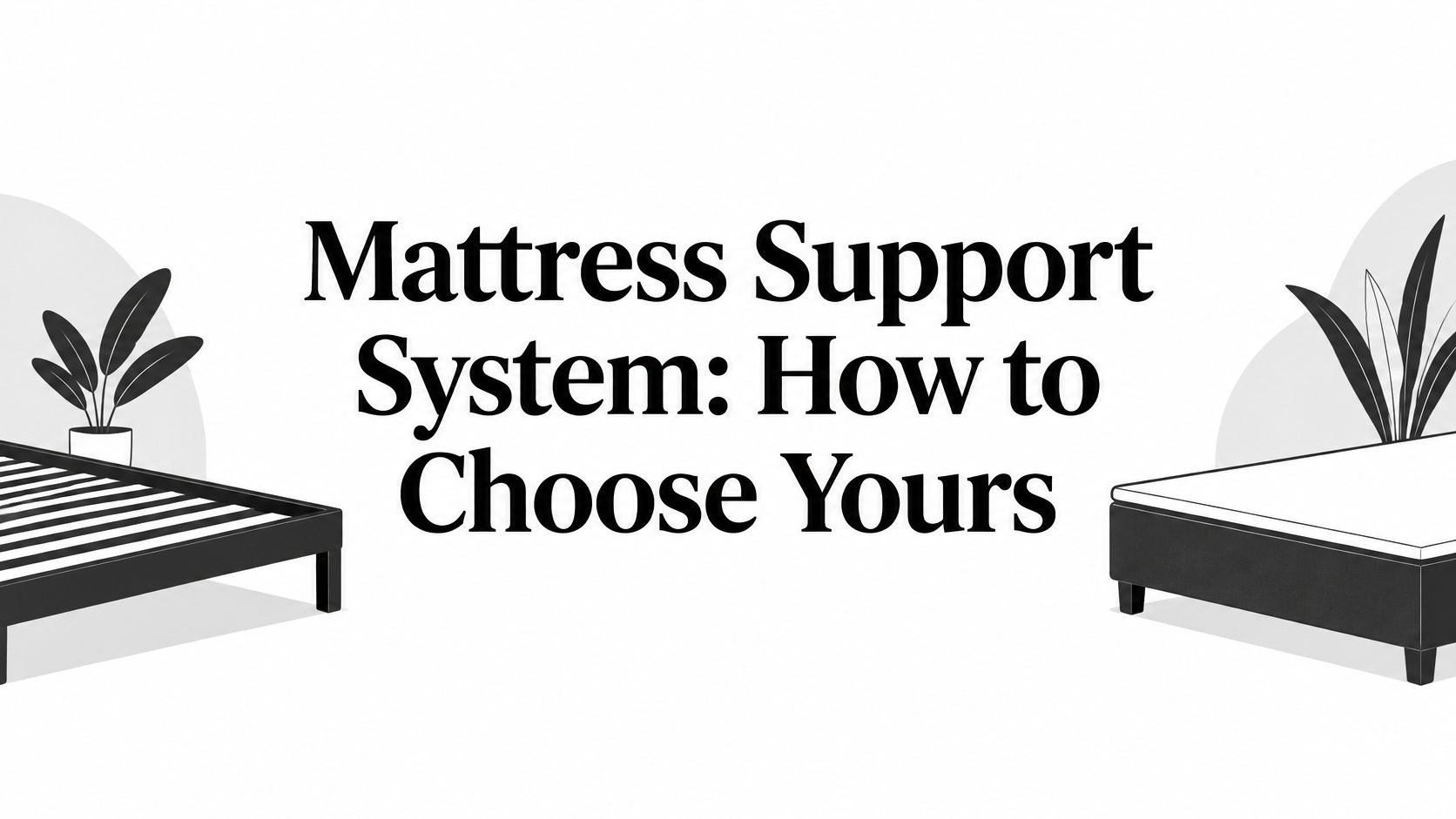
A mattress support system combines the mattress core and the base beneath it to keep the spine near neutral while the upper layers cushion pressure points. Firmness alone doesn't define support, so buying a harder bed isn't the right first move when an existing bed starts to sag.
For Ruidoso households, a useful starting point is beneath the mattress: the slats, center supports, foundation, and floor. An older frame in a mountain home or an often-used guest bed in Alto can change how a mattress performs, even when its surface still looks inviting.
What a Mattress Support System Really Does
A mattress support system manages body weight through the mattress and its supporting structure. Its job isn't to hold the body perfectly flat, but to allow a comfortable posture without excessive sinking or concentrated pressure.
Say a hiker returns to a Ruidoso cabin with tired shoulders and hips. A plush mattress feels welcoming at bedtime, but the foundation underneath bows toward the middle. Like a hammock, the whole sleeping surface slopes inward, allowing the pelvis to settle below the rest of the body.
Structural Support and Pressure Relief Have Different Jobs
Structural support resists the sleeper's weight. Coils, a dense foam core, a sound foundation, and a properly assembled frame all contribute to that resistance.
Pressure relief comes primarily from the comfort layers near the surface. Memory foam, latex, and cushioning upholstery allow prominent areas such as shoulders and hips to settle without bearing an uncomfortable share of the load.
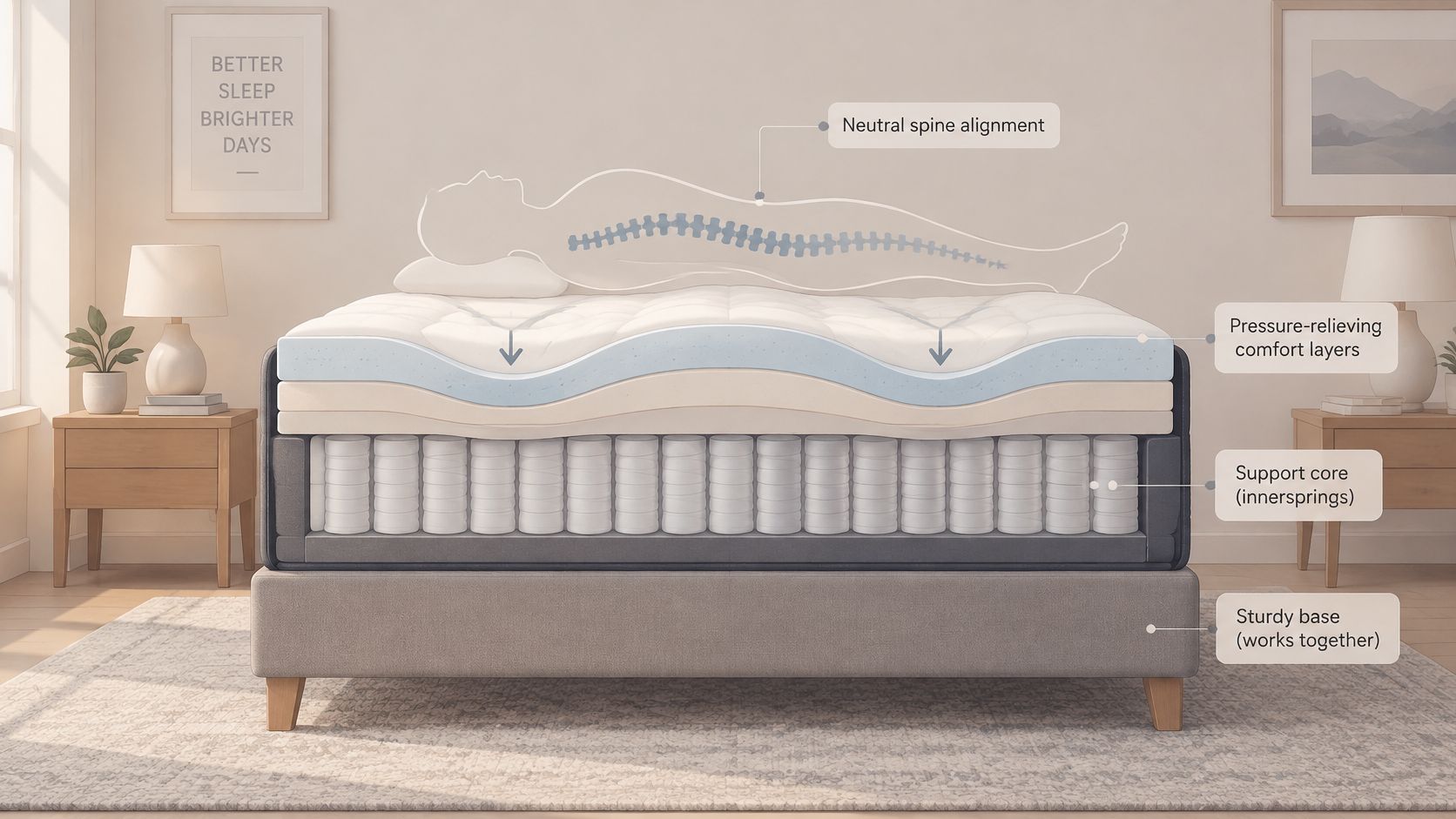
A soft-feeling top can sit above a substantial support core. Conversely, a hard-feeling surface can create pressure without providing a comfortable fit through the waist and lower back.
The Sleep Foundation's discussion of mattress firmness and back comfort describes a meta-analysis covering 24 studies in which medium-firm mattresses provided the greatest back-pain relief among the mattress types evaluated. That finding supports a balanced starting point, not a universal prescription.
A Whole-Bed Fit Matters More Than a Label
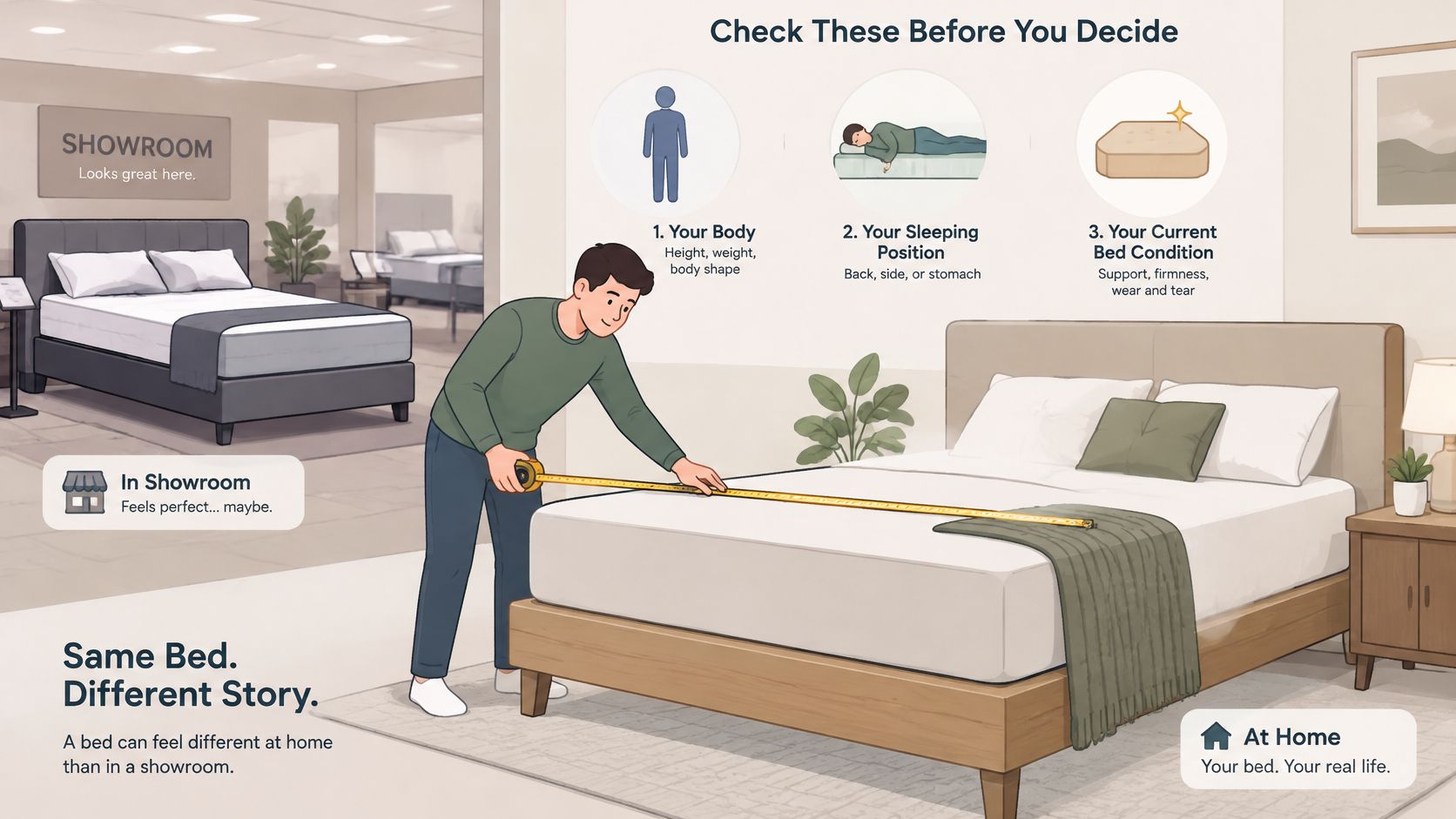
A showroom label can't account for every sleeper or home. A side sleeper recovering after a trail outing, a couple sharing a cabin bed, and a guest who sleeps near the edge place different demands on the same surface.
- Through the middle: The pelvis should settle without pulling the torso into a trough.
- At the shoulders: Cushioning should allow comfortable contact rather than a sharp pressure spot.
- Along the perimeter: Stable mattress edge support matters for sitting, getting up, and using the full sleeping surface.
Practical rule: A comfortable top can't compensate for a support structure that bends where it shouldn't.
For households across Lincoln County, the meaningful match includes base type, mattress material, body weight, and sleeping position. No single firmness word captures that combination.
How to Measure the Support You Need
Measure the sleeper's needs and inspect the existing bed before comparing mattresses. A showroom mattress on a sound foundation won't reveal problems with the frame waiting at home.
Build a Useful Shopping Note
Record the shared load. Note each sleeper's approximate weight and any substantial difference between partners. Compare the combined load with the mattress and base specifications, rather than assuming a familiar bed size guarantees adequate capacity.
Identify the main sleeping position. Side sleepers generally need room for the shoulders and hips, with contact through the waist. Back sleepers should assess whether the lower back meets the surface comfortably, while stomach sleepers should watch for excessive pelvic sinking.
Document visible changes. Strip the bedding and place a straightedge or broomstick across the mattress without pressing down. Photograph any depression and record its depth using the manufacturer's measurement method; this changes whether the next conversation concerns comfort, deterioration, or warranty assessment.
Inspect the structure below. Measure slat gaps, photograph the center support, and look for bowed rails, loose connections, or legs that don't reach the floor. These details determine whether the existing base remains a candidate for reuse.
Describe symptoms precisely. Note whether discomfort occurs while lying down, during turning, or on getting up, along with new noises or a tendency to roll inward. A specific description is more useful than saying the mattress feels old.
Separate comfort testing from medical care. Persistent pain, radiating symptoms, or a diagnosed spinal condition warrants professional medical guidance. A mattress trial can assess comfort, but it doesn't diagnose the cause of pain.
Compare Positions, Not Just First Impressions
During a showroom visit, the sleeper should settle into the usual sleeping position rather than judge every mattress while sitting on its edge. Partners should test together when possible, including turning over and lying in their normal locations.
A randomized multicenter trial published in The Lancet followed 313 adults with chronic nonspecific low-back pain and found better pain and disability outcomes with medium-firm mattresses than firm mattresses after 90 days. The participants had a specific pain condition, so the finding supports thoughtful comparison rather than a promise that a particular mattress will resolve everyone's symptoms.
A guide to choosing mattress firmness can help organize those comparisons. Useful notes describe pressure, ease of movement, and where the body settles, not merely whether the surface feels soft.
Turn Observations Into a Purchase Decision
Consider a heavier side sleeper using a mattress over widely spaced slats. The shopping note should flag both the need for shoulder cushioning and the need to correct the support surface.
A lighter back sleeper on a sound, approved platform may have a different task: replacing the mattress without replacing the base. In Alto and Lincoln County rentals, where frames may remain through successive mattress replacements, keeping these records prevents an old structural problem from following each new purchase.
Is Sag the Base or the Mattress?
A mattress can look saggy because the base beneath it is uneven or damaged. If the dip disappears on a sound, compatible base, the original base was causing the problem. If it remains, the mattress is the likely source.
Compare the Surface on Sound Support
With help, remove the mattress and inspect the foundation. Mattresses can be heavy and awkward, so avoid dragging one by its handles unless the maker's instructions allow it.
If the mattress maker permits, place it briefly on a clean, dry, flat floor. If the surface becomes even, the original base was contributing to the sag. A floor check is only a diagnostic step, not a reason to use the floor as a permanent base.
Inspect the Frame Before Declaring Failure
- Slats and rails: Look for cracks, bowing, loose ends, and gaps wider than the mattress maker allows.
- Center supports: Check that required rails and legs are present, secure, and carrying weight.
- Floor contact: Look for rocking, tilted legs, or uneven contact beneath the frame.
In an older Ruidoso home, a sound frame may still sit unevenly on the floor. Correct the leveling with suitable hardware or manufacturer-approved adjustments. Loose objects can shift and make the support less stable.
Decide What Needs Replacing
After correcting the support, measure and photograph the unloaded mattress surface again. If a body-shaped depression or inward slope remains, or the core appears damaged, the mattress needs assessment. A sag that returns on a corrected base points to the mattress rather than the frame.
The mattress sagging guide explains how to assess visible wear and check for a support problem. Warranty eligibility depends on the product's terms and measurement procedure.
Support Bases and Material Compatibility
A mattress and its base work as a team. Before you buy a firmer bed, check whether the current base is compatible and whether the mattress itself is sagging. In a Ruidoso home, where floors and older frames may not sit perfectly level, the support beneath the mattress deserves a close look.
| Mattress material | Use this base | Avoid | Why it matters |
|---|---|---|---|
| Memory foam | Solid platform or closely spaced slats that meet the maker's limit | Traditional flexible box spring unless expressly approved | Foam needs consistent support rather than unsupported gaps |
| Latex | Breathable platform or close slats approved for its weight | Fully sealed, non-vented deck when heat and moisture are concerns | Airflow depends on the full mattress-and-base system, alongside a flat, stable plane |
| Hybrid | Rigid foundation, platform, or approved adjustable base | Flexing box the maker doesn't list | Coils and comfort layers need the intended support underneath |
| Innerspring | Approved box spring or the brand's specified foundation | Bare wide slats without required center support | Mattress coils don't replace the supporting frame |
| Adjustable-ready foam or hybrid | Adjustable base on the compatibility list | Coil beds labeled unsuitable for articulation | The mattress must accommodate repeated bending |
The exact model's instructions take priority over this material-to-base lookup. Mattress categories offer a starting point, but they don't establish universal compatibility.
Check What Is Inside the Foundation
A traditional box spring has a flexible support structure inside a covered frame. Some innerspring mattresses are designed for that flex, while other models require a rigid surface. The familiar term “box spring” is also sometimes used for a rigid foundation, so check the construction rather than relying on the name or fabric cover.
A rigid foundation provides stable support without intentional spring action. Its condition still matters: damaged internal rails or inadequate support can undermine an otherwise compatible pairing.
Platforms and Wood Slats Need Inspection
A platform may have a solid deck or a slatted surface. Check the gaps between supports, whether the surface bends under load, center reinforcement, and the manufacturer's ventilation requirements.
Loose or widely spaced wood slats can leave parts of the mattress unsupported. A panel placed over them may restrict airflow or conflict with the warranty, so check the mattress maker's requirements before changing the surface.
The biomechanical review of mattress evaluation explains that mattress-and-base combinations affect spinal-shape estimates, while evidence doesn't justify many proposed alignment thresholds. A universal slat rule or showroom posture measurement can't settle every compatibility question.
Adjustable Bases, Bunkie Boards, and Metal Frames
An adjustable base changes the position of the head and foot sections. Check that the mattress can bend, the base can carry the full load, and moving components have the required clearance.
A bunkie board provides a thin supporting surface when approved for the setup. It won't repair a broken box spring or replace the load-bearing frame beneath it.
A metal frame carries the foundation or another approved support surface. Center rails and floor-contact legs matter when the specified setup calls for them, but their presence alone doesn't prove the frame has adequate capacity.
- Check connections: Loose brackets can allow shifting even when every component appears intact.
- Check the full load: Include the mattress and base, not just the sleepers.
- Check finished height: Make sure the system allows comfortable entry and exit.
Coil Count Isn't a Complete Quality Score
A patent's background discussion describes typical modern innerspring mattresses as containing approximately 250 to 1,000 coil springs, with lower-count designs generally using heavier-gauge wire. Coil gauge, arrangement, upholstery, and how the layers work together also affect the finished mattress.
For Tempur-Pedic, Sealy, Stearns & Foster, and Sherwood, follow the base requirements for the exact mattress model. A base approved for an older mattress isn't automatically approved for its replacement. For couples, consider motion transfer and uneven loading too: one partner's deeper compression shouldn't make the other feel pulled toward the middle.
Keep the existing base only when its condition and compatibility both check out. Matching dimensions alone isn't enough. For foam models, the memory foam mattress foundation guide explains the practical questions to check.
When Firmer or Smarter Support Is Not Better
A soft mattress increased peak loading on the intervertebral discs by 49% compared with a medium mattress in a controlled comparison described in this peer-reviewed review of mattress biomechanics. That finding helps explain why comfort and alignment involve more than choosing the softest or firmest feel. Your body, mattress, and base work together, much like parts of one support system.
The Body Needs Give Without Collapse
On a surface that lets the shoulders and pelvis sink too far, spinal posture can shift. A surface that feels excessively hard can create pressure at those same areas and leave the lower back without comfortable contact.
The review also describes reduced lumbar lordosis and increased contact pressure on a hard surface. You can't judge disc loading by feel alone, so consider how your body settles and whether the surface feels comfortable across your usual sleeping position.
A firmer label describes surface resistance, one part of the match. The right feel depends on how that resistance works with your body and the support beneath the mattress.
When Personalization Earns Its Complexity
Zoned designs vary resistance across the mattress. They may suit you if your shoulders and hips need different amounts of give, provided the zones line up with your proportions.
Adjustable firmness and adjustable positioning do different jobs. An air-adjustable mattress changes resistance, while an articulating base changes your posture, such as raising the head for reading in a mountain cabin.
- Different partner preferences: Separate adjustments may make a shared bed easier to fit.
- Changing comfort needs: Adjustable resistance may offer flexibility.
- Position preferences: An approved articulating setup can accommodate raised-head or raised-foot lounging.
A systematic review of mattress designs and clinical outcomes describes potential benefits from customized and adaptive systems while calling for stronger clinical trials before routine recommendation. Choose technology to address a specific comfort or positioning need, then judge whether it helps you rest comfortably.
Test the Benefit, Not the Feature List
Before choosing an adjustable setup, consider power access, clearance for moving parts, controls, possible noise, and maintenance. This guide to adding an adjustable base can help you think through those practical fit questions. In a lightly used Ruidoso-area rental bedroom, a simpler approved system may be easier to manage.
Pressure maps and demonstrations can inform your decision, but your comfort during sleep is the meaningful test. Consider how the mattress and base work together before changing firmness, especially if the concern may come from sagging rather than the surface feel.
Buying, Maintaining, and Confirming Your Match
Before you sign, confirm that the mattress and base work together. Ask for the approved base types, spacing limits, center-support directions, and capacity information for the specific mattress model. Keep those details with the receipt, warranty, care instructions, and setup photographs.
Also confirm what the purchase includes: the foundation or adjustable base, frame components, delivery, and assembly. The paperwork should describe the complete setup, since an unsuitable base can affect warranty coverage.
Use Local Guidance to Reduce Guesswork
A mattress consultation should account for your body type, sleeping position, budget, and home setup. Bring frame photographs and measurements so a Sleep Pro can help distinguish a comfort preference from a structural concern.
Mattress Pro by Miller Waldrop offers one-on-one guidance for shoppers in Ruidoso and Lincoln County. Your home details matter, whether you're setting up a bedroom in a mountain cabin, an Alto guest room, or a rental that needs straightforward upkeep.
Review the current terms of the Low Price Promise and Comfort Promise before purchase, including eligibility, timing, and any requirements.
Treat Professional Setup as Part of Support
Full-Service Delivery with Professional Setup can help put the planned mattress-and-base combination in place. Discuss access, assembly, base placement, and whether existing components are suitable for reuse.
Before the delivery team leaves, check that required support legs touch the floor, the assembled base sits securely, and adjustable parts move without obstruction. Ask about the controls and care instructions while the setup is easy to inspect.
For a rental, a durable hybrid or innerspring on an approved rigid foundation may be a practical starting point. A compatible, breathable protector and a record of the setup can make routine checks between guests easier.
Care for the System in a Mountain Home
Dry mountain air does not remove every moisture concern. Closed cabins, limited airflow, spills, and a bed placed on a damp surface can still affect the sleeping environment.
- Allow ventilation: Keep the support area clear and do not block intended airflow.
- Protect the surface: Use a compatible protector, and continue normal cleaning.
- Rotate appropriately: Follow the model's instructions. Flip a mattress only if it is designed for both sides.
- Handle carefully: Do not fold a mattress unless the maker expressly permits it.
- Inspect during bedding changes: Look for developing depressions, loose connections, and debris around the foundation.
A mechanically sound support system does not determine how cool the bed feels. Room temperature, bedding, protector construction, and mattress materials all shape the sleeping environment.
Replace According to Condition
The Sleep Foundation's mattress replacement guidance gives approximately 6 to 8 years as a general replacement range under normal conditions. It also describes reasons to consider replacing a mattress sooner, including sagging, damage, worsening sleep, or unusual spring noise. Treat the calendar as a guide, not a deadline.
For deciding whether the base, mattress, or both need attention, use the checks in Is Sag the Base or the Mattress?.
For mattress-and-base guidance, visit Mattress Pro by Miller Waldrop at 2801 Sudderth Drive, Suite F, in Ruidoso. Sleep Pros can discuss your home setup, and Full-Service Delivery with Professional Setup is available. Bring frame photographs and measurements when you visit Monday through Saturday to compare options for your household.