

Sealy Mattress for Side Sleepers: Your Local Buying Guide

You wake up on your side, roll over, and feel it right away, a numb shoulder, a pinched hip, maybe a neck kink that follows you into the morning. That's not a side-sleeping problem. That's a mattress problem, and it's exactly why a Sealy mattress for side sleepers has to be chosen with more care than a generic firmness chart can give you.
Side sleeping is common, and Sealy's own guidance says it's the most popular sleeping position. The better question is not whether you should sleep on your side, but whether your mattress is doing enough to cushion the shoulder and hip without letting your midsection sag. In a showroom, that's the difference between waking up loose and waking up irritated.
Why Side Sleepers Wake Up Sore
You don't usually blame the bed first. You blame the long day, the bad pillow, or the way you twisted in your sleep, but the same pain keeps showing up in the same spots, especially the shoulder and hip.
That pattern tells the story. Side sleeping puts the most load where your body touches the mattress hardest, and if the surface is too firm, those pressure points take the hit. If the surface is too soft, the torso drops and the spine loses its straight, supported line. A side sleeper needs both comfort and structure, not one at the expense of the other. pressure-point relief guidance
Practical rule: if the shoulder feels pinned and the hip feels jammed, the mattress is too firm for that body. If the lower back feels unsupported, the mattress is too soft.
The goal is simple. A side sleeper should feel the shoulder and hip nestle into the surface while the waist and lower back stay aligned. That's why the wrong mattress creates the kind of soreness that shows up before coffee.
What Side Sleeping Actually Demands From a Mattress
A side sleeper needs a mattress to do three jobs at once. It has to cushion the shoulder, protect the hip, and keep the lumbar curve from collapsing.
The shoulder and hip need room to sink
The shoulder and hip are the body's high points, the places that hit first and hardest. A firm bed pushes back too quickly, and that creates concentrated pressure where nerves and joints don't want it. A more conforming surface spreads that load out, so the body is not taking it all in one spot.
The midsection has to stay steady
A mattress can feel soft without being careless. If the center of the body sinks too much, the spine bends out of line and the lower back starts doing work it should not have to do. That is why side sleepers need a surface that gives at the shoulder and hip but still keeps the torso from dropping like a hammock.
The real test is simple. Does it let the widest parts of the body settle while the waist stays supported?
The quick showroom checklist
Use this before any purchase:
- Cushioning first. The top layers should feel conforming enough to reduce pressure at the shoulder and hip.
- Support second. The mattress should resist the urge to let the body sink straight through the middle.
- Alignment always. The spine should stay level, not bowed or twisted.
For a deeper look at construction height and feel, mattress thickness guidance matters because side sleepers usually need enough comfort material to absorb the contact points without swallowing the whole body, especially in a dry mountain climate where a mattress that breathes and holds its shape can feel more consistent night after night.
How Sealy Builds a Mattress for the Side Sleeper
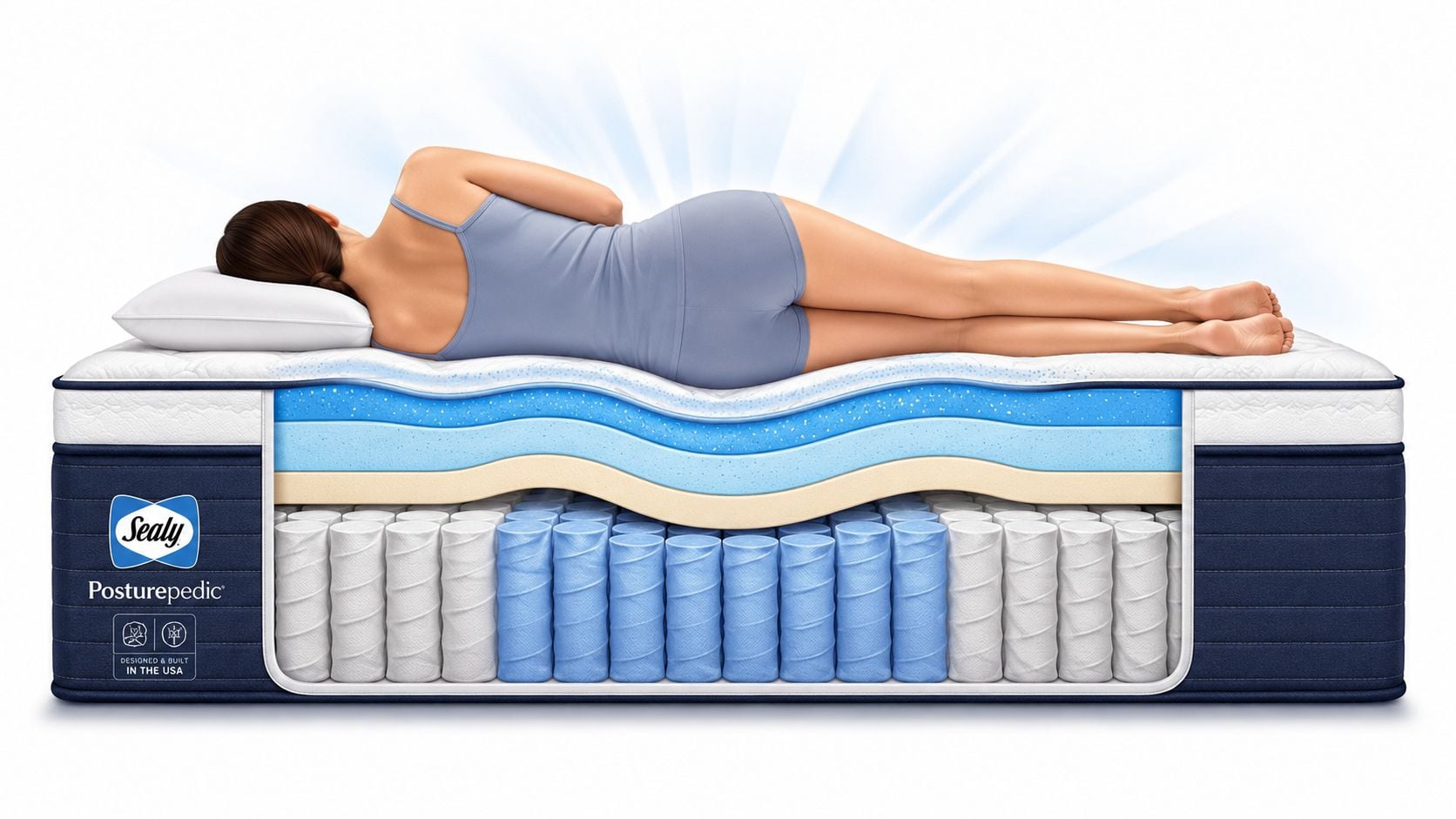
Sealy's modern Posturepedic design pairs gel memory foam with a coil base, and that combination makes sense for side sleeping. The foam is the part that gives at the shoulder and hip, while the coils are the part that keep the body from settling too far.
That split matters more than people think. Side sleepers need a surface that can compress around the shoulder without collapsing under the waist, and Sealy's structure is built around that balancing act. In review coverage, Posturepedic models are also associated with a 10-year warranty, which is a useful sign that the bed is being built for longer-term use rather than quick replacement. Typical mattresses often last 5 to 10 years depending on use and care, so construction quality and warranty length deserve real attention. Sealy Posturepedic mattress review
What each layer is doing
The foam layer handles pressure relief. The coil base handles support and keeps the spine from sinking into an awkward angle. In the right Sealy build, those two jobs work together instead of fighting each other.
For side sleepers, that layered approach is especially useful when the sleeper needs a mattress that feels softer at first touch but still has a stable core under the hips. A good Posturepedic-style build should feel like the shoulder can settle in while the waist doesn't disappear.
What to look for on the floor
A strong candidate usually shows a few clear signs.
- Comfort depth: look for roughly 2 to 3 inches of conforming comfort material in the upper layers, because thin comfort stacks tend to feel sharp on the shoulder and hip.
- Firmness zone: a medium to medium-soft feel usually gives the best side-sleep balance.
- Height and presence: a 12-inch class mattress often signals enough comfort material to matter for pressure relief.
- Foundation of support: a zoned support core or reinforced midsection helps the pelvis stay level.
If the build looks too thin, too stiff, or too flat across the top, side sleeping usually suffers. If it has enough contour plus a stable base, the body has a real chance to settle correctly. More about the brand's construction lives on the Sealy mattress collection page.
The Sealy Models Side Sleepers Should Actually Try
Not every Sealy feels the same once a side sleeper lies down on it. The right choice depends on whether the body needs a deeper hug, a cooler feel, or a more supportive lift under the hips.
The strongest all-around pick
The Sealy Posturepedic Hybrid is the model most side sleepers should start with. It combines more than 700 individually wrapped coils with ComfortSense memory foam, which Sealy says helps with breathability and pressure relief. That gives the shoulders room to settle while the core stays responsive underneath. Sealy Posturepedic Hybrid mattress
Independent testing says this hybrid is especially well suited to average- and heavier-weight side sleepers, because it offers very good body conformity at the shoulders and arms. Lighter sleepers may not sink in enough to get the same comfort. RTINGS Sealy Posturepedic Hybrid review
The plush option for deeper contour
A Sealy memory foam plush model makes sense if the body wants more of a hugging sensation. It's the better match for sleepers who want their shoulder and hip to sink more into the surface, especially when pressure relief is the main complaint. The tradeoff is that plush foam can feel too soft for heavier bodies if it doesn't have enough support underneath.
The livelier, more traditional option
A traditional Posturepedic innerspring feel works for side sleepers who want a firmer, more responsive surface. It can be useful when the sleeper likes some cushion but doesn't want the mattress to feel slow or overly enveloping. If the build is too rigid, though, the shoulder can still get hammered.
| Sealy Builds Compared for Side Sleepers | Feel | Best Fit Side Sleeper | Pressure-Relief Feature |
|---|---|---|---|
| Sealy memory foam plush | Soft, contouring | Lighter sleepers who want deeper cushioning | More surface hug around shoulder and hip |
| Sealy Posturepedic Hybrid | Medium to medium-firm | Average and heavier sleepers | Foam plus wrapped coils balance relief and support |
| Traditional Posturepedic innerspring | Responsive, firmer | Side sleepers who prefer a livelier feel | Supportive coil base with less sink |
Matching Sealy Firmness to Your Body and Sleep Style
Firmness is where a lot of shoppers get misled. Side sleepers do not all need the same feel, and body weight changes the answer fast.
Lighter side sleepers
A lighter sleeper may glide across the top of a hybrid without compressing it enough. That can leave the shoulder feeling pinned instead of cushioned. For that body type, a plush memory foam build or a softer pillow-top style usually gives better surface response.
Average-weight side sleepers
Most average-weight side sleepers do well in the medium to medium-soft zone. That's where Sealy's hybrid construction tends to hit the sweet spot, because the foam can contour without making the body feel trapped. If the shoulders are broad or pressure-sensitive, a little extra give matters.
Heavier side sleepers
A heavier side sleeper, especially one approaching the up to 300 lbs range that falls within common medium-range guidance, usually needs more underlying support than a plush surface can provide. A firmer hybrid or a zoned innerspring helps keep the pelvis from bottoming out while still giving the shoulder space to settle. firmness guidance
If the hip sinks faster than the shoulder, the bed is too soft. If the shoulder feels stuck and the neck tightens up, it's too firm.
The at-home test
Lie on the mattress you have now and pay attention to three things. Does the shoulder flatten hard, does the hip drop lower than the chest, and does the lower back feel unsupported? That one minute of honest feedback tells a shopper more than a glossy label ever will.
Buying a Sealy in Ruidoso Without the Guesswork
Buying online sounds easy until the mattress lands in the room and feels wrong. In a local showroom on Sudderth Drive, the shopper can lie on the bed in the normal side-sleep position while a Sleep Pro checks shoulder compression and hip sink in real time. That beats a generic firmness chart every time.
Ruidoso shoppers also live with dry mountain air and cooler nights, so cooling still matters even when the weather feels crisp. A breathable hybrid or cooling foam build can help the sleeper stay comfortable without feeling stuffy under blankets. For cabins, second homes, and rentals in Alto and across Lincoln County, delivery and setup matter just as much as the mattress itself.
What to ask before you buy
- Ask about the Comfort Promise. That's the practical answer to the fear of picking the wrong bed.
- Ask about the Low Price Promise. A local store should stand behind what it sells.
- Ask about Full-Service Delivery with Professional Setup. Heavy mattresses are not a solo project.
- Ask about financing. Budget should never force a bad fit.
- Ask how the mattress handles side pressure. The shoulder and hip are the whole story here.
A local family business can also guide shoppers toward other sleep systems, including Tempur-Pedic, Stearns & Foster, and Sherwood, when the body needs a different feel. For side sleepers, the main job is still the same, pressure relief first, alignment second, and a mattress that fits the room, the climate, and the sleeper's body. local mattress store guidance
Your Next Step Toward Better Side-Sleeping Nights
A side sleeper's Sealy has to do three things well, cushion the shoulders and hips, support the lumbar curve, and keep the spine aligned. If one of those pieces is missing, the mattress is the problem, not the sleeper.
Use this before a showroom visit. Lie on your side for at least five minutes, notice where the shoulder presses flat or the hip sinks too far, ask about the warranty and trial period, and confirm delivery and setup for your address. That's the shortest path to a smart decision.
Ready to transform your sleep? Visit our Sleep Pros at the Mattress Pro showroom located at 2801 Sudderth Drive, Suite F, in Ruidoso. From luxury brands to budget-friendly solutions, we're here to help you wake up loving your mornings. Browse our collection online or stop by Monday through Saturday at Mattress Pro by Miller Waldrop.