


6 Drawer Rolling Cart: How to Choose and Use One Right

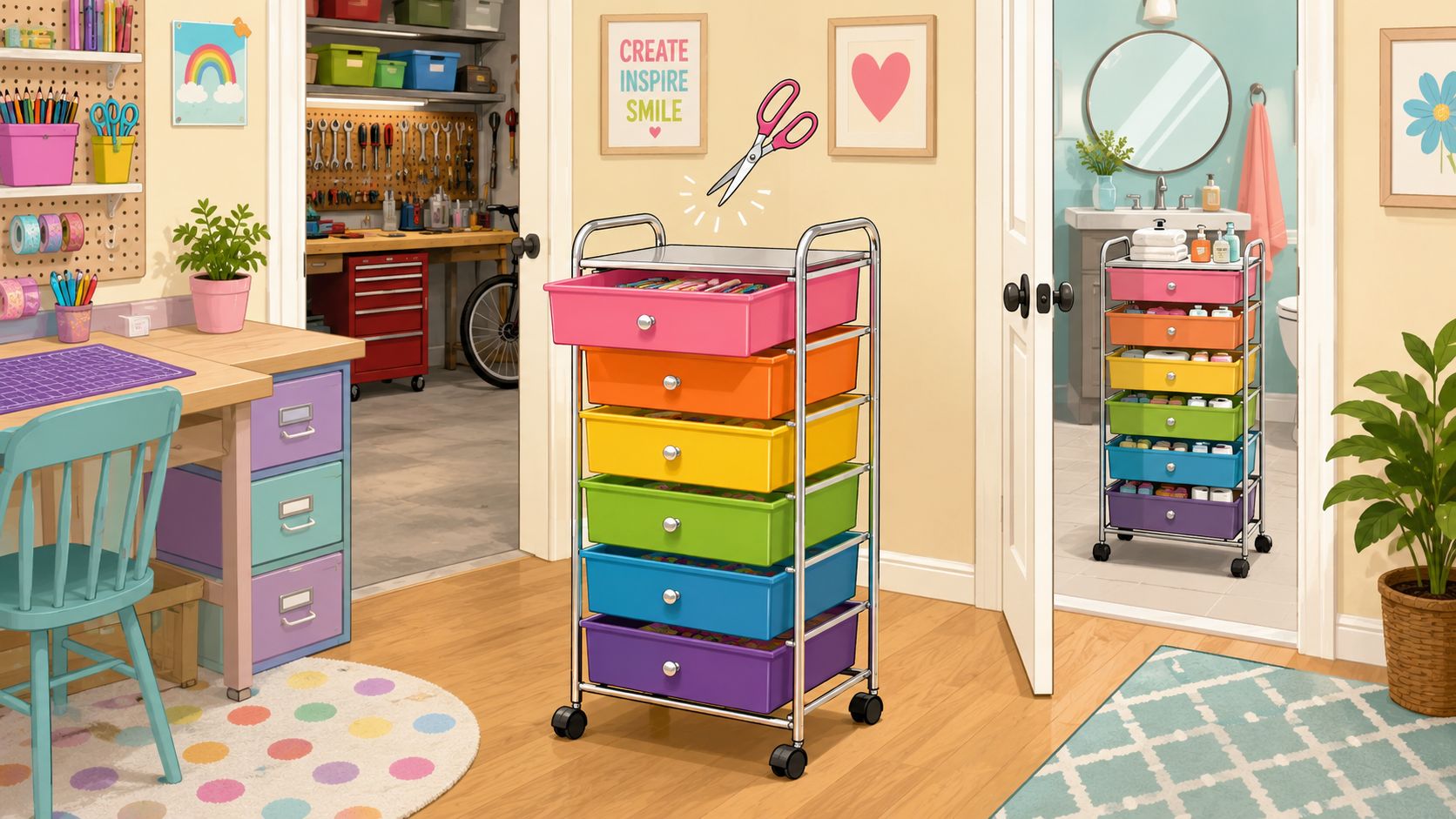
You know the moment. The scissors are buried, the screwdrivers are in the wrong room, and the only flat surface left is already covered. A 6 drawer rolling cart fixes that kind of daily friction because it puts storage right where the work happens, then moves out of the way when the job is done.
That's the core appeal. It's not just more drawers. It's a small, mobile system that lets you sort, park, roll, and lock without turning a room into a permanent storage zone.
A Cart That Follows You Around the House
A cart earns its keep when it saves steps. In a craft room, that means the markers are within reach, the paper stays flat, and the glue gun isn't hiding in a cabinet. In a garage, it means screws, bits, and tape measure all travel together instead of scattering across three shelves.
A 6 drawer rolling cart works especially well because six drawers gives enough separation without feeling fussy. You can keep daily items up top and bulkier supplies lower down, so the cart behaves like a tiny mobile workstation instead of a junk catcher.
The best carts feel present when needed and invisible when parked. Roll it beside the desk, lock it in place, finish the task, then tuck it back into a corner.
Practical rule: if a storage piece has to stay in one room forever, it's probably the wrong tool for a space that changes by the hour.
Anatomy of a 6 Drawer Rolling Cart
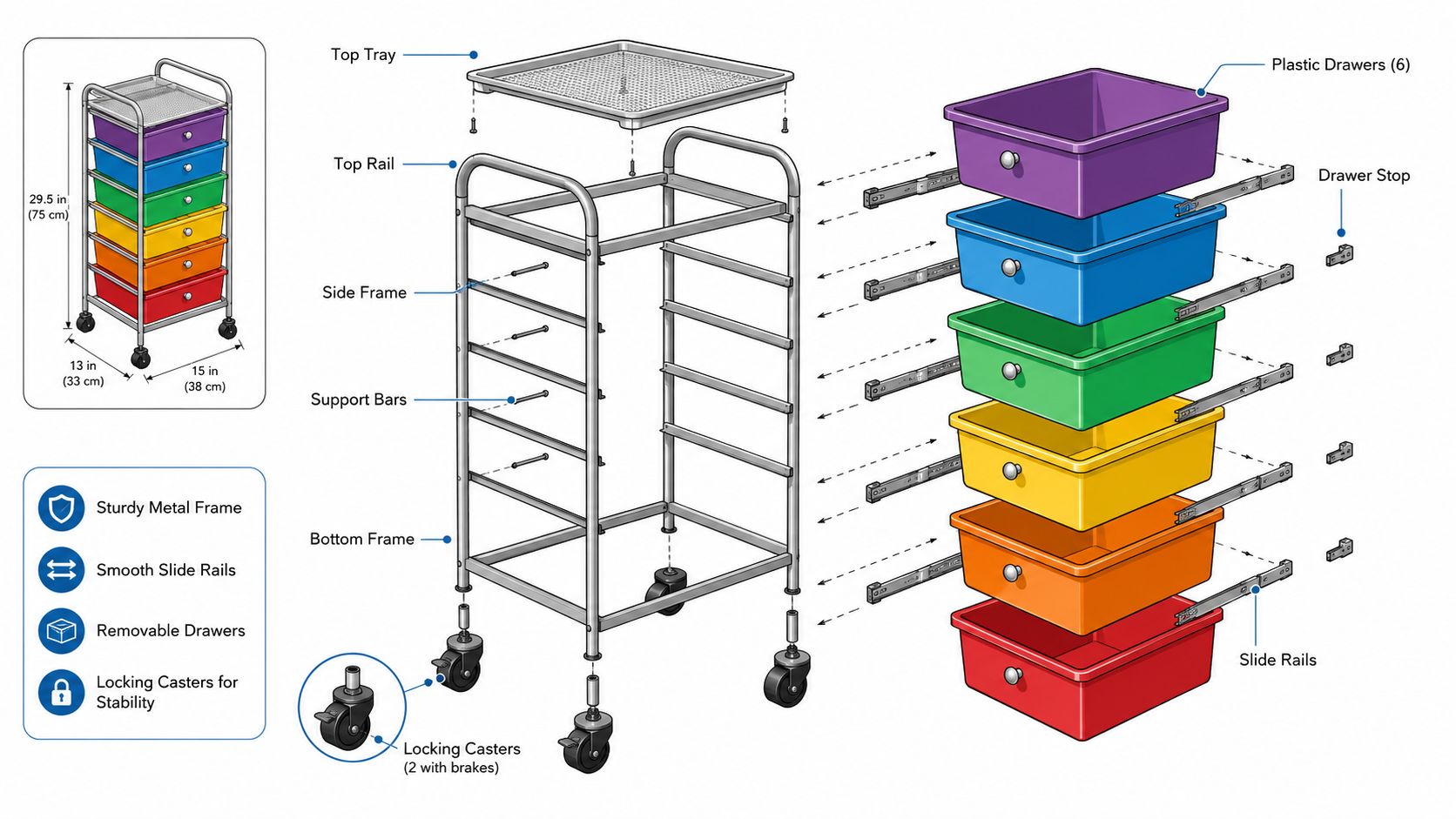
A cart only feels good when the parts work together. The frame holds the shape, the drawers carry the load, the rails or stops keep the drawers from slipping out, and the casters decide whether the unit glides or fights back.
The parts that matter
The frame is usually steel, polypropylene, or bamboo. Steel brings rigidity, polypropylene keeps weight and cleanup simple, and bamboo works well when the cart is going into a bedroom or other finished space. The drawer bodies matter just as much, because they decide how easily the cart handles impact, moisture, or rough use.
A lot of 6 drawer rolling carts use a two-size drawer layout, often 2 deep drawers and 4 shallow drawers or 4 medium drawers and 2 large drawers. That split is smart because bulky items don't waste space in shallow drawers, and small tools don't get lost in deep ones.
Wheels and movement
Most carts in this category use 4 casters, with at least 2 lockable so the cart can move when needed and stay put when parked, as shown in product specifications for this category and in the linked category example rolling cart wheel setup. That setup is the minimum sensible configuration.
If the wheels are tiny or the cart feels loose at the base, daily use gets annoying fast. A good cart should roll straight, stop cleanly, and not wobble when a drawer opens hard.
This mirrored nightstand example is a useful reminder that storage furniture works best when the structure matches the room, not when the room has to adapt to bad proportions.
Specs That Actually Matter When You Compare Carts
Ignore the shiny marketing language and look at the specs that affect daily use. The big three are static load capacity, caster mobility, and drawer-cycle durability.
Capacity is not the whole story
The headline load number sounds impressive, but the per-drawer working limit matters more. A cart can claim a decent total capacity and still become miserable if one drawer is overloaded every day, because that's what bends rails and makes drawers stick.
A practical approach is simple. Check whether the drawer slides feel smooth, whether the cart stays square when pushed, and whether the wheels keep rolling instead of dragging. That tells more truth than a glossy label ever will.
Wheel choice changes everything
Common caster sizes in this category are 2 to 4 inches. Smaller wheels can work on smooth floors, but they're more likely to complain on carpet, thresholds, and rough concrete. Softer wheels are usually the safer pick when the cart has to cross mixed flooring.
A cart that handles well on tile can feel terrible on carpet if the wheels are too hard or too small. That's not a minor detail, it's the difference between useful storage and a cart that gets abandoned in a week.
One detail worth insisting on
A two-size drawer layout is worth prioritizing because it keeps the cart organized without forcing every item into the same depth. That's the kind of design choice that saves time every single day.
This compact storage reference is another good reminder that the best furniture usually solves one room problem cleanly instead of trying to do everything at once.
Measuring, Planning, and Placing Your Cart
A cart only helps if it fits the room cleanly. Measure the doorway, the parking spot, and the path the wheels will take before the cart arrives. That's the difference between a smooth setup and a box that lives unopened in the hallway.
Start with the space, not the shopping
Check height against the counter, desk, or sink edge where the cart will work. In tight rooms, compact vertical storage matters, and some carts are built around footprints as small as 34 × 43.5 × 76 cm, which makes them useful in closets, bathrooms, dorms, offices, or craft corners compact dimensions reference.
Then assign each drawer before anything gets loaded. Heavy items and rarely used supplies go low. Light, daily-use tools stay near the top, where they're easy to grab without tipping the unit upward.
Test the cart before you trust it
A solid field check is to load each drawer to about 80% of its intended service load, then see whether the cart rolls straight and stays square under push force. If the frame racks, the cart is telling the truth early, which is useful.
Keep the cart low, balanced, and easy to move. If it starts heavy at the top, the design is already working against the user.
For closet-style setups, this closet cleanup guide fits well with the same logic, because the best storage plans begin with sorting before buying.
Matching the Cart to Your Use Case
The right cart depends on the room. A craft setup wants shallow access. A workshop wants stability. A bedroom wants a slimmer footprint that doesn't dominate the floor.
Best fit by room
- Craft room: Shallow top drawers for scissors, markers, tape, and labels. Medium drawers work well for paper pads and smaller project kits.
- Garage or workshop: Deeper bottom drawers hold heavier tools and hardware bins. Lockable casters matter here because concrete floors and uneven seams can make a cart drift.
- Bedroom or rental: A slim bamboo or polypropylene cart is usually the better choice because it tucks beside a dresser and is easier on finished floors.
- Office or dorm: Compact vertical storage wins. The cart should use height efficiently because floor space is the most expensive part of the room.
| Use Case | Drawer Layout | Caster Type | Frame Material |
|---|---|---|---|
| Craft Room | Shallow top, medium lower drawers | Smooth-rolling, lockable | Polypropylene or bamboo |
| Garage or Workshop | Deep lower drawers | Lockable, sturdier casters | Steel |
| Bedroom or Rental | Mixed shallow and deep drawers | Floor-safe, quiet wheels | Bamboo or polypropylene |
| Office or Dorm | Compact mixed-depth drawers | Easy-roll, lockable | Lightweight frame |
The cart should match the mess it's organizing. If the room changes often, the cart needs mobility first and storage second.
That's why the category works so well in small spaces. It's vertical, movable, and easy to adapt without dragging a whole cabinet into the room.
This bedroom storage guide pairs well with that mindset because a room feels better when the storage supports the layout instead of crowding it.
Mistakes That Wear Out Carts Early
Most cart failures are self-inflicted. People load them poorly, choose the wrong wheels, or ignore the floor under the cart. A six drawer rolling cart is a small engineered system, and when load distribution, caster choice, and drawer layout are off, it starts failing sooner than it should.
The common problems
- Top-heavy loading: Put the heaviest items in the lower drawers. Weight up high raises the center of gravity and makes tipping more likely when a drawer opens.
- Skipping the locks: If the casters do not lock, the cart can creep on tile or hardwood the moment you pull a drawer.
- Wrong wheels for carpet: Small hard wheels sink into carpet and make the cart feel stuck, which puts extra strain on the frame every time you move it.
- Overpacking drawers: A drawer loaded past its working limit presses hard on the rails and starts sticking, sagging, or binding.
- Ignoring thresholds: Every bump sends stress into the frame and caster mounts, especially when the cart is fully loaded.
The fix is usually boring, which is good news. Put the weight low, use lockable casters, and match the wheel to the floor the cart will live on. If the cart will cross thresholds or rough seams, I would choose sturdier casters and keep the load more evenly spread instead of packing everything into one side.
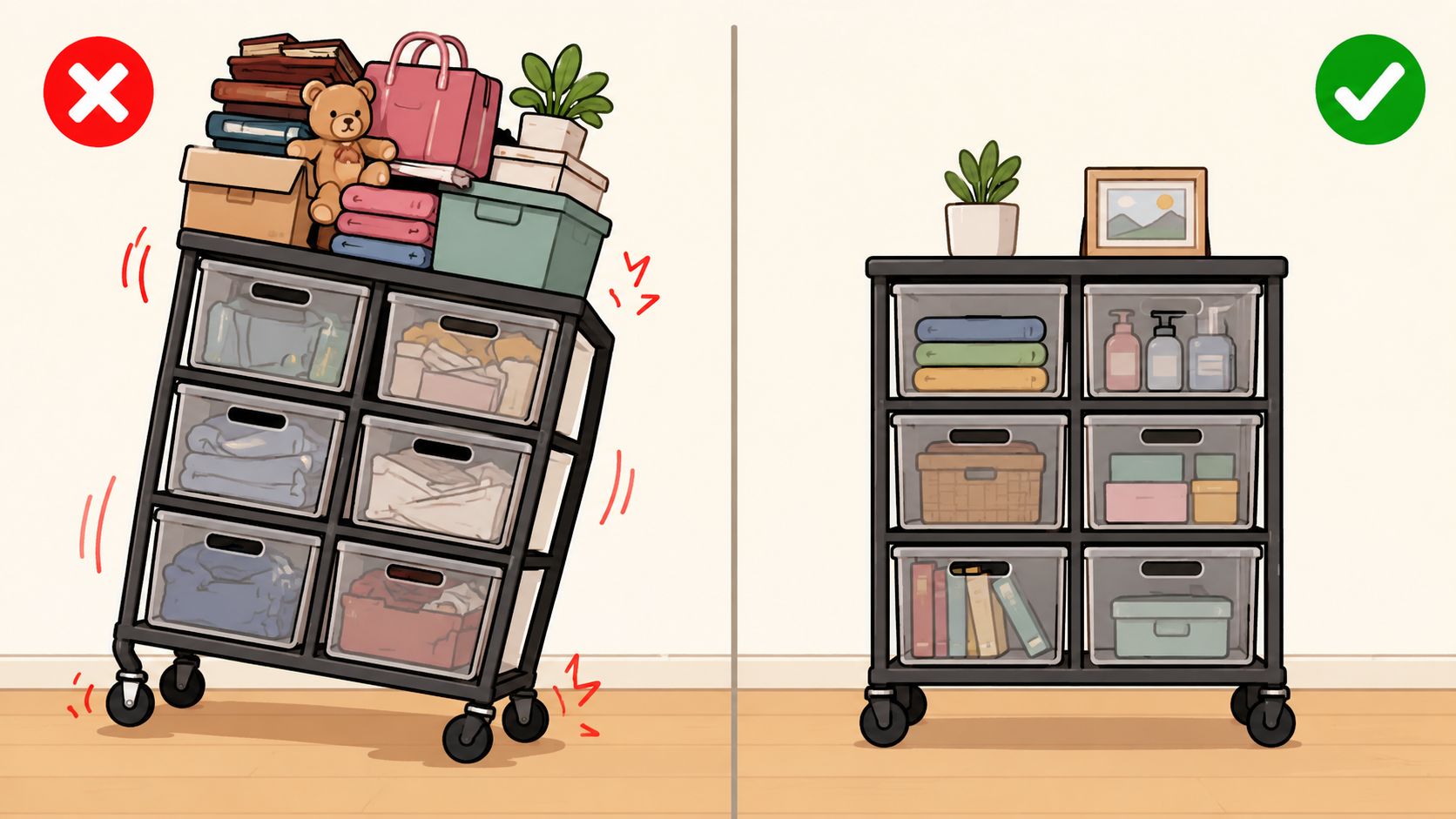
A cart that feels awkward on day one rarely gets better on day sixty. A better wheel, a better load plan, or both usually fixes the problem.
The history of mobile storage backs that up. Early rolling carts were not welcomed with open arms, because people had to learn how to use a movable cart before it felt normal. The same basic pattern shows up with any practical storage piece that rolls, shifts, and changes how a room works.
A later retail milestone came when the first UPC barcode was scanned on a supermarket item in Ohio, which showed how cart design, checkout flow, and store efficiency became part of the same retail shift shopping cart history and shopping cart reception and UPC milestone. That matters because a rolling cart only earns its keep when the storage, movement, and everyday use all line up. The same setup discipline applies at home, which is why a careful white-glove delivery setup mindset makes sense for carts too, the finished result matters more than the box arriving at the door.
Your Pre-Purchase Checklist and Care Routine
Before buying, check the footprint, the drawer layout, the caster size, and whether at least two wheels lock. Also check frame material, because the right choice depends on whether the cart is going into a bathroom, bedroom, garage, or office.
What to verify before checkout
- Footprint: Make sure the cart fits the room and the path to it.
- Drawer mix: Choose a layout that separates bulky items from daily tools.
- Wheel setup: Prefer a 4-caster base with at least 2 lockable wheels.
- Surface match: Use wheels that suit carpet, tile, or rough floors.
- Material: Pick steel for rigidity, polypropylene for lighter use, and bamboo for a softer finished look.
- Parts support: Check whether replacement pieces are available if a caster or drawer fails.
After setup, keep the maintenance simple. Tighten caster mounts every few months, wipe drawer rails when they start to feel gritty, and rebalance the contents if the cart drifts to one side. That's enough to keep the cart rolling well without turning upkeep into a project.
This white-glove delivery overview is a good example of why careful setup matters, because the value is in the finished result, not just the box arriving at the door.
A good cart should make the room easier to use on a Tuesday, not just look neat on delivery day.
Ready to transform your sleep? Visit our Sleep Pros at Mattress Pro by Miller Waldrop and get the kind of local care that fits the way you live in Ruidoso and Lincoln County. From luxury brands to budget-friendly solutions, we're here to help you wake up loving your mornings. Browse our collection online or stop by Monday through Saturday.