


Find the Perfect 2 End Tables for Your Bedroom

A lot of bedrooms hit a frustrating point. The mattress is new, the sheets feel right, the pillows are dialed in, but the room still doesn't function well at night.
That usually shows up in small ways. A water glass ends up on the floor. A phone charger stretches across the bed. A book, sleep mask, or nighttime medication has no proper home. For people investing in a better sleep setup, especially with higher-profile mattresses like Tempur-Pedic, Sealy, Stearns & Foster, or Sherwood, 2 end tables often become the missing piece that makes the room finally work.
Why Your End Tables Are Part of Your Sleep System
A bedroom can look complete and still fail at bedtime. That happens when the mattress gets all the attention and the bedside area gets treated like an afterthought.
The space on each side of the bed does real work. It supports hydration, lighting, charging, reading, and the small routines that help a person settle down without fully waking up again later. In practical terms, 2 end tables aren't just decor. They are sleep accessories.

The bedroom works better when both sides work
Couples notice this first. One side may need a lamp and a charging spot. The other may need room for water, reading glasses, or a white noise device. If only one bedside surface functions well, the whole room feels lopsided.
That matters for sleep because friction adds up. Reaching too far in the dark, bending down to grab a phone from the floor, or knocking over a drink at midnight interrupts the calm a bedroom is supposed to protect.
A complete sleep environment includes the mattress, support, bedding, airflow, light control, and bedside access. That's why thoughtful bedside design belongs in the same conversation as creating a sleep sanctuary with lighting, temperature, mattress, and bedding working together.
Practical rule: If a sleeper uses an item every night or nearly every morning, it needs a stable place within easy reach of the bed.
Why this matters more now
Modern mattresses are often taller and more specialized than older models. A pressure-relieving Tempur-Pedic or a supportive Sealy Hybrid can improve comfort, but the room still feels off if the bedside table sits too low, too high, or too far away.
That growing attention to functional furniture shows up at the market level too. The global side table market, which includes end tables, was valued at approximately USD 13.63 billion in 2025 and is projected to grow to USD 21.57 billion by 2034, reflecting durable demand for furniture that complements primary pieces like mattresses, according to this market projection.
In a place like Ruidoso, that practical side matters even more. Mountain homes, cabins, and vacation properties need bedrooms that are easy to use, not just nice to photograph. A bedside setup that supports better habits and fewer disruptions is part of what makes a room restful.
Getting the Size and Scale Right for Your Mattress
You feel bad bedside sizing every night. A lamp sits too low to reach without bending. A glass of water ends up on the floor because the table surface is awkward. For sleepers who have upgraded to a taller mattress, that mismatch shows up fast.
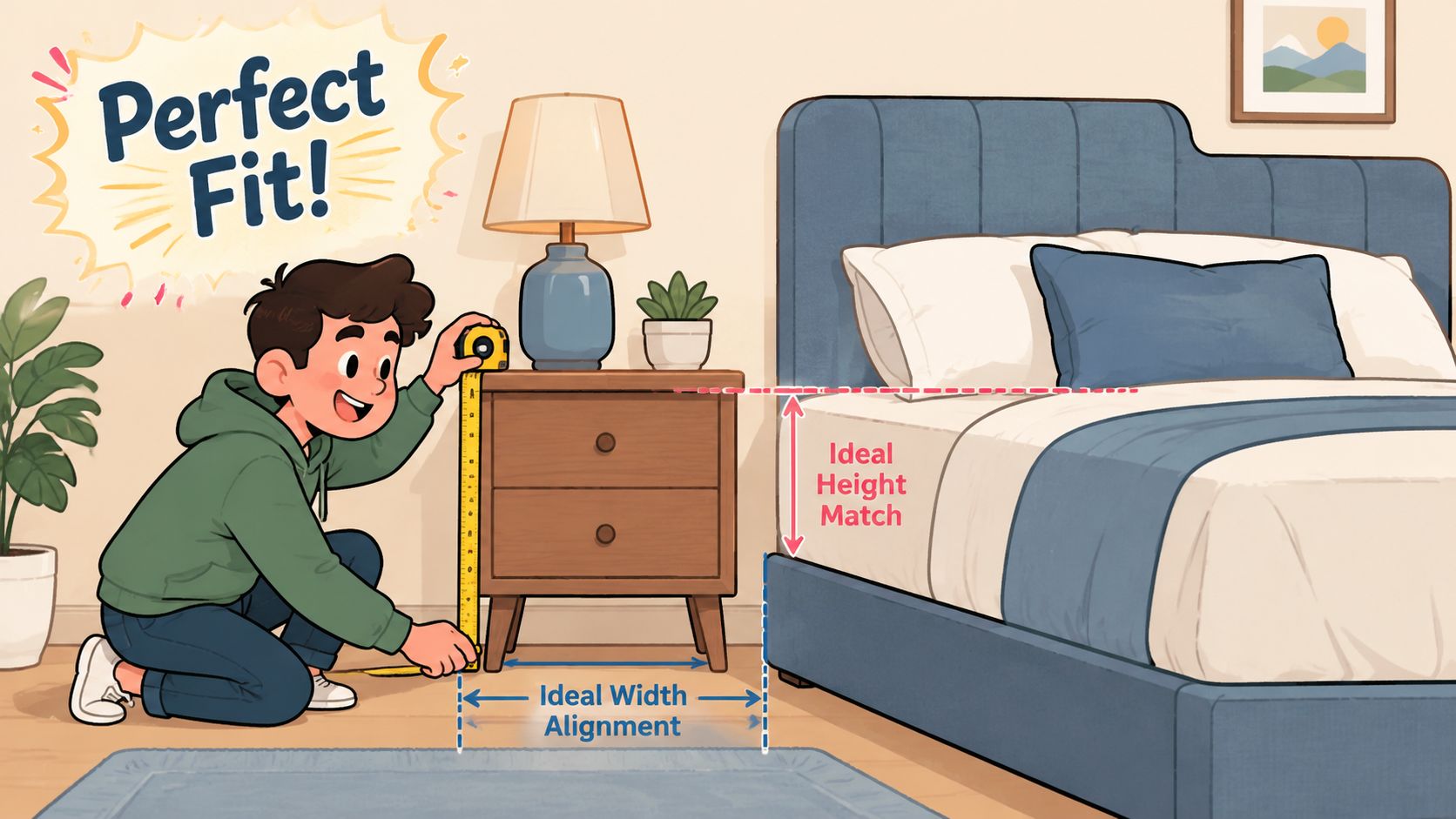
The fix starts with one measurement. Measure from the floor to the top of the mattress, with your usual bedding in place. That is the working height your end tables need to serve.
Use the mattress-top rule
A good target is simple. Keep the end table surface within about 2 inches of the mattress top. The Joinery's bedside height guide gives the same rule of thumb, including a practical example: if the mattress top lands at 28 inches, the table should usually fall between 26 and 30 inches.
That matters more with the high-profile mattresses many people buy now. A modern foam or hybrid mattress often sits taller than older sets, especially once you add a foundation or substantial bed frame. I see this in Ruidoso homes all the time. A table that worked fine ten years ago can end up several inches too short after a mattress upgrade, and the whole bedside routine feels clumsy.
A quick measuring checklist
Use this before buying 2 end tables for a bedroom:
- Measure mattress height. Go from the floor to the top of the mattress with bedding arranged the way you sleep.
- Set your height range. Stay within roughly 2 inches above or below that top surface.
- Check usable top height. Tray tops, thick edges, and raised rails can make the surface less convenient than the spec sheet suggests.
- Test bedside clearance. Make sure drawers open fully and the piece does not crowd the path around the bed.
- Match the room, not just the mattress. A properly sized table still needs to fit the bed width, wall space, and walkway.
For room planning, it helps to review how to choose the best bed mattress size for your home, since mattress dimensions directly affect how much space remains for end tables and comfortable movement.
A bedside table should let you reach a lamp, water, or your phone without sitting up awkwardly or stretching across the gap.
Depth and proportion count too
Height gets the attention, but width and depth decide whether the room feels balanced. A narrow table can look undersized next to a substantial bed and tall headboard. A deep one may fit on paper but still clip your shin in the dark.
I usually tell shoppers to judge end tables the same way we judge a sleep setup. Fit first, appearance second. A high-profile mattress pairs better with tables that have enough visual weight to hold their own beside it, but not so much bulk that they choke off walking space. In tighter bedrooms, a slimmer table with one good drawer often works better than a larger case piece with extra storage you rarely use.
Common mistakes with 2 end tables
A few sizing problems show up over and over:
- Too short for the mattress. This is common after replacing an older bed with a thicker mattress.
- Too deep for the room. The table may fit beside the bed but still block an easy path.
- Too small on top. A lamp, water glass, phone, and one personal item should fit without crowding.
- Too heavy for the bed scale. Thick cases beside a large bed can make the whole room feel compressed.
- Too different in size. Mismatched function can work, but wildly different heights and widths usually look accidental.
Good sizing should disappear into your routine. If you can reach what you need in the dark, keep the surface tidy, and move around the bed without bumping into corners, the tables are doing their job as part of the sleep system.
Matching Styles and Choosing Durable Materials
A bedroom looks better and works better for sleep when the end tables make sense with the bed they serve. With today's taller mattresses, I pay close attention to how the tables finish the whole sleep setup, not just how they photograph. The right pair should support the scale of the bed, soften the room visually, and hold up to years of nighttime use.
Matching pair or complementary pair
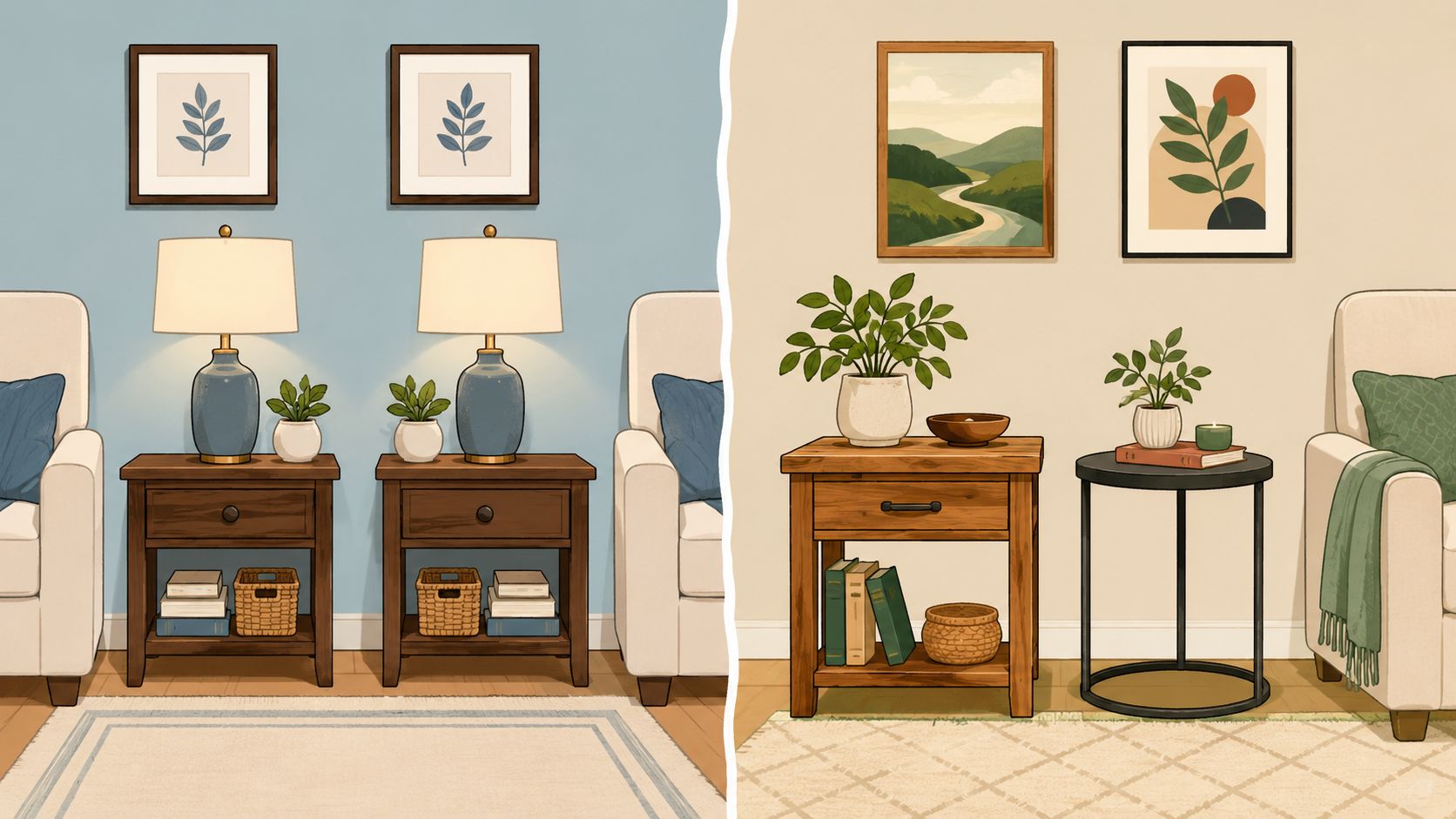
A matched set gives the room symmetry and a calmer look at bedtime. That tends to work well with substantial headboards, high-profile mattresses, and bedrooms where both sleepers use the space in a similar way.
A complementary pair can be the smarter choice in real homes. One side may need a drawer for glasses and medications. The other may need more open access for books, a CPAP, or charging cords. I recommend keeping the height, width range, and visual weight closely related so the room still feels settled.
Here's where shoppers usually get it right:
- Matching tables suit bedrooms where visual balance matters most and both sides need similar storage.
- Complementary tables fit couples with different bedtime habits.
- Mixed finishes can work if one finish repeats elsewhere in the room, such as the bed frame, lamp base, or hardware.
- Very different shapes or massing tend to feel distracting beside a bed that should read as one unified sleep zone.
If you want a warmer accent without making the bedside feel busy, this antique brass side table idea shows how a smaller piece can add character and still stay appropriate for a bedroom.
Materials matter in mountain homes
In Ruidoso, materials take more abuse than shoppers expect. Dry air, dust, frequent cleaning, and the stop-and-start use of guest rooms or cabins all show up on bedside furniture first. A table that looks fine on the sales floor can start loosening at the joints, chipping at the corners, or showing a swollen top after a short stretch of real use.
For a primary bedroom, I usually steer people toward materials that age well and clean up easily. For a vacation property, I get even pickier. The end table is part of the sleep environment, so it needs to stay stable, quiet, and attractive without constant fuss.
What holds up over time
Solid wood
Solid wood is still one of the best long-term choices for bedside use. It has enough visual substance to stand next to taller mattresses, and minor wear usually looks natural instead of cheap.
It does need a decent finish and reasonable indoor humidity control. In return, it often lasts longer and looks better after years of lamps, books, and nightly reach-and-set-down use.
Metal
Metal is a good fit for slimmer profiles, cleaner lines, and smaller rooms. It resists a lot of daily wear and is easy to wipe down.
The trade-off is feel. Some metal tables can look cold or sound a little harsh when you set items down at night, so I like them better with warmer wood tones, upholstered beds, or softer lighting.
Stone accents
A stone top gives you a durable surface for water glasses, hand lotion, and anything that might spill. It also handles repeated cleaning well.
Weight is the main drawback. Heavy tops are harder to move and can feel too rigid in a bedroom that already has a large bed, dresser, and chest.
Engineered wood
Engineered wood has its place in lighter-use rooms and tighter budgets. Some pieces look good from a few feet away.
The problem shows up later. Edges and corners tend to reveal wear sooner, especially in guest rooms, rentals, or bedrooms where chargers, cups, and daily handling put the finish to work. For shoppers building a bedroom around a premium mattress, this is often the material compromise they notice first.
Considering Functionality for Modern Lifestyles
A bedside table used to be a simple landing spot for a lamp and a clock. That's no longer enough for many bedrooms.
Modern sleep routines involve charging devices, managing clutter, storing personal items, and keeping the visible space calm. The best 2 end tables support those habits instead of adding more mess.
Storage changes the feel of the room
Open surfaces look nice in photos. Real bedrooms need places to hide the everyday items that collect around a bed.
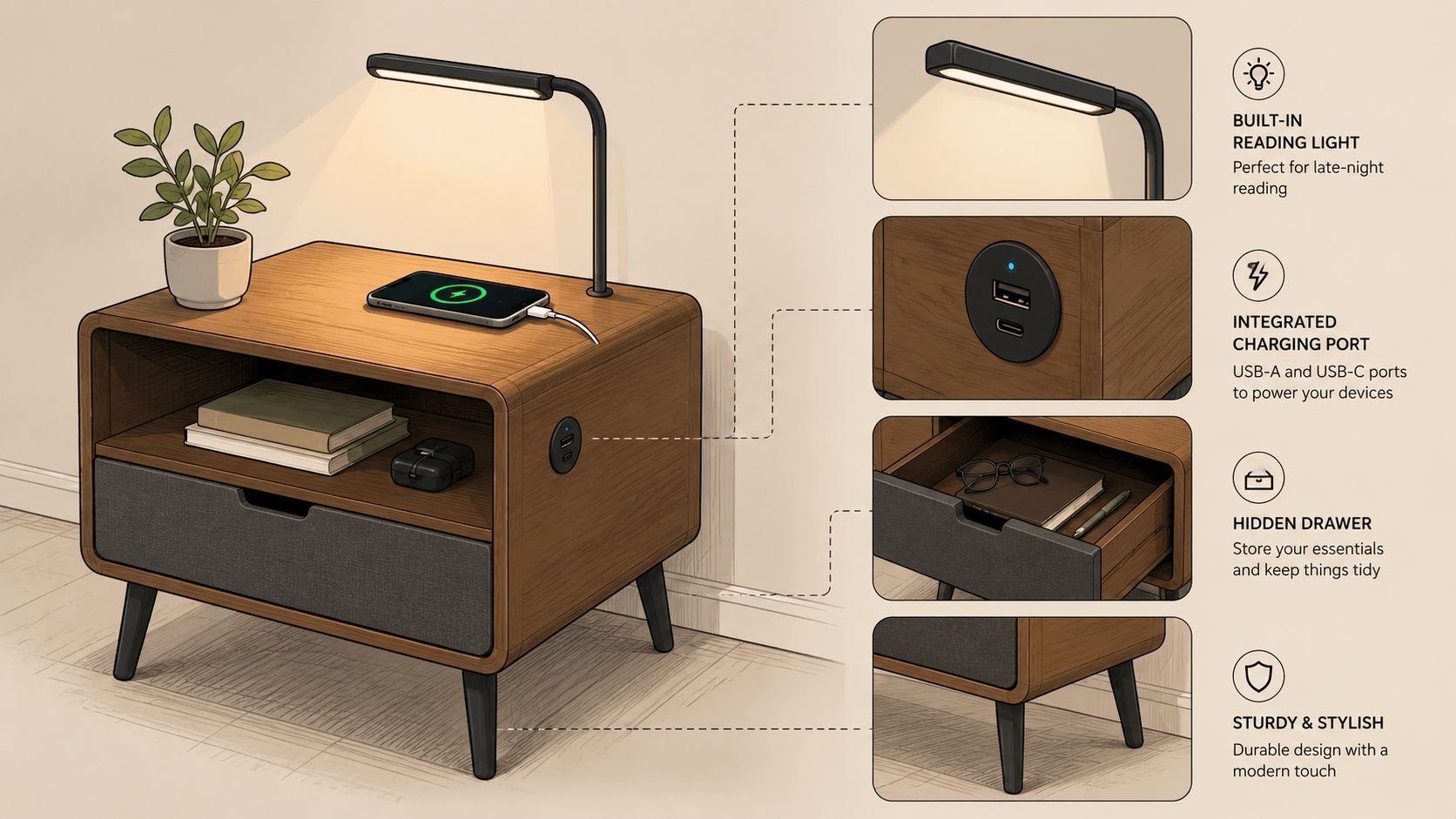
A drawer can hold reading glasses, chargers, hand cream, or a sleep mask. A lower shelf can hold books or a basket. That simple change keeps the top surface clear, which usually makes the room feel quieter before bed.
For vacation cabins and compact bedrooms, this becomes even more important. For small spaces like vacation cabins, 60% of buyers now prioritize vertical storage and built-in charging over sheer surface area, with guides indicating tables under 18 inches wide with multiple levels are a top choice, based on this small-space end table guide.
Charging belongs where people actually use it
A charging feature only helps if it reduces clutter and keeps cords under control. On a bedside table, that means the device can charge without sliding to the floor or stretching a cable across the sleep space.
That's especially useful in Alto vacation homes and compact guest rooms where every inch has to earn its place. A table with integrated charging can replace the need for extra adapters, visible extension cords, or awkward furniture placement near outlets.
Bedrooms tend to feel more restful when the bedside surface is doing quiet work in the background instead of collecting loose cords and clutter.
Not both tables need to do the same job
One of the most practical mistakes shoppers make is assuming both bedside tables must be identical in function. They don't.
A better approach is to assign roles based on actual habits:
- One table can be storage-first for books, medications, or personal items.
- The other can be charging-first for devices used overnight or first thing in the morning.
- One can carry the lamp load if the other side relies more on wall lighting.
- Both can stay visually related even if the internal function differs.
That setup works well for couples and also for primary bedrooms that include a reading chair or mixed-use corner.
Keep sleep in the center of the decision
Function should support sleep, not fight it. If a table encourages clutter, harsh lighting, or visible cable mess, it's not helping the room rest.
For side sleepers, comfort needs are already specific. Side sleepers require mattress features that relieve pressure at the shoulders and hips, as noted in this mattress guidance for sleep position matching. The bedside setup should show the same level of thought. Good sleep comes from systems that work together, not from one premium item surrounded by poor support pieces.
Proper Placement for a Balanced Bedroom
Placement changes how 2 end tables feel even after the right size and style are chosen. A good table in the wrong spot still creates inconvenience.
The goal is simple. The sleeper should be able to reach the top surface easily, move around the bed safely, and keep the room visually balanced.
Start with access, then adjust for symmetry
Place each table close enough to serve the bed naturally. If the sleeper has to lean far out or twist to reach a lamp or water glass, the table is too far away.
At the same time, don't wedge tables so tightly that bedding rubs against them or drawers become hard to open. A little breathing room makes the bed easier to make and the room easier to clean.
A helpful visual reference for bedroom flow appears in these ways to improve the design of your bedroom.
Balance doesn't always mean identical
A balanced bedroom can have matching tables, but it can also have two different pieces that carry similar visual weight. That's often the better solution when the room includes more than just the bed.
The most overlooked example is mixed seating. For rooms with mixed seating, such as an armless chair next to a bed, the standard height rule changes. The table for the armless chair should be 8 to 10 inches higher than the seat for proper accessibility, according to this guidance on side tables with storage and seating variation.
That means a bedroom with a bed on one side and an armless reading chair on the other shouldn't automatically use two tables at the same height. Doing that may look neat, but it won't feel right in use.
The room should match how people move through it at night, not just how it looks from the doorway.
A simple placement checklist
- Reach test. Sit on the bed in your normal position and reach for the tabletop.
- Path test. Walk around the bed in low light and notice any corners that interrupt movement.
- Drawer test. Open drawers fully and make sure bedding or nearby furniture doesn't block them.
- Lamp test. Check whether the light falls where it's needed for reading without glaring across the bed.
- Chair-side adjustment. If one side serves a chair, size and height may need to change.
In bedrooms across Ruidoso and Lincoln County, the best layouts usually feel easy rather than styled. That's the sign the placement is correct.
Your Ruidoso Partner for a Complete Sleep Sanctuary
Getting a bedroom right takes more than choosing a mattress off a spec sheet. Sleep improves when the whole setup works together, from support and pressure relief to the pieces placed on both sides of the bed.
That's where local guidance matters. A family business with a 70-year legacy in Ruidoso understands the difference between a bed that looks good online and a sleep system that fits a real mountain home, a guest cabin in Alto, or a primary bedroom in Lincoln County. Dry mountain air, seasonal visitors, room size limits, and cooling needs all affect how a bedroom should come together.
Why local sleep guidance still matters
A mattress isn't a one-size-fits-all product. Tempur-Pedic memory foam responds differently than a Sealy Hybrid. Stearns & Foster often appeals to shoppers who want a more substantial, luxury feel. Sherwood can be a strong fit for value-conscious households that still want dependable support.
That decision should connect to sleep position and body mechanics. Side sleepers, for example, often need pressure relief at the shoulders and hips, while the support core helps maintain spinal alignment. Cooling materials can also matter more in bedrooms that trap heat, even in a mountain climate where nights cool down.
For people worried about making the wrong choice, the Comfort Promise helps remove that fear. The Low Price Promise adds confidence on value, and Full-Service Delivery with Professional Setup means the room gets finished correctly instead of left half-done at the front door.
Better sleep comes from a complete setup
A high-profile mattress with poor bedside function still leaves gaps in the nightly routine. A supportive mattress paired with well-sized 2 end tables, proper lighting, and practical placement creates a calmer room and an easier bedtime.
That's the kind of detail a real sleep consultation can catch. Shoppers who want help comparing support, feel, pressure relief, and room fit can start with a local sleep consultation near Ruidoso.
For many households, that guidance is the difference between buying a bed and building a sleep sanctuary.
Ready to transform your sleep? Visit our Sleep Pros at the Mattress Pro by Miller Waldrop showroom located at 2801 Sudderth Drive, Suite F, in Ruidoso. From luxury brands to budget-friendly solutions, we're here to help you wake up loving your mornings. Browse our collection online or stop by Monday through Saturday.