

Adjustable Bed for Side Sleepers: 2026 Comfort Guide

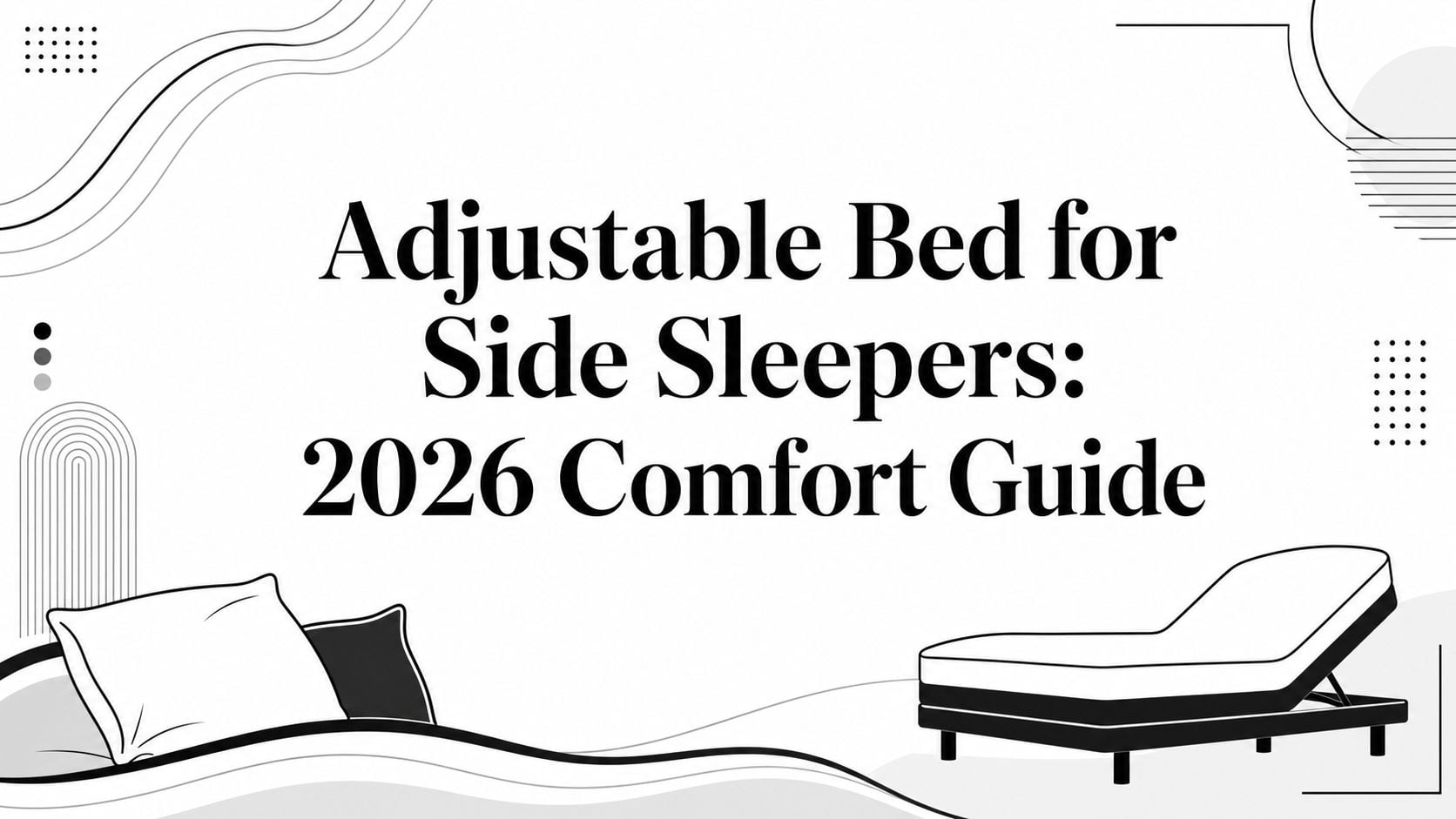
You wake up on your side, reach for your shoulder, and feel that familiar pinch that makes the whole morning feel off. In Ruidoso, where dry mountain air can already leave you feeling a little tight and stiff, that kind of wake-up call usually means the bed isn't matching the way your body sleeps. An adjustable bed for side sleepers can change that by letting the mattress and base work with your shoulders, hips, and neck instead of fighting them.
Why Side Sleepers Need Specialized Sleep Solutions
Side sleeping is normal, but it's also demanding. When you spend most of the night on one shoulder and one hip, a flat surface can create pressure points that make you toss, shift, and wake up sore. A local shopper often notices it first as a sore shoulder in the morning, then later as neck tightness or hips that feel compressed.
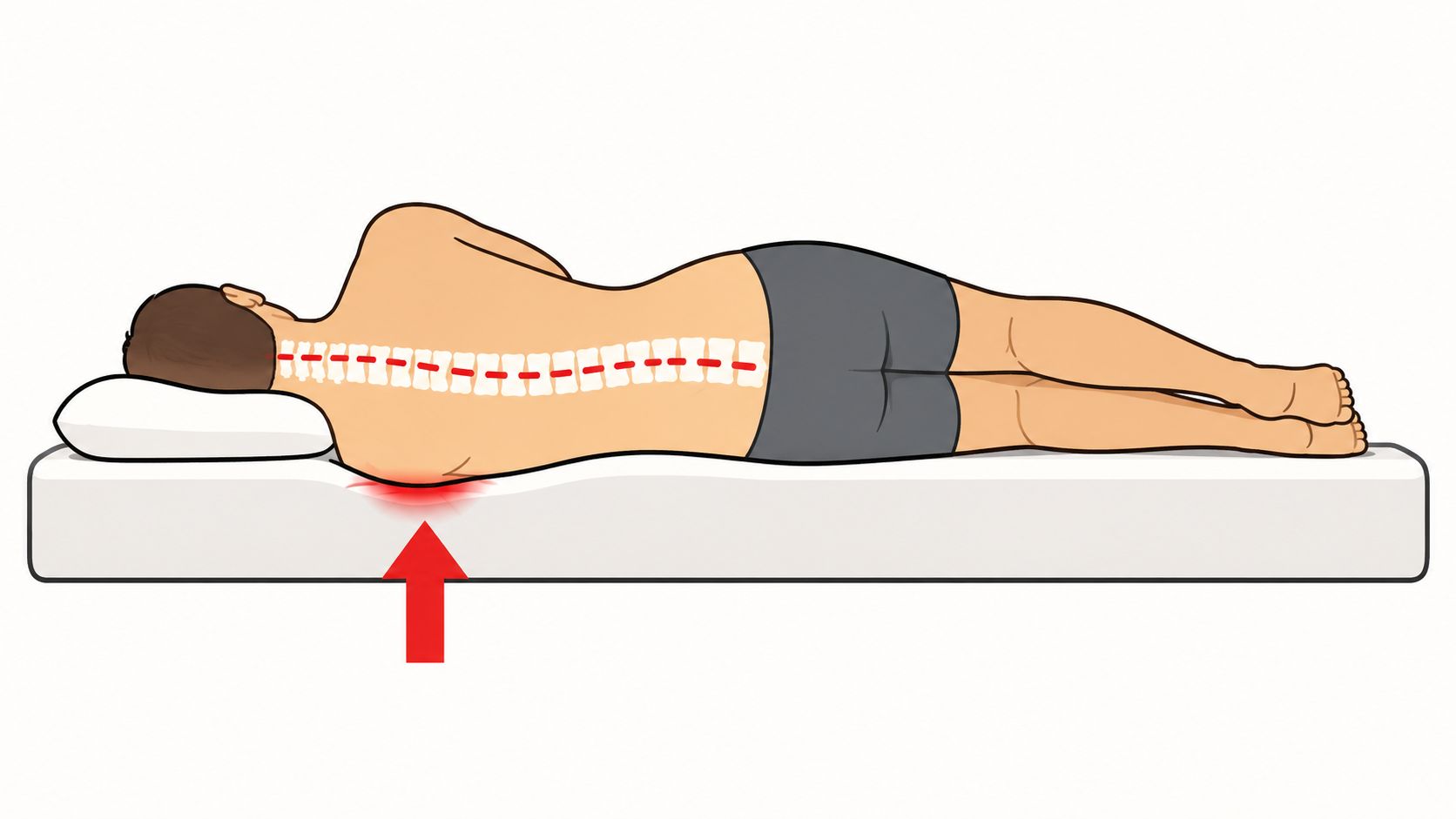
The reason this matters is simple. Side sleeping is a major sleep posture, with one survey finding 54.1% of time in bed spent on the side, and another source noting adults spent about 54% of the night on their sides, compared with about 37% on their backs and 7% on their stomachs source. That means a lot of people need a setup that supports the body in that position, not one that only feels good when fully flat.
What usually goes wrong on a flat bed
A flat mattress can still feel soft, yet softness alone doesn't solve alignment. If the shoulder sinks too far while the waist stays lifted, the spine can twist slightly, and that often shows up as morning stiffness. If the mattress is too firm, the shoulder and hip take too much direct load.
A bed that can articulate gives the sleeper another option. It lets the upper body and knees settle into a more forgiving shape without forcing the entire mattress surface to stay rigid. For many side sleepers, that small change makes the bed feel less like a hard plane and more like a supportive contour.
Why local shoppers should care
At Mattress Pro by Miller Waldrop in Ruidoso, the conversation usually starts with the body, not the brochure. A bed should fit the sleeper's real habits, whether that means long nights in Alto, quick recovery after work in Lincoln County, or just wanting to stop waking up sore after a cold mountain night. For a deeper look at mattress fit, the best mattress for side sleepers guide is a useful place to compare comfort styles before choosing a base.
Practical rule: if side sleeping leaves the shoulder numb or the hip tender, the bed needs pressure relief first, not more marketing hype.
The Science of Pressure Relief and Spinal Alignment
A side sleeper's body creates two main pressure zones, the shoulder and the hip. Those areas bear the most load because they're the widest contact points against the bed, and that's why a good setup has to do more than feel plush. It has to reduce stress where the body meets the surface while keeping the spine from bending into a curve that feels fine at bedtime but painful by sunrise.
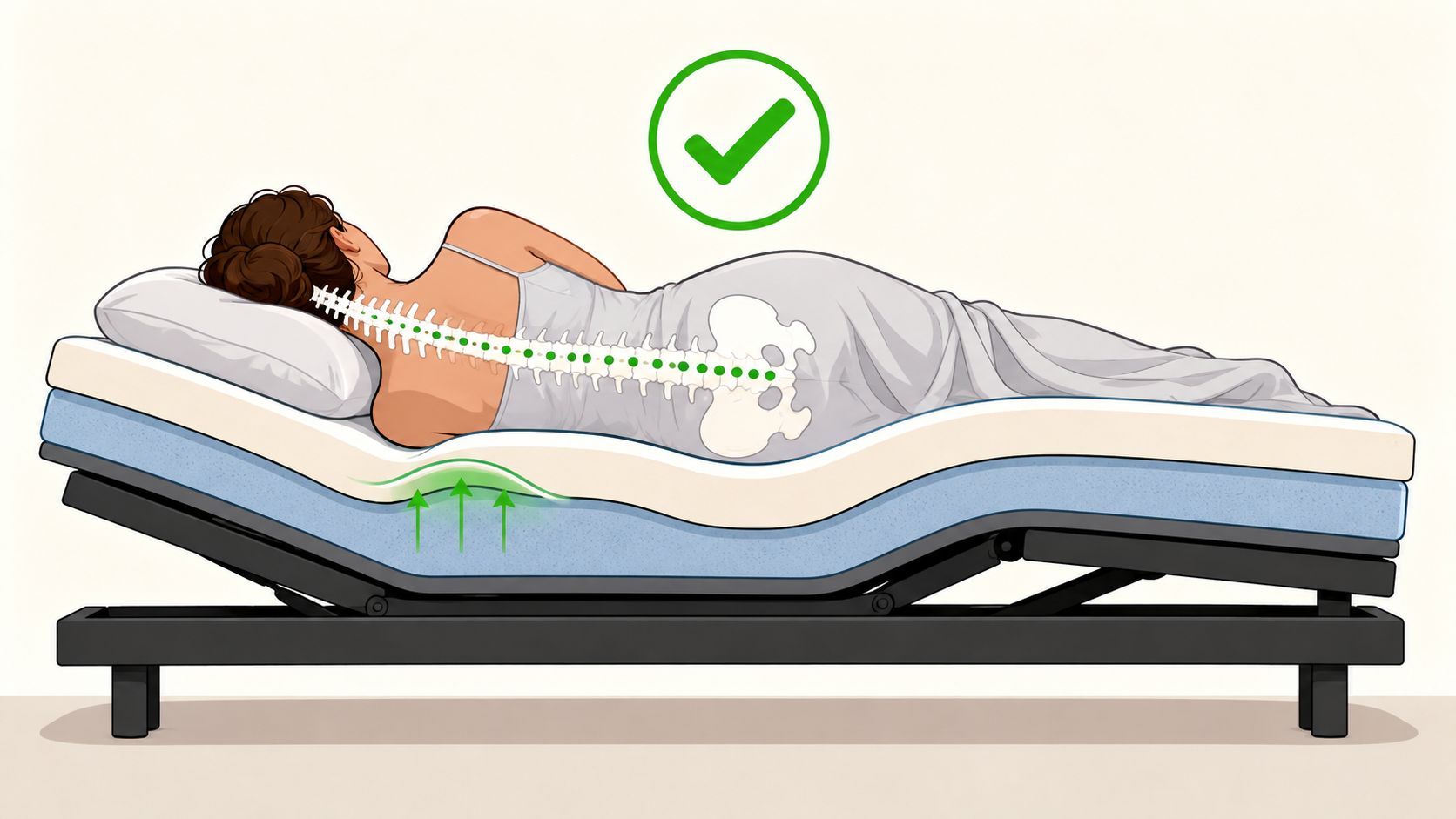
Research supports the idea that adjustable bases can change sleep in measurable ways. In a 2022 abstract published in SLEEP, objectively measured sleep and self-reported sleep both improved in duration and quality when participants used an adjustable base instead of their original bed base source. That doesn't mean every sleeper needs a dramatic angle, but it does show that the base itself can influence actual sleep metrics.
Why small elevation changes matter
For side sleepers, the important part is usually controlled elevation, not maximum incline. One guide says the useful range is often 30° to 45° of upper-body elevation, because that can reduce shoulder loading without creating a sharp bend at the waist source. The same source notes that some premium bases add pillow-tilt, which helps the neck without forcing the torso into a different position.
That kind of precision matters because side sleeping is sensitive to tiny shifts. Raise the head too much and the chest can feel compressed. Raise it too little and the shoulder may still carry too much pressure.
A simple way to think about alignment
The goal isn't to look “positioned.” The goal is to wake up without feeling braced, twisted, or compressed.
That's why an adjustable bed for side sleepers works best when it supports a neutral line from head to hips as closely as the body allows. The adjustable base can fine-tune the angle, while the mattress does the softer job of pressure relief. For people who want to understand that pressure-relief layer more clearly, the pressure point relief explanation is worth reviewing before narrowing down a setup.
Essential Features to Look for in an Adjustable Bed
A side sleeper doesn't need every feature on the market. The useful ones are the ones that help the body stay comfortable all night without overcomplicating bedtime. That starts with articulation that's smooth, quiet, and specific enough to support the shoulders and knees without throwing the whole body out of balance.
What to prioritize first
- Articulation range: Look for a base that offers enough head and leg movement to fine-tune position, not just a dramatic lift. Small adjustments usually help more than extreme settings for side sleeping.
- Quiet motor operation: A loud base can interrupt wind-down time, especially if one partner moves before the other.
- Stable frame support: Side sleepers need the mattress and base to stay aligned, especially near the edge.
- Simple remote controls: Easy controls make it more likely you'll use the position that works.
- Massage or preset options: These can be pleasant, but they're extras, not the core reason to buy.
A good showroom conversation should separate comfort essentials from nice-to-have features. If the remote is clever but the base doesn't hold position well, the shiny feature won't matter at 2 a.m. The same is true if the bed feels smooth when testing it but wobbly after longer use.
What to ask in the store
The best question is usually, “Does this base support side sleeping without forcing a steep angle?” That keeps the focus on comfort and alignment rather than gadget count. In Ruidoso, that kind of practical testing matters because a bedroom that feels okay in the store can feel very different once it's dealing with dry air, cooler nights, and a real home setup.
One option many shoppers ask about at Mattress Pro by Miller Waldrop is an adjustable base pairing that can be matched to the mattress instead of forcing the mattress to do all the work source. That pairing question is usually more important than any single feature.
Choosing the Right Mattress for Your Adjustable Base
Not every mattress bends the same way, and that's where many shoppers get tripped up. An adjustable base can only help if the mattress can articulate with it, keep pressure off the shoulder and hip, and still feel supportive when raised. The best choice depends on how the material responds to movement and how much contouring the sleeper wants.
Mattress Types for Adjustable Bases
| Mattress Type | Flexibility | Pressure Relief | Best For |
|---|---|---|---|
| Memory Foam | High | Strong contouring | Side sleepers who want deep pressure relief |
| Hybrid | Moderate | Balanced support and contouring | Sleepers who want lift plus cushion |
| Latex | Moderate to high | Responsive cushioning | Sleepers who prefer a buoyant feel |
Memory foam often works well because it responds closely to the body and helps distribute pressure around the shoulder and hip. Hybrid models can add more lift and airflow, which some sleepers appreciate in a dry mountain climate. Latex feels more responsive, so the sleeper can turn more easily, but the surface may feel less enveloping.
Thickness and flexibility matter
A mattress that's too rigid can fight the base's movement, while one that's too bulky may not articulate cleanly. That's why thickness should be considered along with material, not as a separate afterthought. The mattress thickness guidance helps shoppers think through compatibility before they buy.
Brand fit without the guesswork
At a local showroom, shoppers usually compare feel first and brand second, then match the brand to the base and sleep position. In Ruidoso, that can include pressure-relieving models from Tempur-Pedic, balanced support from Sealy, premium comfort from Stearns & Foster, and adaptable options from Sherwood. The right pairing is the one that keeps side sleeping comfortable without losing support in the waist and lower back.
Helpful shortcut: if the mattress folds cleanly with the base, cushions the shoulder, and doesn't feel like it is pushing the sleeper off alignment, it's probably closer to the right match.
Debunking the Zero-Gravity Myth for Side Sleepers
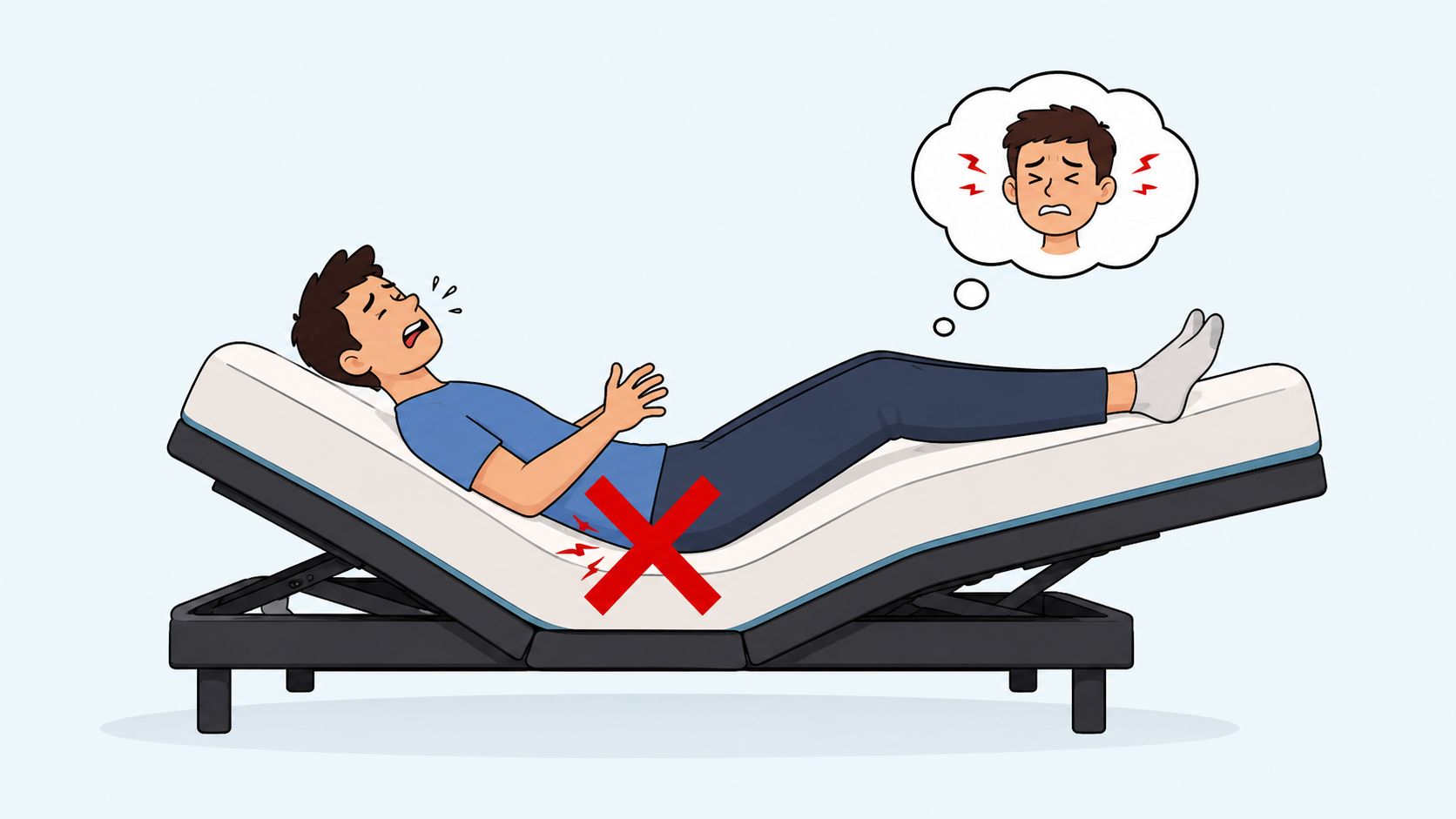
Zero-gravity sounds like a universal fix, but side sleepers don't always benefit from the steepest preset. A position that feels impressive in the showroom can shift pressure to the shoulder or hip once the body settles for real sleep. That's why the smartest setup is often the one that looks less dramatic and feels more natural.
Why higher isn't always better
One recent guide recommends a mild setup of about 15–20° head elevation and 10–15° foot elevation, while another puts the useful range for side sleepers closer to 30° to 45° and warns that going much higher can create lower-back strain source. Those ranges don't conflict so much as they show why blanket advice fails. Different bodies tolerate different angles.
The key idea is that side sleepers need pressure relief and lateral support first, not a dramatic pose. A steep preset can feel weightless for a few minutes, then make the shoulder work harder once the body relaxes. For some sleepers, especially those with pain in one spot, the right answer is a smaller adjustment that lets the mattress do more of the work.
A better way to test presets
The useful test is whether the angle reduces pressure without creating a new problem. If the hips feel pinned, the neck feels bent, or the low back starts to tighten, the preset is probably too aggressive. The right setup should feel boring in the best way possible, because the body is no longer fighting it.
An honest review of adjustable beds for side sleepers also has to admit that body type and mattress response matter. A softer surface may need less lift, while a firmer one may need more careful articulation. That's why reading personal comfort bed reviews can help shoppers think more critically about how a base and mattress work together instead of chasing a preset name.
Setup and Adjustment Tips for Optimal Comfort
The first night on an adjustable bed is usually not the final answer. Side sleepers often need a few small changes before the setup feels right, and the best results usually come from adjusting in small increments rather than jumping straight to the steepest position. The goal is to settle the body, not to impress it.
A simple adjustment routine
- Start low. Begin with mild head and knee elevation, then notice whether the shoulder still feels compressed.
- Change one thing at a time. Move the head or knees first, not both in big jumps.
- Use your pillow as part of the system. A supportive pillow should fill the space between the neck and mattress, not fight the angle.
- Check the hips after 10 to 15 minutes. If the lower body feels twisted, the position needs less lift or more support.
- Repeat over a few nights. The body often needs more than one bedtime to settle into a new arrangement.
What to do if two sleepers want different positions
That's common. One partner may need a flatter setup while the other wants more lift for shoulder relief or reflux comfort. Split designs and individualized controls make that tension much easier to solve, because the bed can stop being a compromise built on guesswork.
Useful habit: if a position feels good only for the first ten minutes, it's not the final answer.
Dry air in Ruidoso can also make sleepers more sensitive to muscle tightness, so the room itself matters too. A comfortable mattress, a stable adjustable base, and the right pillow height work together better than any single part on its own.
The Mattress Pro Difference for Ruidoso Sleepers
Shopping locally changes the process in ways an online cart can't. A family-owned store with a 70-year legacy can listen to a sleeper describe shoulder pain, mattress heat, or morning stiffness and then connect that story to the right feel, the right base, and the right price range. That matters in Ruidoso, where people want real answers, not a maze of return labels and guesswork.
Mattress Pro by Miller Waldrop focuses on sleep, not just boxes on a screen. That means the conversation stays on what side sleepers need, like pressure relief, support at the hips and shoulders, and a mattress-base pairing that holds up in the dry mountain climate. The store also backs the purchase with a Comfort Promise, a Low Price Promise, and Full-Service Delivery with Professional Setup, which helps reduce the fear of picking the wrong bed.
Why local guidance makes the choice easier
- Better fit conversations: A side sleeper can explain pain patterns, sleep position, and comfort preferences face to face.
- Local climate awareness: Dry mountain air and cooler nights can change how a bed feels.
- Real setup help: Delivery and professional setup reduce mistakes that can ruin an otherwise good purchase.
- Brand-focused selection: Shoppers can compare Tempur-Pedic, Sealy, Stearns & Foster, and Sherwood with guidance that stays grounded in actual sleep needs.
The showroom at 2801 Sudderth Drive, Suite F, in Ruidoso gives shoppers a place to lie down, compare, and ask questions without rushing. For neighbors in Alto, Lincoln County, and across town, that kind of service is often the difference between a bed that just arrives and a bed that actually works.
Ready to transform your sleep? Visit our Sleep Pros at the Mattress Pro showroom located at 2801 Sudderth Drive, Suite F, in Ruidoso. From luxury brands to budget-friendly solutions, we're here to help you wake up loving your mornings. Browse our collection online or stop by Monday through Saturday at Mattress Pro by Miller Waldrop.