


Best Bed Pillows for Neck Pain That Actually Help You Sleep


You wake in Ruidoso after a full night in bed, roll your shoulders, and feel that familiar pull at the base of your neck. The mattress may feel comfortable, yet the morning still starts with stiffness, a headache, or the need to stretch before breakfast. That pattern can make it tempting to blame the bed, but the pillow may be the part of the sleep system that's holding the head at the wrong angle.
The search for the best bed pillows for neck pain shouldn't be a popularity contest. A pillow that feels wonderful to one sleeper can push another sleeper's head forward, let the neck drop, or fail to fill the space between the shoulder and mattress. The useful question isn't whether memory foam, latex, contour, or cervical designs are “best.” It's whether the pillow's loft and shape fit the sleeper's posture, body size, mattress, and natural neck curve.
A Sleep Pro neighbor approaches the problem the same way a careful mattress fitting works. First, the sleeper identifies what happens during the night. Next comes a look at spinal alignment, pillow anatomy, sleep position, and body type. Finally, the pillow gets tested with the mattress rather than judged by its label alone.
That approach matters in Ruidoso, Alto, and throughout Lincoln County, where people often need practical guidance instead of a one-size-fits-all online recommendation. The local, family-owned Miller Waldrop legacy has focused on sleep for 70 years, with personal care that bed-in-a-box websites can't provide. Readers who want more background can also review this guide to sleeping better with neck pain.

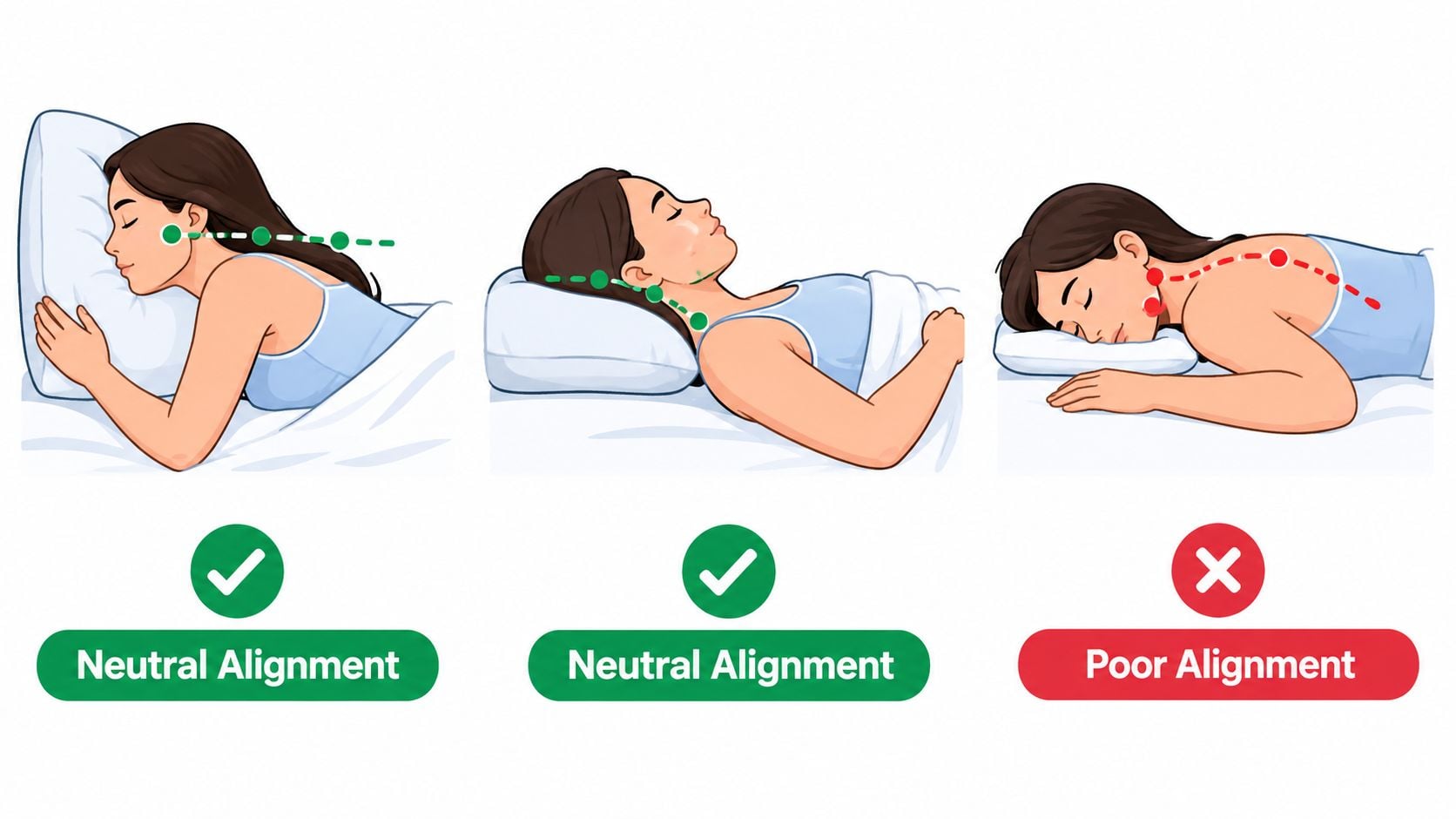
How Sleep Posture Creates Neck Pain and What Neutral Alignment Looks Like
You wake with a sore neck after sleeping through the night, even though nothing seemed wrong at bedtime. Often, the issue is sustained pressure or bending. A pillow supports neutral alignment when your head stays level with the rest of your spine, rather than tipping up, down, or forward. Your neck works like a short bridge between your skull and upper back. It rests more comfortably when that bridge stays straight.
Why morning pain can feel worse
Morning neck pain often starts with hours of one-sided loading. A pillow that is too tall can hold your chin toward your chest. One that is too low can let your head fall toward the mattress. Either position may keep the neck muscles working while the rest of you is trying to rest.
Pillow height changes cranio-cervical pressure and cervical spine alignment, according to a head-neck biomechanics study and related clinical review. The included studies identified approximately 10 cm as the most optimal pillow height for maintaining cervical alignment. Treat that figure as a reference, not a personal prescription. Your shoulder width, body proportions, mattress, and sleep position still determine the right fit.
Check your position with these simple signs:
- A level head: Your head should not angle toward the ceiling or mattress.
- A relaxed neck: The muscles around your shoulders should not feel braced.
- An open airway: Your chin should not be pressed sharply toward your chest.
- Even support: The pillow should support your head and neck without crowding your shoulder.
How each position changes the gap
Side sleeping leaves the largest space between the mattress and the side of your head because your shoulder occupies that space. A side sleeper commonly needs more loft, with enough stability to prevent the neck from bending downward.
Back sleeping usually calls for a medium loft. The pillow should cradle the neck's natural curve without pushing your head forward. Stomach sleeping creates another challenge because your head is already turned to one side. A very low pillow, or no pillow under the head, can reduce rotation and extension.
Your mattress changes the gap, too. A softer surface lets the shoulder sink farther, while a firmer surface can leave more space to fill. That is why pillow fitting works better with your usual mattress and a local Comfort Promise test in Ruidoso than with a label alone.
Use this plain-language guide to spinal alignment during sleep to compare these positions with your usual posture.
Pillow Anatomy Explained Loft Firmness Fill and Shape
Pillow labels can be confusing because “firm,” “soft,” “orthopedic,” and “cooling” describe only part of the fit. Four features work together: loft, firmness, fill, and shape. Changing one can change how the others feel under the head.
Loft is the starting measurement
Loft is the pillow's height under load, not its height on a store shelf. A tall pillow can compress considerably, while a thinner pillow may stay more stable. The correct loft fills the gap between the mattress and the head without lifting or dropping the neck.
A 2021 systematic review and meta-analysis found that rubber pillows significantly reduced chronic neck pain compared with comparators, with a standardized mean difference of -0.263, p<0.001. The review also reported lower waking pain, lower neck disability, and higher pillow satisfaction, but the effect sizes were modest and the results didn't show that every pillow type works equally well. The findings are available in the PubMed review of pillow designs for chronic neck pain.
Firmness controls stability
Firmness determines how much the pillow resists the head and how consistently it holds its shape. A soft pillow may feel inviting at bedtime but flatten enough to lose alignment. A very firm pillow may hold the neck securely while creating pressure at the ear, jaw, or side of the head.
The right combination depends on posture:
- Higher and firmer: Often suits side sleepers who need to span the shoulder gap.
- Medium and supportive: Often suits back sleepers who need gentle neck-cradle support.
- Low and forgiving: Often suits stomach sleepers who need less elevation.
Practical rule: Height and shape can matter more than material alone. A “firm” pillow with the wrong loft can still place the neck out of neutral alignment.
Fill affects feel and temperature
Memory foam contours around the head and neck, which can help distribute pressure rather than concentrating it in one spot. Dense foam may retain heat, while designs with ventilation or cooling gel technology aim to move heat away from the surface. Latex usually feels more buoyant and responsive, while adjustable shredded fills allow the sleeper to change loft.
A hybrid pillow can combine layers or materials to balance contouring, responsiveness, and airflow. No fill guarantees relief, however. The pillow still needs to match the sleeper's posture and the mattress beneath it.
Readers interested in how bedding surfaces affect sore areas can explore this explanation of pressure point relief.
Shape gives the neck a target
A flat pillow offers flexible positioning, but it may require more careful adjustment. Contour and cervical pillows use raised or lowered zones to support the neck's curve and keep the head centered. A cervical pillow reduced pain at the base of the neck, particularly in the morning, over a four-week period in a controlled study, as described in this PubMed-indexed research on semi-customized cervical pillows.
Choosing the Best Pillow for Your Sleep Position and Body Type
Selecting a pillow is a fitting problem, not a brand ranking. Start with the position you hold most of the night, then adjust for shoulder width, body frame, and mattress feel. A broad-shouldered side sleeper may need more usable height than someone with a smaller frame. A petite back sleeper may feel pushed forward by a pillow that supports a larger body.
The mattress changes the fit, too. On a firm surface, the shoulder sinks less, so the pillow may need more loft. On a plush mattress, deeper shoulder compression reduces the space the pillow must bridge. The same pillow can therefore feel well matched in one bed and misaligned in another.
Side sleepers need room to bridge the shoulder gap
Side sleepers generally need the highest loft and stable, firmer support. The pillow should fill the distance between the mattress and the head without tipping the neck toward the mattress. It must support both the side of the head and the neck, much like a bridge spanning the shoulder gap.
Check the line from the shoulder to the ear. If the ear sits noticeably lower, the loft may be too low. If the nose points away from the body's center, the loft may be too high, or the pillow's shape may not suit you.
Back sleepers need a neck cradle without forward pressure
Back sleepers typically do well with a medium loft that supports the natural cervical curve. The head should settle into a shallow center area while the neck receives enough support to avoid dropping backward. A contour design can help, provided its raised section matches your neck length and shoulder profile.
Your chin should not be pressed toward your chest. If it is, the pillow is likely too tall, too firm, or shaped in a way that does not fit your body.
Stomach sleepers need the least elevation
Stomach sleepers generally need the lowest loft, and some feel better without a head pillow. A thick pillow lifts the head while it is turned, increasing neck rotation. A soft, thin design can limit that angle. Persistent pain is a reason to discuss your sleep position and symptoms with a qualified healthcare professional.
A quick decision matrix
| Sleep Position | Recommended Loft | Firmness Guidance | Alignment Goal |
|---|---|---|---|
| Side | Highest | Firmer and stable | Fill the shoulder-to-head gap |
| Back | Medium | Supportive but not rigid | Cradle the neck's natural curve |
| Stomach | Lowest or none | Soft and flexible | Limit elevation and rotation |
These position-based recommendations align with the guidance in Sleep Foundation's neck-pain pillow guide. An independent loft guide suggests approximately 3 to 5 inches for back sleepers and under 3 inches for stomach sleepers. Treat those figures as starting points, not prescriptions. Mattress compression and body proportions change the fit.
Why body type changes the answer
Body type affects the distance the pillow must cover. Wider shoulders, a larger frame, or a mattress with little contouring can increase the need for loft. Narrow shoulders, a smaller frame, or deeper shoulder compression can reduce it.
A 2023 prospective study found that individualized height adjustment helped address neck pain. 42 participants, or 50%, reached the minimal clinically important difference after pain decreased by at least three points on a numerical rating scale. That finding supports tuning loft to the individual instead of choosing by a generic “firm” or “soft” label. The study details appear in this biomechanical and clinical evidence review.
Use your position and body proportions as the starting map. Then account for how your mattress changes shoulder depth. In Ruidoso, local testing with Mattress Pro by Miller Waldrop's Comfort Promise can help you assess that complete fit rather than judging a pillow by feel alone.
How to Measure and Test Pillows In Store Like a Sleep Pro
A pillow can feel comfortable for a few seconds and still be wrong after a full night. In-store testing works best when the sleeper checks alignment in the position used at home, rather than testing the pillow while sitting upright.
A practical showroom test
Bring the relevant details. Note the current mattress feel, usual sleep position, shoulder width, and whether pain appears at bedtime or in the morning. A photo of the current pillow can also help a Sleep Pro understand its shape and compression.
Lie down as usual. At the Mattress Pro showroom on Sudderth Drive, the sleeper should settle into the position used most often. Side sleepers should keep the shoulder close to the mattress, while back sleepers should avoid propping the head with extra layers.
Check the head and neck line. The nose should align roughly with the center of the sternum, not point toward the ceiling or mattress. The neck should feel supported without the chin being pushed sharply toward the chest.
Measure the gap. A Sleep Pro can assess the space from shoulder to neck and compare that space with the pillow's loaded loft. Body size and mattress compression both belong in the fitting conversation.
Stay for three to five minutes. During that time, notice pressure at the ear, jaw, shoulder, and base of the skull. Also notice whether the neck muscles relax or keep tightening.
Repeat the test. Comparing several shapes and lofts makes it easier to identify whether the issue is height, firmness, fill, or contour.
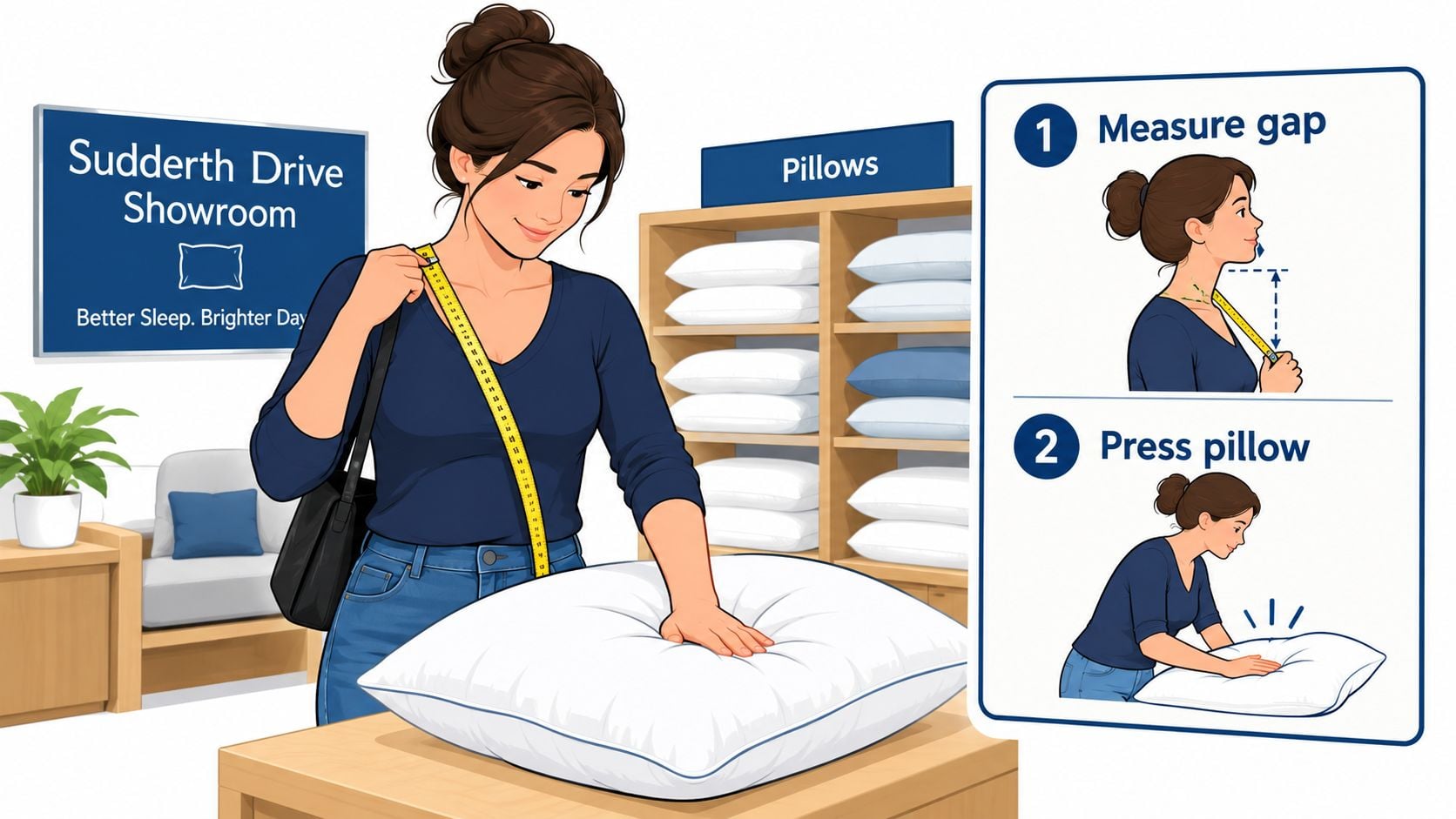
Residents from Alto and across Lincoln County can use the same process when visiting the local mattress store. The purpose isn't to choose the tallest or most expensive pillow. It's to find the geometry that keeps the neck comfortable on the mattress the sleeper uses.
The Comfort Promise helps reduce the fear of choosing the wrong feel. Instead of treating the purchase as a gamble, the fitting conversation creates a practical safety net when the first choice doesn't feel right.
Pairing Your Pillow With the Right Mattress for Lasting Relief
The pillow and mattress form one support system. A pillow that works on a firm surface may feel too tall on a plush mattress because the shoulder sinks deeper. The opposite can happen on a firmer mattress, where the shoulder stays higher and the sleeper needs more loft to keep the head level.
Mattress feel changes pillow geometry
Memory foam mattresses contour around heavier areas, which can reduce pressure at the shoulder and hip while helping distribute body weight. That contouring may change the space the pillow must fill. Hybrid mattresses combine foam comfort layers with a coil support system, often producing a more responsive surface with a different amount of sink.
Tempur-Pedic, Sealy, Stearns & Foster, and Sherwood each offer sleep-system options with distinct construction and comfort feels. A Sleep Pro can evaluate the mattress and pillow together instead of recommending a pillow in isolation. Readers comparing complete setups can also review this guide to the best mattress for neck and shoulder pain.
Cooling belongs in the local conversation
Ruidoso's dry mountain air can feel cool, but sleepers may still need temperature management inside a contouring foam sleep system. Dense memory foam can hold more body heat, while breathable covers, ventilated materials, cooling gel technology, and responsive latex designs may feel less heat-trapping.
That doesn't make one material automatically superior. A cooler pillow with the wrong loft can still aggravate the neck, while a well-fitted contour pillow may support better sleep even if the sleeper needs a more breathable cover or mattress layer.
Local service completes the fit
Mattress Pro by Miller Waldrop provides one-on-one guidance based on body type, sleep position, and budget. The Low Price Promise helps shoppers compare value locally, while Full-Service Delivery with Professional Setup supports the complete mattress purchase rather than leaving the household to manage every detail alone.
The same family-owned approach reflects the Miller Waldrop difference. A local team understands the needs of Ruidoso and Lincoln County neighbors, including permanent bedrooms, active mountain sleepers, and guest spaces that need dependable comfort.
Caring for Your Pillow When to Replace It and Your Next Step to Better Sleep
A well-fitted pillow still needs care. Washing instructions vary by fill, so the care label should guide cleaning rather than assumptions. Regular attention helps preserve loft, reduce moisture buildup, and reveal when the pillow no longer supports the neck evenly.
When should a pillow be replaced?
A pillow should be considered for replacement when it stays flattened, develops lumps, loses its shape, or no longer keeps the head and neck comfortable. Persistent morning pain after a careful fit check is another reason to reassess both the pillow and the mattress.
Use this maintenance checklist:
- Follow the care label: Wash or spot-clean only as the manufacturer allows.
- Fluff carefully: Restore the fill without forcing foam or structured inserts out of shape.
- Rotate when appropriate: Change orientation if the design allows it and the support begins to settle unevenly.
- Check the cover: Replace or wash protective covers when moisture, dust, or odors accumulate.
- Inspect the core: Look for sagging, lumps, cracking, or permanent compression.
Pillow care can't correct a poor loft match, but it can help a suitable pillow remain more consistent. When replacement becomes necessary, the Comfort Promise offers reassurance during the next fitting, while the Low Price Promise keeps the local comparison straightforward.
Mattress Pro by Miller Waldrop offers Sleep Pros who can test pillow loft and shape alongside Tempur-Pedic, Sealy, Stearns & Foster, and Sherwood sleep systems. Visit Mattress Pro by Miller Waldrop at 2801 Sudderth Drive, Suite F, in Ruidoso, Monday through Saturday, or browse online and use the Comfort Promise to take the uncertainty out of choosing support for neck pain.