

Full Size Mattress Dimensions: A Complete Buyer’s Guide

You're standing in a guest room or cabin with a tape measure in one hand and a floor plan in the other, trying to answer a simple question that somehow never feels simple enough. Will a full bed fit, or will it crowd the door, block the dresser, and turn a cozy room into a squeeze?
That's the job of full size mattress dimensions. The spec sheet says one thing, but your bedroom, your walking space, and your furniture have the final say. At Mattress Pro by Miller Waldrop in Ruidoso, the conversation starts with those life details, because the Comfort Promise is there to take the fear out of picking the wrong bed.
Standard Full Size Mattress Measurements
A standard full mattress measures 54 inches wide by 75 inches long. In everyday language, that is about 4.5 feet by 6.25 feet, which makes the footprint easier to picture when you are looking at a bedroom, cabin, or guest room floor plan instead of just a spec sheet. The standard full size also goes by the older name double bed, so that label still appears on some frames and bedding packages, and some shoppers run into a full XL at 54 by 80 inches when they need extra legroom.
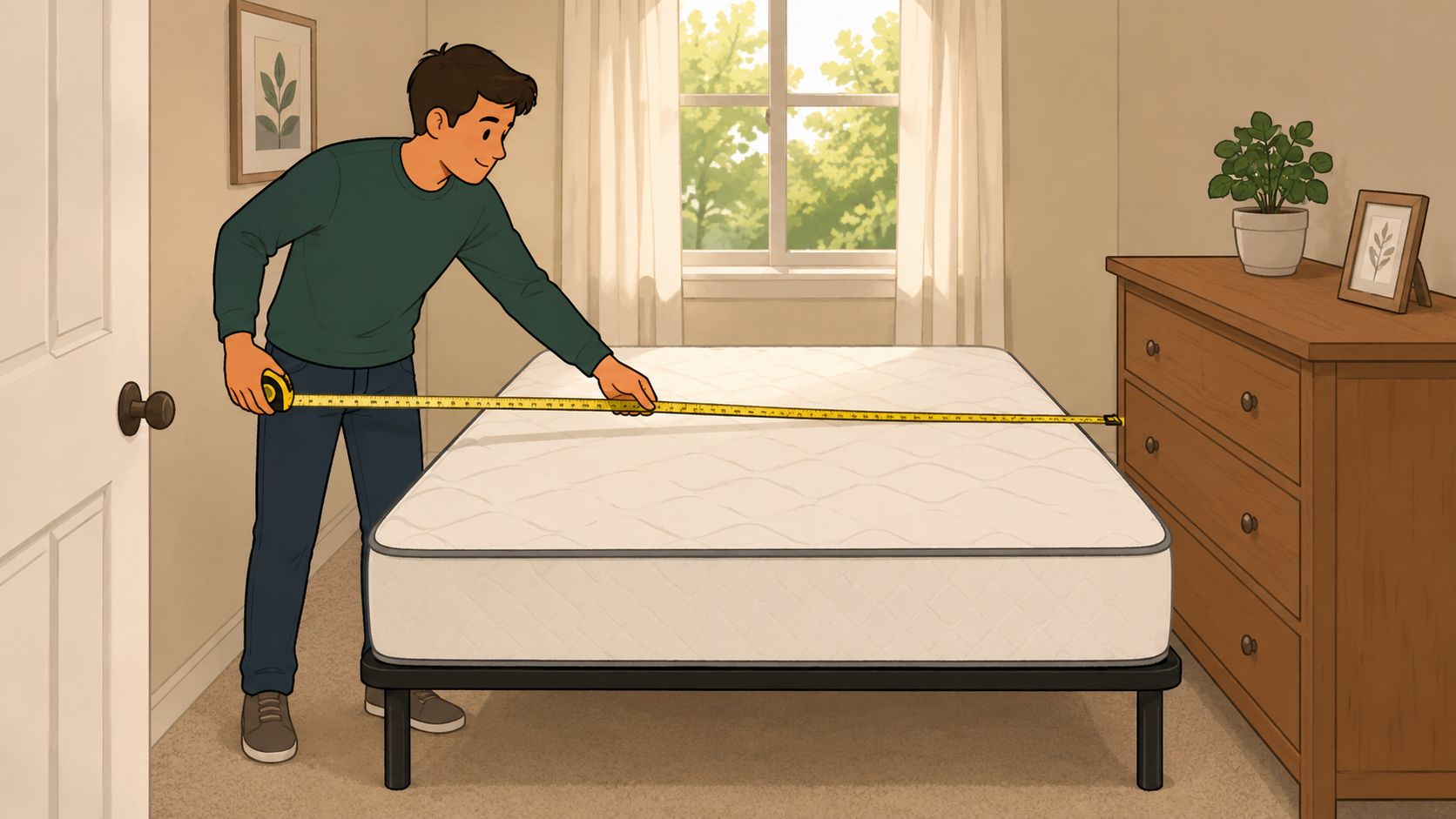
The easiest way to read those numbers is simple. A full gives one sleeper more room than a twin, yet it stays compact enough for smaller bedrooms where a queen can start to take over the space. That balance is one reason many shoppers in Ruidoso, Alto, and Lincoln County keep it on the short list when they want practical comfort without giving up too much floor space.
The standard full size also has a surface area of 3,975 square inches. That helps explain why a full feels like a real step up for one person, not just a small shift in bed width. For a plain-English comparison while you are checking room layouts, this mattress sizes in inches guide keeps the measurements easy to scan.
Practical rule: if the room can handle the mattress footprint and still let the door open cleanly, the full size becomes a serious contender.
Why the Numbers Matter Beyond the Label
The word “full” sounds simple, but the question is how those inches behave in an actual bedroom. A standard full mattress provides about 3,975 square inches of sleep surface, while a queen gives 4,800 square inches, so the jump to queen adds noticeably more usable area. On paper, that seems like a small change. In a room, it can decide whether the bed feels tucked in neatly or takes over the space.
Width changes how a bed feels at night
A full gives one adult room to stretch, shift positions, or sleep with a child or pet on occasion. Two adults can share it, but the width gets tight fast, especially if both people move around or keep different sleep schedules. That difference is not abstract, it changes whether elbows, blankets, and turning space feel easy or cramped.
The 75-inch length matters just as much. Independent guidance cited in the brief recommends a maximum sleeper height of 5'9" for a full mattress, while a full XL extends to 80 inches for taller sleepers (Mattress sizing advice). That extra length can matter more than many shoppers expect, especially if feet hang off the edge or pillows steal usable space.
Ruidoso's dry mountain air also changes the comfort conversation. In a climate like that, sleepers often care more about pressure relief, spinal alignment, and cooling-feel materials than they do about the mattress label alone. Memory foam, hybrid, and supportive innerspring designs all behave differently, so the right size should work with the right feel, not replace it.
A mattress size choice is also a body-fit choice. If the bed is too short or too narrow, comfort gets compromised long before a showroom sample feels “fine.”
Room fit and sleep fit need to match
The biggest mistake is focusing only on the mattress footprint. A bed that fits on paper can still feel wrong if there is no easy path to the closet, dresser, or window. In compact Ruidoso cabins, guest rooms, and vacation rentals, a full often makes more sense than a larger bed because it leaves room to walk, dress, and store luggage without bumping into corners.
A simple floor-plan check helps here. Measure the mattress space, then measure the clearance you still need around it for doors, drawers, and everyday movement. If the room can hold the bed but not the life around the bed, the size choice will feel wrong from the first night.
For local shoppers weighing that tradeoff, this guide on when to choose a king or a queen mattress helps frame the decision before the room starts feeling crowded.
Full vs Full XL vs Queen vs King
A bedroom can look roomy until the bed goes in. That is why a side-by-side comparison helps so much, especially in compact Ruidoso cabins, guest rooms, and vacation rentals where every inch has a job to do. Full sits in the middle of the group, larger than a twin, shorter and narrower than a queen, and much more compact than a king. The question is whether the size fits the sleeper, the room, and the daily routine without crowding everything else.
| Standard Mattress Size Comparison | Width (in) | Length (in) | Best For |
|---|---|---|---|
| Twin | 38 | 75 | Kids, small guest spaces, very compact rooms |
| Twin XL | 38 | 80 | Taller single sleepers who need more legroom |
| Full | 54 | 75 | Solo adults, guest rooms, smaller bedrooms |
| Full XL | 54 | 80 | Taller sleepers who want full width with extra length |
| Queen | 60 | 80 | Couples, larger bedrooms, more personal space |
| King | 76 | 80 | Maximum shared sleeping space and roomier layouts |
Width is usually what people notice first. A full gives one person more side-to-side room than a twin, but it stays noticeably narrower than a queen, so the bed can feel easier to place in a tight room. That middle position is why a full often works well for solo sleepers and guest rooms, while couples usually start to feel the limits once nighttime movement becomes part of the picture.
Three decision points usually settle it
Start with how many people will use the bed. One sleeper can usually make good use of a full, because the width feels comfortable without taking over the room. Two adults sharing the bed long-term usually want more personal space, which is why a queen or king often feels calmer at night.
Length matters too. Taller sleepers notice legroom fast, and extra inches can matter more than a fancy label on the tag. Then look at the furniture around the bed, because a mattress that fits the floor plan but blocks drawers still creates daily frustration.
For shoppers sorting out whether to stay with a full or size up, this guide on when to choose a king or a queen mattress can help frame the choice before the room starts feeling crowded.
How to Know if a Full Bed Fits Your Room
A full bed can sit neatly in the right room and feel cramped in the wrong one. For many small bedrooms, the useful question is not just whether the mattress measures 54 by 75 inches, but whether the room still works once you add doors, drawers, and walking space. In other words, the mattress can fit on paper and still make daily life awkward.
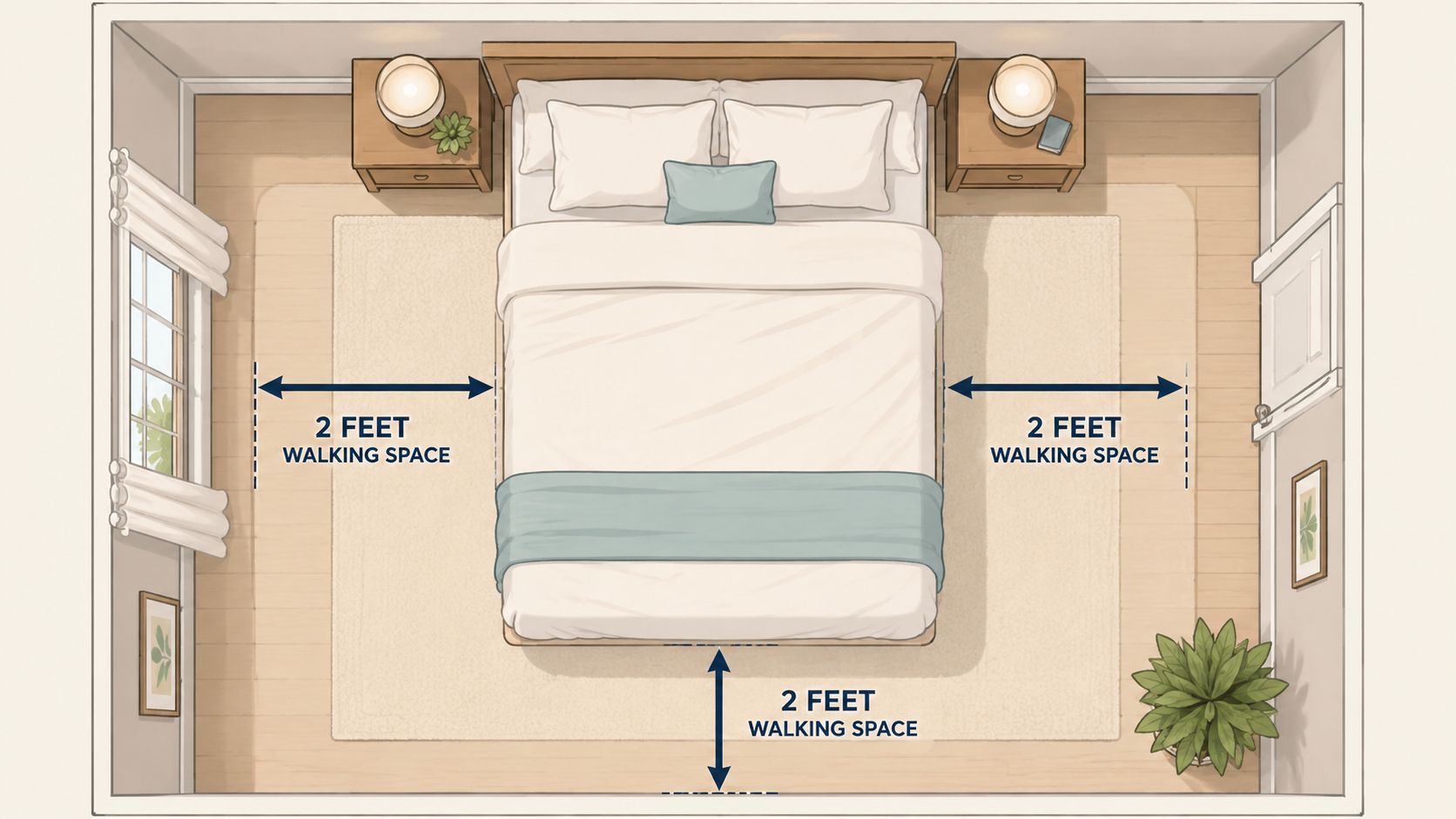
Room guides usually point to a bedroom around 10 by 12 feet for a full mattress, and layout advice often recommends leaving about two feet of space on three sides so you can walk, make the bed, and reach nearby furniture comfortably (Room-size guidance, Layout spacing advice). Those numbers are a useful starting point, but a tape measure tells the story.
What to measure before you buy
Start with the room, not the bed. Measure wall length, window placement, closet swing, and dresser depth. Then trace the path from the doorway to the bed area, because a mattress that fits the floor plan still has to get through the door and into position.
That matters a lot in Ruidoso cabins, Alto vacation rentals, and older Lincoln County homes. Sloped ceilings, built-in dressers, heating vents, and narrow openings can change the usable layout quickly. A full bed may solve the footprint problem and still create a daily headache if circulation gets blocked.
A simple sketch helps. Draw the room, place the bed rectangle, and leave space for the things people do every day, like opening drawers, standing at the closet, and walking around without turning sideways.
Useful habit: if the room feels open on paper but tight in the sketch, it will probably feel tight in real life too.
For a broader home-fit walkthrough, how to choose the best bed mattress size for your home can help you compare room shape, sleeping needs, and furniture placement before delivery day.
Bedding, Frames, and Foundations That Actually Fit
The mattress size is only half the purchase. Sheets, frames, foundations, and toppers all need to match the 54 by 75-inch footprint, or the bed can feel awkward from the first night. A full mattress usually takes full or double labeled bedding, and deep-pocket fitted sheets become important when the mattress runs thicker.
The accessories that cause the most confusion
Most fit problems come from mismatched accessories, not the mattress itself. A frame that's too short can create overhang, while a foundation that's too large can make the bed unstable or uneven. That's why it helps to confirm compatibility before the truck shows up.
Common fit checks include:
- Sheets: Look for full or double sizing so the corners stay secure.
- Frames: Platform, traditional metal, and adjustable bases can all work when they're built for the right size and support pattern.
- Foundations: A box spring or foundation should match the mattress support requirements, not just the room size.
- Toppers: A topper can change how high the bed sits, which matters for older adults or anyone who wants easier bed access.
A topper around 2 to 4 inches can noticeably raise the effective bed height. That may sound small, but for someone with mobility concerns, those inches affect how easily they sit down, stand up, and get in and out of bed. The same goes for mattress thickness, because a bed that looks elegant in a showroom can feel too tall at home.
Sleepers comparing support systems should also remember that memory foam, hybrid, and innerspring designs don't need the same base. A supportive platform can help foam and hybrid beds stay stable, while different traditional constructions may prefer a different support style. The right setup keeps the mattress working the way it was designed to work.
For a clearer breakdown of support types, this internal guide is useful: box spring vs foundation. In a local showroom, a Sleep Pro can also confirm fit before delivery so the bed, frame, and base all arrive ready for the room.
Who a Full Size Bed Really Works For in 2026
A full bed still makes a lot of sense for the right shopper. The strongest fit is usually the solo adult in a smaller bedroom, the host furnishing a guest room, the college student moving up from a twin, or the parent buying a child's first larger bed. In Ruidoso and Alto, where cabins and compact rooms are common, that practical fit is one reason full remains a familiar choice.
Real-world buyer profiles
A solo sleeper often likes the room to sprawl without paying queen-size space tax. A guest room host may want a bed that feels comfortable for one person every night but can still handle two adults for an occasional stay. A growing teen often needs more width than a twin offers, especially once backpacks, reading, and scrolling start happening in bed.
A full can even work for some couples. That usually happens when closeness is preferred, the room is small, or the bed is only needed for shorter stays. The key is honesty about comfort, because “can work” and “will feel good long term” are not the same thing.
The 54-inch width and 75-inch length are the actual limits, not the marketing label. For a taller sleeper, the shorter length can become the dealbreaker before the width does. For a couple, the width often becomes the limiting factor first, especially if one person sleeps light and the other moves a lot.
If sleep position matters too, this related guide can help narrow the feel choices once the size is known: side and stomach sleeper mattress.
A full bed is often a smart fit for the room and a poor fit for the body if the sleeper is too tall or too restless.
That's why the local conversation matters. The right answer depends on who sleeps there, how often, and whether the room is meant to serve one person, guests, or a couple over time.
When to Skip the Full and Size Up Instead
A full is not automatically the budget-smart answer just because it's smaller. Some shoppers are better off moving to a full XL, queen, or a different configuration right away, especially if the bed needs to work for years instead of months. The goal is not to buy the smallest mattress that fits, it's to buy the size that still feels good after daily use.
Situations that usually call for a bigger size
- Taller sleepers: If the body needs more legroom, the 80-inch full XL length is often the more realistic choice.
- Couples with different schedules: If one person gets up early or shifts around at night, a queen usually reduces sleep disruption.
- Pain-sensitive sleepers: Shoulder and hip pressure often improve when the mattress gives each person more width to settle into a natural position.
- Aging in place: If the bed is meant to serve for many years, easier entry, exit, and movement matter more than saving a few inches of floor space.
The Comfort Promise is the safeguard here. It removes the fear of picking the wrong bed and getting stuck with a layout or sleep feel that doesn't work at home. That matters because a mattress can look perfect in the showroom and still feel too short, too narrow, or too restrictive once it's in the bedroom.
Shoppers also don't have to start over if they size up. Tempur-Pedic, Sealy, Stearns & Foster, and Sherwood all offer step-up options in the same showroom, so a better fit can usually stay within the same comfort family. That keeps the decision focused on size and sleep needs, not on beginning the shopping process from scratch.
Your Full Size Mattress Checklist Before You Buy
A good full bed decision usually comes down to four things, room fit, body fit, bedding fit, and delivery fit. Start with the headline measurement, 54 inches wide by 75 inches long, then check whether the room can still feel open after the bed goes in. If the room is tight, the mattress may technically fit but still feel wrong in daily use.
Before shopping, confirm these points
- Room dimensions: Measure the bedroom, doorway, closet swing, and dresser placement.
- Clearance space: Leave enough room to walk, open drawers, and make the bed without bumping into furniture.
- Sleeper height: Check whether the 75-inch length is enough, or whether a full XL makes more sense.
- Bedding size: Make sure sheets and protectors are labeled full or double.
- Base compatibility: Match the frame or foundation to the mattress construction.
- Long-term comfort: Think about whether the bed is for one sleeper, a guest room, a teen, or occasional couples use.
The brand shortlist is easy enough to keep in mind, Tempur-Pedic, Sealy, Stearns & Foster, and Sherwood. They each give shoppers different comfort feels and support styles, which is useful when the full size itself is only one part of the decision. Mattress Pro by Miller Waldrop also backs purchases with the Low Price Promise, so the final setup can stay aligned with the budget as well as the room.
Full-Service Delivery with Professional Setup matters here too. A full mattress has to fit the room, the frame, and the path into the home, and that's especially true in compact mountain houses where every inch counts.
If a local conversation would make the decision easier, stop by and measure with a Sleep Pro instead of guessing from a chart. Ready to transform your sleep? Visit our Sleep Pros at the Mattress Pro showroom located at 2801 Sudderth Drive, Suite F, in Ruidoso. From luxury brands to budget-friendly solutions, we're here to help you wake up loving your mornings. Browse our collection online or stop by Monday through Saturday.
Ready to make the room-fit decision with confidence? Visit Mattress Pro by Miller Waldrop for personal guidance on full size mattress dimensions, compatible frames, and the comfort level that fits your bedroom in Ruidoso, Alto, or anywhere in Lincoln County. The Sleep Pros can help you compare sizes in person, so you can choose a bed that fits your space and your life without second-guessing it at home.